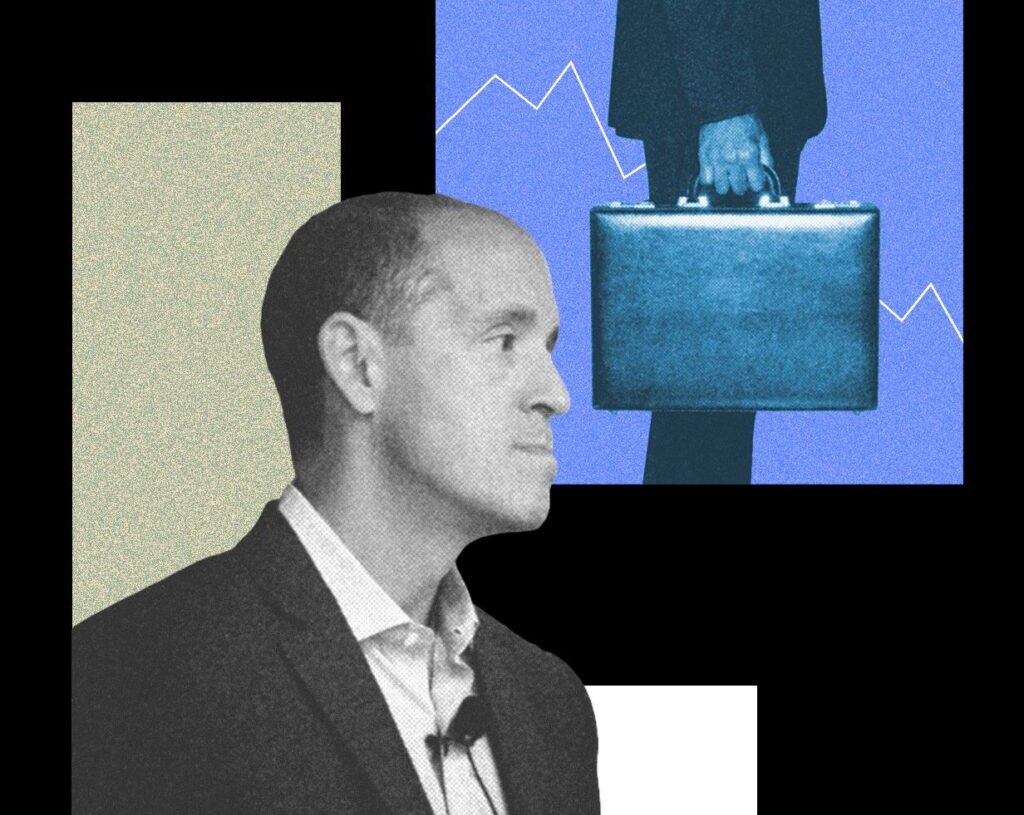
OpenAI has allegedly become more guarded about publishing research that highlights the potentially negative impact that AI could have on the economy, four people familiar with the matter tell WIRED.
The perceived pullback has contributed to the departure of at least two employees on OpenAI’s economic research team in recent months, according to the same four people, who spoke to WIRED on the condition of anonymity.
One of these employees, Tom Cunningham, left the company entirely in September after concluding it had become difficult to publish high-quality research, WIRED has learned. In a parting message shared internally, Cunningham wrote that the team faced a growing tension between conducting rigorous analysis and functioning as a de facto advocacy arm for OpenAI, according to sources familiar with the situation.
Cunningham declined WIRED’s request for comment.
OpenAI chief strategy officer Jason Kwon addressed these concerns in an internal memo following Cunningham’s departure. In a copy of the message obtained by WIRED, Kwon argued that OpenAI must act as a responsible leader in the AI sector and should not only raise problems with the technology, but also “build the solutions.”
“My POV on hard subjects is not that we shouldn’t talk about them,” Kwon said on Slack. “Rather, because we are not just a research institution, but also an actor in the world (the leading actor in fact) that puts the subject of inquiry (AI) into the world, we are expected to take agency for the outcomes.”
In a statement to WIRED, OpenAI spokesperson Rob Friedlander said the company hired its first chief economist, Aaron Chatterji, last year and has since expanded the scope of its economic research.
“The economic research team conducts rigorous analysis that helps OpenAI, policymakers, and the public understand how people are using AI and how it is shaping the broader economy, including where benefits are emerging and where societal impacts or disruptions may arise as the technology evolves,” Friedlander said.
The alleged shift comes as OpenAI deepens its multibillion-dollar partnerships with corporations and governments, cementing itself as a central player in the global economy. Experts believe the technology OpenAI is developing could transform how people work, although there are still large questions about when this change will happen and to what extent it will impact people and global markets.
Since 2016, OpenAI has regularly released research on how its own systems could reshape labor and shared data with outside economists. In 2023 it copublished “GPTs Are GPTs,” a widely cited paper investigating which sectors were likely going to be most vulnerable to automation. Over the past year, however, two sources say the company has become more reluctant to release work that highlights the economic downsides of AI—such as job displacement—and has favored publishing positive findings.
An outside economist who previously worked with the company alleges that OpenAI is increasingly publishing work that casts its technology in a favorable light. The economist spoke on the condition of anonymity.
Earlier this week, OpenAI published a report in which it surveyed enterprise users who claim that the company’s AI products have saved them an average of 40 to 60 minutes of time a day, and that companies throughout the economy have “significant headroom” to increase their AI adoption.
This isn’t the first time OpenAI researchers have raised concerns questioning what the company does and doesn’t publish. When former head of policy research Miles Brundage left OpenAI in October of 2024, he said the company had become so high-profile that it was “hard for me to publish on all the topics that are important to me.” He added that while some constraints are expected, he felt that OpenAI had become too restrictive.
Research Politics
Sharing gloomy statistics about AI’s potential impact on the economy could complicate OpenAI’s fragile public image. While the Trump administration has championed AI’s potential, White House advisers have pushed back on claims that the technology will eliminate jobs, which has become an increasingly urgent issue for many Americans. Roughly 44 percent of young people in the US fear that AI will reduce job opportunities, according to a November survey from the Harvard Kennedy School’s Institute of Politics.
While companies often highlight research that benefits them, today’s leading AI labs are given an unusual level of authority to self-report the risks and capabilities of the technology they’re racing to deploy. Silicon Valley leaders have mounted $100 million lobbying campaigns to keep it this way, fighting against proposed state-level AI regulations that could constrain the industry.
OpenAI’s allegedly cautious posture stands in contrast to its rival Anthropic. The startup’s CEO, Dario Amodei, has repeatedly warned that AI could automate up to half of entry-level white-collar jobs by 2030, framing the predictions as necessary to spur public debate about changes to the workforce. The Trump administration has sharply criticized those warnings. David Sacks, the White House special adviser for AI and crypto, accused Anthropic of running a “sophisticated regulatory capture strategy based on fear-mongering.”
OpenAI’s economic research efforts are currently managed by Chatterji, who led a significant September report on how people around the world are using ChatGPT. Cunningham is listed as an author on this report. It was released months after Anthropic published a similar paper on how people use its chatbot, Claude.
Sources tell WIRED that Chatterji reports to OpenAI’s chief global affairs officer, Chris Lehane, reflecting how the team is tightly integrated with the company’s political and policy strategy. Lehane previously worked at Airbnb, where he helped the company defeat Prop F, a ballot measure in San Francisco that would have severely restricted the company’s ability to operate. He also served as the special assistant counsel to former President Bill Clinton, where he earned a reputation as the “master of disaster.”
This is an edition of the Model Behavior newsletter. Read previous newsletters here.
The post OpenAI Staffer Quits, Alleging Company’s Economic Research Is Drifting Into AI Advocacy appeared first on Wired.