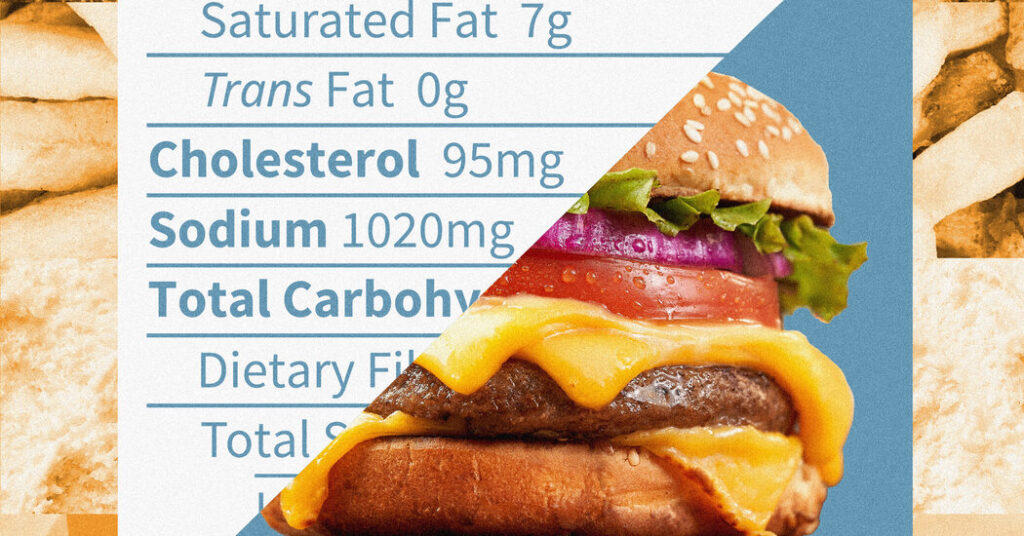
For decades, nutrition experts and health officials have warned against eating too much saturated fat. Red meat, full-fat dairy products, fried foods and other big sources of the nutrient can raise your cholesterol, they have said, and with it the risk of cardiovascular disease.
But Robert F. Kennedy Jr. and other federal health officials, along with some proponents of the Make America Healthy Again movement, have taken a different stance — suggesting that the fats have been unfairly demonized and that the evidence to prove that they are harmful is insufficient.
Mr. Kennedy, the nation’s health secretary, has been dismissive of expert consensus and said that the next edition of the Dietary Guidelines for Americans, expected in early 2026, will “stress the need to eat saturated fats.”
Why the potential about-face on decades of guidance? We asked nutrition experts to break down the evidence.
What are saturated fats?
All fatty acids are categorized into two main groups according to their molecular structures.
Saturated fats, which tend to be solid at room temperature, are predominant in animal products like butter, cheese, beef and pork as well as certain oils like coconut oil and palm oil.
Unsaturated fats are abundant in fish and foods like avocados, nuts, seeds and cooking oils like olive oil and soybean oil. These types of fat tend to be liquid at room temperature.
What does the research suggest?
Since the 1950s and 1960s, studies have consistently found cardiovascular benefits from limiting saturated fats, said Kevin Klatt, an assistant professor of nutritional sciences at the University of Toronto.
Small clinical trials from the 1950s, for instance, found that when adults replaced saturated fats (from foods like butter or coconut oil) with unsaturated fats (from sources like sunflower oil or corn oil), their blood cholesterol levels decreased. Other studies published around the same time found that those who consumed less saturated fat tended to have lower rates of coronary heart disease than those who consumed more.
Based on this and other research, the American Heart Association began recommending in 1961 that adults at risk for heart disease replace saturated fats with unsaturated fats in their diets. Federal health officials issued similar guidance for everyone in the first edition of the Dietary Guidelines for Americans in 1980, and have recommended limiting saturated fats in subsequent editions.
Studies performed during the decades since have continued to support this advice, said Deirdre K. Tobias, an epidemiologist at Brigham and Women’s Hospital in Boston.
In dozens of short-term clinical trials published since 1970, researchers have found that the more saturated fats people consumed, the higher their blood levels of LDL, or “bad,” cholesterol rose. Over time, high LDL can raise the risk of having a heart attack or stroke.
The results of longer-term trials, while mixed, have largely shown that the more people reduce how much saturated fat they eat, the lower their risk of having a cardiovascular event like a heart attack or stroke.
In observational studies that have followed large groups of adults for decades, researchers have also found that consuming less saturated fat — and more unsaturated fat — was linked to lower rates of both coronary heart disease and earlier death, Dr. Tobias said.
Observational studies can’t prove cause and effect, but these findings did jibe with previous clinical trial data, Dr. Klatt said.
All research on this topic has limitations, he added, but it’s generally all “pointing in the same direction.”
Why have some questioned the guidance on saturated fats?
Public health officials have provided little explanation for why they want to roll back the longstanding advice on saturated fats.
Some health influencers, including those in the MAHA movement, have argued that because humans evolved to eat red meat and other animal products high in saturated fats, those foods are inherently good for us. And they contend that unsaturated fat-rich seed oils like canola oil and soybean oil, which experts recommend as healthier replacements, have worsened our health. A return to butter and beef tallow, they say, would improve it.
But there’s no evidence that seed oils are harmful to health, or that saturated fats are beneficial, said Dr. Walter Willett, a professor of epidemiology and nutrition at the Harvard T.H. Chan School of Public Health. In fact, he added, the opposite is true: Eating fewer saturated fats and more unsaturated fats (including from seed oils) has most likely been one reason deaths from cardiovascular disease have declined by about 75 percent since the 1950s, he said.
The idea that eating more saturated fats would make us healthier is “fundamentally bogus,” Dr. Willett said.
There is broad agreement among scientists that replacing saturated fats with unsaturated fats like those in plant oils, nuts, seeds and avocados can lower cholesterol levels and the risk for heart disease, said Alice H. Lichtenstein, a professor of nutrition science and policy at Tufts University. For this reason, Dr. Lichtenstein thinks the guidelines should focus less on limiting saturated fats and more on swapping them for healthier unsaturated ones.
There is also some debate among scientists about whether all foods that contain saturated fats are equally bad for you. Full-fat dairy products like yogurt and cheese, for instance, do not appear to be consistently linked to health harms, despite their high levels of saturated fats, said Benoît Lamarche, director of the Nutrition, Health and Society Center at Laval University in Quebec.
Processed meats and many other ultraprocessed foods, on the other hand, which are also major sources of saturated fats, are clearly linked to greater risks of heart disease and poor health, he said.
Regardless of the source, it would be a mistake to start eating more saturated fats, Dr. Klatt said. They aren’t beneficial for health — and they add extra calories to your diet.
This is one reason the current dietary guidelines recommend limiting saturated fats by prioritizing low-fat dairy products and lean meats, Dr. Klatt said. That leaves more room in your “calorie budget” for other foods rich in essential nutrients and heart-healthy fiber, like fruits, vegetables and whole grains.
What does this mean for you?
If the new dietary guidelines recommend consuming more saturated fats, many experts worry that Americans’ health may worsen, and that it would potentially cause an uptick in cardiovascular disease, Dr. Willett said.
To reduce your risk, experts recommended prioritizing unsaturated fats over saturated ones. Cook with olive oil, soybean oil or canola oil instead of butter or beef tallow, for example, and prioritize fish over red and processed meats. Use avocado instead of bacon in sandwiches and salads, and add nuts and seeds to plain yogurt.
If you shift your diet toward more fruits, vegetables, whole grains, legumes, nuts, fish and plant oils, you’ll get major health benefits in general.
“This is undisputed,” Dr. Lamarche said. And if you adopt this way of eating, you won’t have to worry about saturated fat, he said. “It’s going to be lower anyway.”
Alice Callahan is a Times reporter covering nutrition and health. She has a Ph.D. in nutrition from the University of California, Davis.
The post Is Saturated Fat Actually Good for You? appeared first on New York Times.