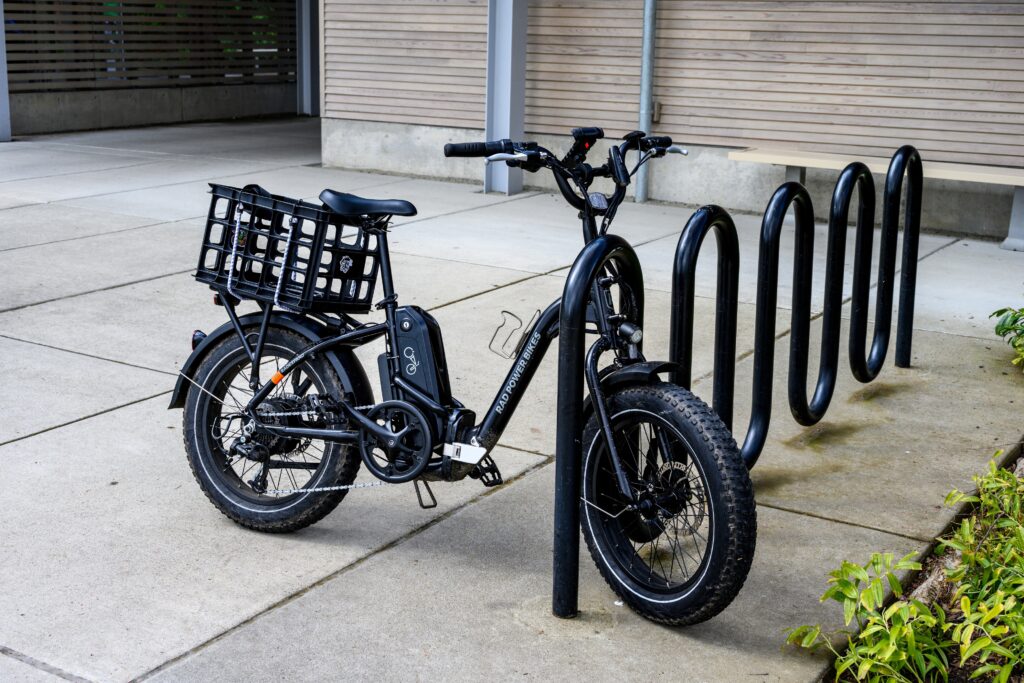
Rad Power Bikes is on the verge of becoming the biggest casualty yet in the nation’s struggling electric bicycle sector, which saw its pandemic-era growth spurt blunted by tariffs, overproduction and slowing demand.
The Seattle-based company recently notified Washington state officials that, barring a rescue deal, it could cease operations as soon as January. Like other domestic e-bike brands, Rad manufactures its products in Asia, with a network of U.S. shops responsible for a small amount of final assembly. But import duties under both the Biden and Trump administrations sent manufacturing expenses spiraling, the company has said, forcing it to absorb some costs and pass along others to consumers.
Now a spate of battery fires may serve up the final blow for Rad: Last month, federal safety regulators issued an advisory affecting nine e-bike models because their lithium-ion batteries could unexpectedly ignite and explode. The company insists its products are safe.
Now Rad, which has long billed itself as the biggest e-bike brand in North America, is pushing up against the same market forces that helped push such rivals as Electric Bike Co. into bankruptcy and Juiced Bikes out of business.
Tariffs are “stressing U.S.-based companies, in some cases past the breaking point, while not seeming to have much effect on foreign marketplace sellers who are doing business as usual,” said Matt Moore, policy and general counsel of the trade group PeopleForBikes.
Optimism and overinvestment
Motorized bicycles were largely a niche product until the 1990s and became common in Europe and Asia. Rad Power Bikes entered the fray in 2007, capitalizing on its lower price point; its bikes can retail from $1,000 to $2,000 in a market where e-bikes can easily top $5,000 or more.
“They really were some of the first people to make [electric] bikes for the average person … they offered something that’s affordable, that’s approachable, that gets people out of cars and onto bikes,” said Justin Taylor, an e-bike reviewer and journalist with Electric Bike Report, who called Rad an “iconic” company.
Its distinctive, orange cargo e-bikes are used by adults to ferry kids to and from school, to carry groceries, or as an alternative to a second car. Delivery drivers use electric bikes to quickly navigate city streets, allowing the company to broker a partnership with Domino’s Pizza.
Domestic e-bike sales took off in 2020, when the covid-19 pandemic took hold, as Americans sought cheaper and cleaner alternatives to their cars, and many were looking for new ways to have fun outdoors. Rad fielded a 297 percent spike in demand, GeekWire reported in May of that year. The market became more crowded over time as e-bike specialists Velotric, Xtracycle and Lectric rolled out new models of their own, as did traditional bicycle makers Trek and Specialized.
A wave of optimism ensued, prompting Rad and other companies to overinvest, said Ed Benjamin, a former bike shop owner who is chairman of the Light Electric Vehicle Association.
By late 2021, Rad had raised more than $300 million from a group of private equity and venture capital firms, which valued it at $1.65 billion, according to Pitchbook. The company described itself as “the most funded electric bike company in the world” in a news release.
But sales leveled off and started dropping across the industry in 2022, with retail e-bike sales peaking that year at around $878 million, according to the data firm Circana. By 2024, they had fallen to $779 million, an 11 percent drop.
Rad’s executives told employees they “did not anticipate the sudden drop in consumer demand from Covid-era peaks,” according to a letter that was forwarded by a company spokeswoman. The letter also cited “significant financial challenges, including in the form of tariffs and the macroeconomic landscape.”
‘Confusion and chaos’
Then tariffs changed the dynamic, creating “confusion and chaos” across the e-bike industry as retailers and manufacturers alike tried to untangle a constantly changing situation, Benjamin said.
“I believe we’re living on the last vestiges of the inventory buildup that happened during [the pandemic], and buying more product is a daunting idea because we don’t know how much we’re going to be paying for it,” Benjamin said.
E-bikes were exempt from tariffs on Chinese imports that were imposed during the first Trump administration in 2018. But the Biden administration allowed the exemption to expire last year, even though the leading e-bike industry trade group asked to extend it, according to public comments submitted to the U.S. Trade Representative.
At least one U.S.-based e-bike brand, the now-defunct Electric Bike Company, which assembled its bikes in Southern California with a staff of around 40, with parts sourced from Asia, had in fact arguedagainst extending the exemption. Though the company said it opposed tariffs more broadly, it asserted that exempting fully assembled bikes from tariffs while still taxing imported parts put it at an unfair disadvantage.
“That [exemption] hurt us tremendously because nobody was paying their tariff on imported bikes,” said Electric Bike Company founder Sean Lupton-Smith, an entrepreneur from South Africa who started his company 14 years ago. “We were still getting charged 25 percent on all our parts … those weren’t excluded.”
Such feedback appears to have doomed the exemption, said Zhiwei Chen, a senior counsel for international trade at the law firm Crowell & Moring who has worked with e-bike and lithium-ion battery clients.
“The USTR made clear that where there are opposing comments, generally they won’t approve the extension,” Chen said.
More levies followed when the second Trump administration imposed “reciprocal” tariffs on numerous countries this year. The industry’s average tariff rose from an effective rate of about 11 percent, to between 20 and 55 percent as a result of Biden- and Trump-era duties, estimates Ash Lovell, vice president for government relations at PeopleForBikes.
More import levies are on the way for the industry, including one on nonelectrical vehicle batteries that the Biden administration authorized last year and is expected to take effect in 2026. Meanwhile, the Trump administration is considering additional tariffs on steel and aluminum that goes into bike frames, responding to a request from aluminum interests and an Indiana-based manufacturer of children’s bikes.
Moore, the PeopleForBikes general counsel, said the problem lies in policy decisions that are based on a single company’s request.
New tariffs “would punish an entire industry and adversely affect hundreds of companies, their employees and consumers, while only benefiting a small company that makes high-end kids bikes,” Moore said.
Numerous domestic e-bike brands have cited tariffs as a contributing factor in their decisions to cease or pare back operations, including ECells of Nevada; Kent International of New Jersey; New York-based Fuell; and California-based Juiced, according to company announcements and a list compiled by PeopleForBikes.
Electric Bike Company filed for Chapter 7 bankruptcy in the fall, which Lupton-Smith attributed to mounting tariffs on bike parts, along with financing issues and other problems.
He says he now feels “humbled” by the scale and abilities of China’s e-bike makers, adding that the country’s low-cost labor dramatically tilts the playing field against any U.S. manufacturer. He said tariffs imposed by both administrations did little to protect his industry.
“I really thought Trump would put the tariffs higher on our competitors, and least help local manufacturers … but the tariffs didn’t help local manufacturers at all,” he said.
In response to questions about the e-bike industry’s struggles, White House spokesman Kush Desai said the Trump administration is committed to restoring American manufacturing through a mix of tariffs, tax cuts and deregulation.
“America cannot just be an assembler of imported foreign parts, but a manufacturing powerhouse at every step of the supply chain,” Desai said in an email.
No company recall
A company closure would have major implications for consumers, who could lose warranty protections and generally have a harder time replacing parts such as motors, batteries, hydraulic brakes and other components.
“Everything on the bike except for the E part of the e-bike is serviceable … the heart and soul is where it becomes a challenge,” Taylor said.
Nine Rad models were listed in the Consumer Product Safety Commission’s warning in late November because their batteries have been linked to at least 31 fires, including 12 involving property damage totaling $734,500. Consumers were advised to dispose of the batteries at a hazardous materials recycling center.
Rad said it was unable to issue a recall, saying it would go out of business if forced to replace the batteries or issue refunds for all of the affected products. The company’s new “Safe Shield” batteries retail for $350 to $600.
A company spokeswoman emphasized that the batteries had been tested by third-party labs and found to be in compliance with the highest industry safety standards. She also said the 31 fires represent a tiny fraction of the more than 100,000 batteries sold.
“Rad Power Bikes firmly stands behind our batteries and our reputation as leaders in the ebike industry, and strongly disagrees with the CPSC’s characterization of certain Rad batteries as defective or unsafe,” she said in an emailed statement.
Jonathan Weinert, a bike consultant with eCycleElectric, said the CPSC action could lead to change.
“It’s a black eye to the industry, and it will make customers more fearful,” Weinert said. “But I also think it’s an opportunity to move the industry toward safer technology.”
Razzan Nakhlawi and Amy Nakamura contributed to this report
The post How tariffs hit the brakes on America’s booming e-bike industry appeared first on Washington Post.