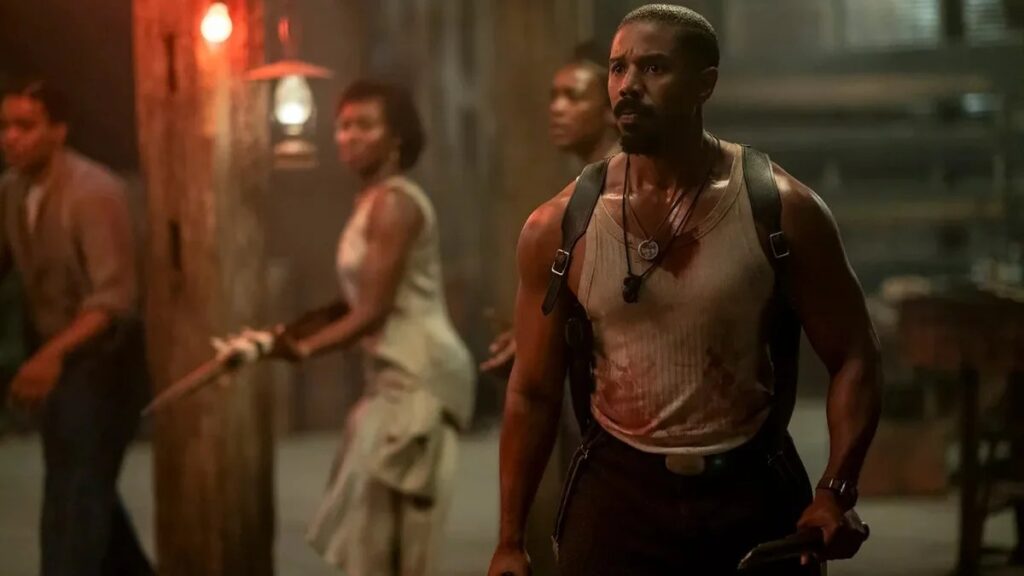
Like many a horror classic, “Sinners” spends a significant amount of time with its characters trapped in a single location. Smoke and Stack, the twins played by Michael B. Jordan, open a juke joint in the Mississippi Delta, with that building becoming the primary setting of the vampiric mayhem that befalls the region’s Black citizens. Despite the bottled-up nature of Sinners’ third act, with the renovated barn serving as both a haven from a horde of vampires and an intended trap set by the Ku Klux Klan, the juke joint never feels restrictive or claustrophobic. Far from it — production designer Hannah Beachler (who has worked on all five of Ryan Coogler’s directorial features) makes this farmhouse-turned-club-turned-slaughterhouse feel like a central character of its own.
While Coogler introduces the juke joint early in “Sinners’” first scene, the location really takes over around the 45-minute mark. Beachler said having a single set be so central was “awesome and also a little nerve-racking, because you have to make a space that people can be in for that long and not be bored. So that was a challenge.” The space also had to accommodate the blocking that Coogler needed for fights, shootings and backroom dealings.
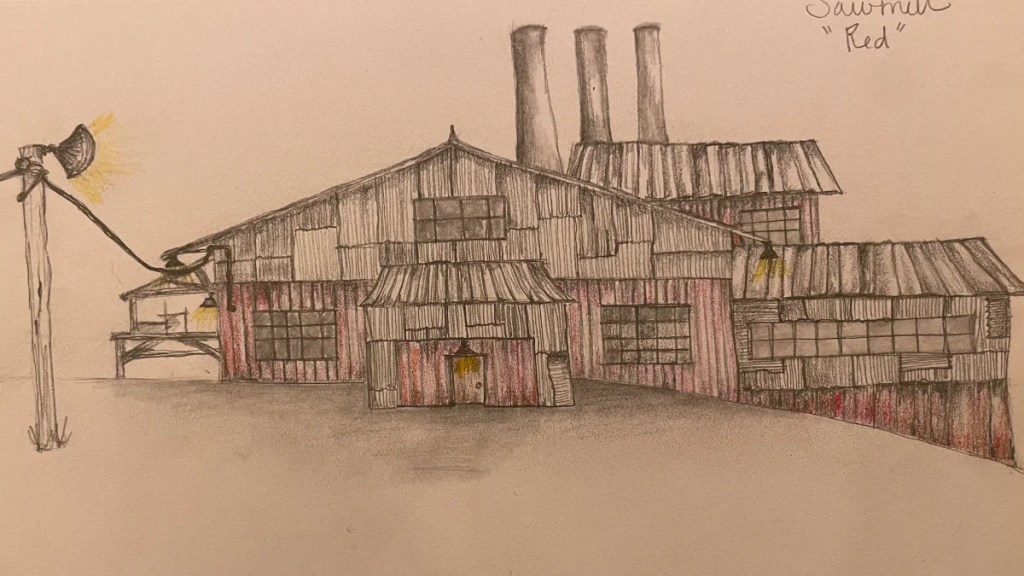
Beachler saw the location as an opportunity to visually represent the characters and culture of the Mississippi Delta. The pillars holding the second floor of the building are meant to evoke the trees outside the shack of Stack’s estranged wife, Annie (Wunmi Mosaku). The white wall where a vampire bites Stack harks back to the church run by the father of young blues singer Sammie “Preacherboy” Moore (Miles Caton), a church Sammie leaves behind at the end of the film. Throughout the building, the color red references the red seen on storefronts on the Black side of the street in Clarksdale (with shops on the white side adorned in blue). “Once we understood the layout and what we needed to do, it was like, ‘OK, this is where everybody comes together,’” Beachler said. “It holds all the different stories, all the different characters, all the different colors.”
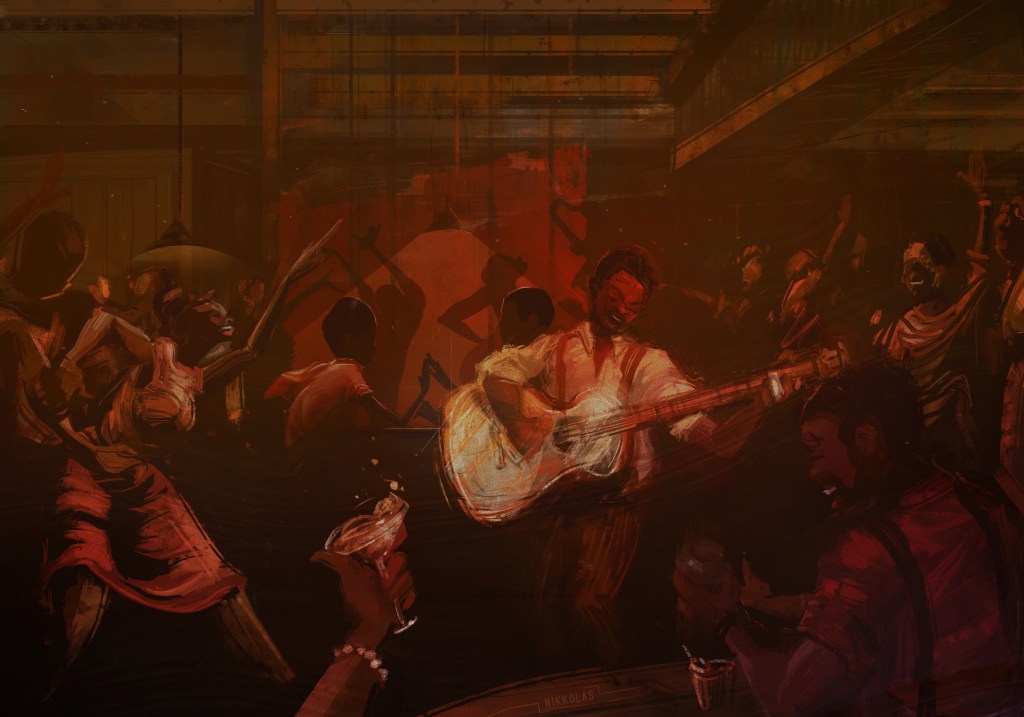
When Sammie plays “I Lied to You,” it feels as if all of “Sinners” comes together: the film’s music, its characters, its themes and its central location. As director of photography Autumn Durald Arkapaw floats her camera through a crowd of dancers from across decades of Black musical expression, Beachler’s work provides a spatial awareness for the viewer, ensuring they know where every character is in relation to each other when the third act mayhem eventually breaks out.
Beachler explicitly designed the space to accommodate unbroken shots, giving the cast and crew “the freedom to go and do whatever they want. They don’t have to cheat. They don’t have to cut and do a pickup shot. They can go in and out of doors; they can go in and out of spaces, up and downstairs, down the hall, like I like to build. That is something that I do on every movie: If I’m building a thing, it’s going to be the complete build of it as much as possible.”
This complete build would later end in ashes as the roof of the juke joint catches fire during Sammie’s performance. “We actually burned the ceiling,” Beachler said. “That was the last thing we got. That was a live burn.”
This story first ran in the Below-the-Line issue of TheWrap’s awards magazine. Read more from the issue here.

The post How Hannah Beachler Made the ‘Sinners’ Juke Joint a Place That ‘Holds All the Stories’ appeared first on TheWrap.