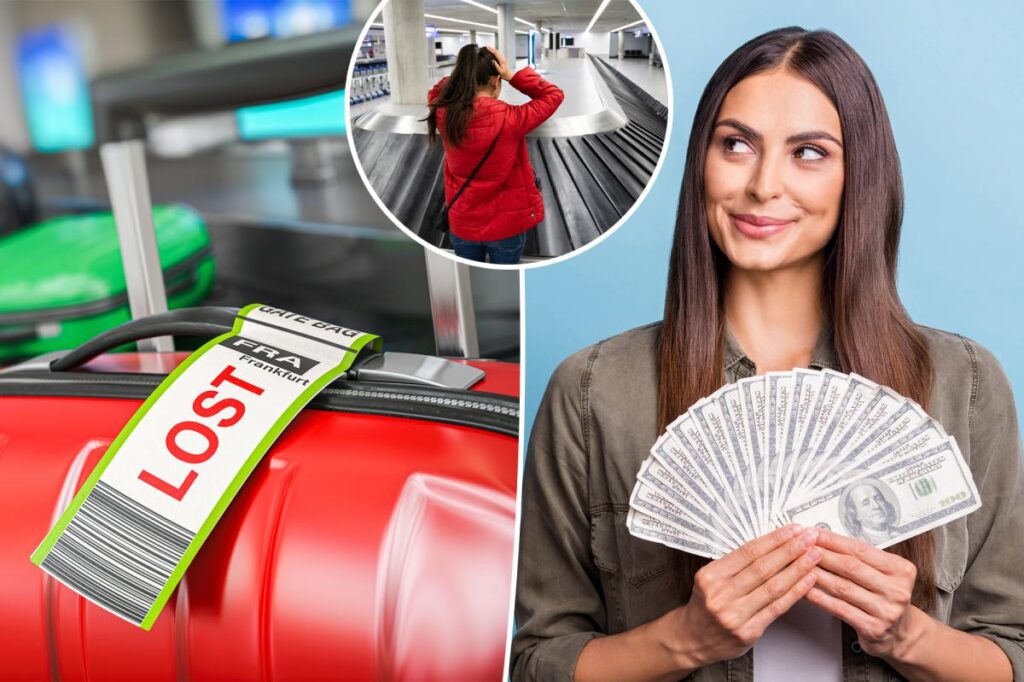
Anyone who has lost their luggage knows the frustration of having to repurchase all their necessities and starting a new wardrobe from scratch, only to get an insufficient reimbursement.
However, there’s a little-known international regulation that gives flyers more leverage than they think they have.
When travelers get a “final offer” from an airline with a reimbursement that doesn’t even begin to cover the experience they had, they tend to stop there, accept defeat and take the money offered.
But staying organized, citing the rules regarding delayed luggage and refusing the purported payout can lead the airline to increase the reimbursement — nearly tripling the amount.
Bailey Berg, an Alaska-based freelance writer, shared on Fodor’s that her bag never made it onto her flight from Dulles to Lisbon, and TAP Air Portugal initially offered only $800 in reimbursement — and she got them to increase it to $2,200.
After Berg returned to the U.S., she filed a reimbursement claim, including a detailed list of the items she bought, why they were necessary, the cost of each item, as well as receipts proving purchase. After tax, the total came to just over $2,300.

However, TAP responded, saying, “The receipts you shared are too high.” They offered only $800 in reimbursement.
Luckily, Berg had documentation — and she knew her rights under The Montreal Convention.
The Montreal Convention 1999 (MC99)establishes a modern framework for airline liability in cases of passenger injury or death, baggage loss or damage, and cargo issues, according to the International Air Transport Association.
In response to TAP, Berg wrote, “As TAP is aware, under the Montreal Convention (Article 19) and reinforced by TAP’s own Customer Service Plan (May 2023), passengers are entitled to reimbursement for such expenses when baggage is delayed.
“This is not a goodwill gesture—it is a legal obligation. Your current offer does not reflect the reality of the hardship imposed by the delay, nor does it meet the standard of care outlined in international passenger rights law.”
It still took two follow-ups and nearly two more months before the airline responded, but they increased the reimbursement offer to $2,193, and Berg was compensated fairly.

Berg noted that “airlines bank on passengers not knowing their rights or not wanting to deal with the hassle.”
Many passengers will accept the first offer given to them because it’s easier — but travelers have the right to get reimbursed for what they needed to buy with the absence of their luggage.
The post Here’s how to triple your lost luggage reimbursement — thanks to a little-known international regulation appeared first on New York Post.