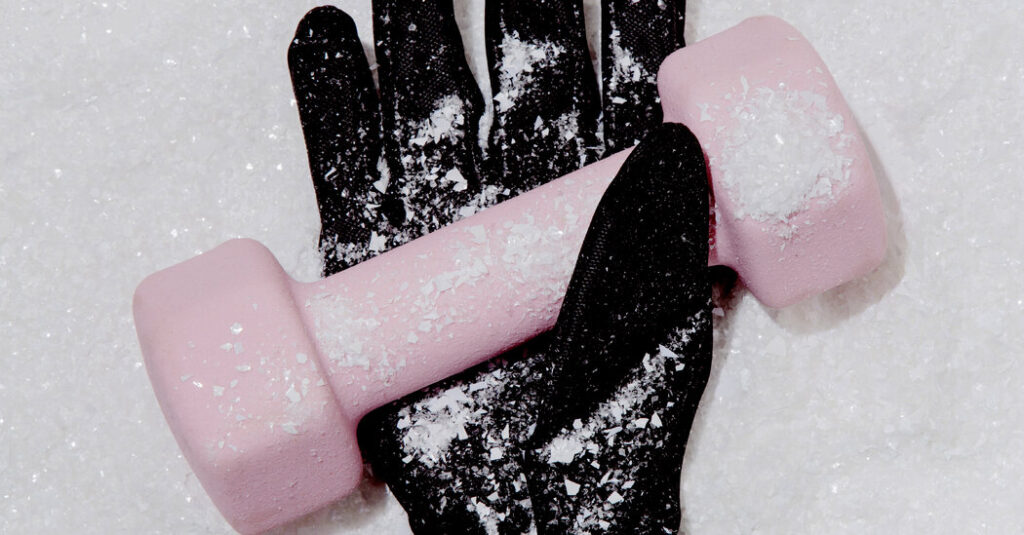
Q: When I exercise in frigid temperatures, my muscles and joints feel stiff and slower to react. Does this increase my risk of injury?
When you spend time in cold weather, your body snaps into action to keep you warm. The blood vessels in your extremities narrow to send more blood to your core. You may also shiver — a survival mechanism in which your muscles contract and generate heat.
While these responses are important for keeping you alive, they’re not always helpful for working out, since they can affect how easily you move and make you more prone to injury. Cold weather can also stress your cardiovascular system.
But experts say that with the right precautions, you can offset these risks and better avoid injury. Here’s what you need to know.
How the cold affects your muscles
When you’re exposed to the cold, your body redirects blood away from your arms and legs and toward your core, to keep your vital organs warm. This causes your muscles and joints to stiffen, making it challenging to move fluidly.
This can affect your performance, in part because rigid muscles aren’t able to exert as much force as muscles that are warm, and they don’t react as quickly, said Dr. Adam Tenforde, a sports medicine specialist and associate professor at Harvard Medical School.
When your tissue is stiff from the cold, you’re also more susceptible to strains and tears. Your range of motion may be limited, too. Think: leaping over a puddle, only to feel a yank in your hamstring.
Cold exposure can impair your balance, too, since stiff muscles can lead to unsteady ankles and knees, said Dr. Nnaemeka Echebiri, a physiatrist and musculoskeletal specialist at the Hospital for Special Surgery in New York. This may make you more likely to slip and fall, he said, especially on icy or uneven surfaces.
How the cold affects your cardiovascular system
When the vessels in your extremities constrict, your blood pressure goes up, and generally, your heart has to work harder to keep blood circulating throughout your body.
This can make cold-weather workouts more challenging, and make you tired more quickly than in more moderate temperatures, said Clare Eglin, a thermal physiologist at the University of Portsmouth in England and a co-author of the American College of Sports Medicine’s official position statement on preventing injury in the cold.
If you have a history of heart or vascular disease, experts recommend speaking with your doctor before taking up a cold-weather workout routine, since cold exposure can raise your risk of heart attack and stroke.
How to stay comfortable and safe
A few simple precautions can help keep your muscles warm and decrease your chances of getting injured, experts said.
Layer up
With the right clothing, you can keep your muscles pliable and protect your body from getting cold in the first place.
A moisture-wicking base layer can prevent sweat from cooling you down, Dr. Echebiri said, but avoid cotton, which holds onto moisture. And a windproof and waterproof outer layer can help retain body heat.
Wear a hat, too, since you lose a lot of heat through your head, and put on gloves, since your hands are especially vulnerable to cold. Keeping your feet warm is also important, since some evidence suggests cold feet can impair your balance as well, Dr. Eglin said.
Warm up
A dynamic warm-up to improve circulation to your extremities is even more important before a cold-weather workout than before a warm-weather one, Dr. Tenforde said.
He recommends spending a few minutes moving around indoors before heading outside. Arm circles and swings, high steps and lunges are good options to get the blood flowing.
If you’re going to be outside before you start your workout, keep moving, experts said. Walking, jogging in place and doing jumping jacks can help you stay warm.
Once you begin your workout, start slowly and gradually increase your intensity. Exercise increases your core body temperature, so after a few minutes, blood flow should return to your arms and legs, and you should be able to move more freely, Dr. Eglin said.
Hydrate
You don’t typically get as thirsty in cold temperatures, but you still sweat. That combination can increase your risk of becoming dehydrated, Dr. Eglin said. (Cold weather can also make you urinate more, which can contribute to dehydration.)
When you’re dehydrated, your blood volume decreases, which can further reduce blood flow to your muscles and put more stress on your heart.
Drink fluids before, during and after a cold workout, Dr. Echebiri said, even if you’re not thirsty.
Know your route
When your movement is altered, you may not be able to dodge unexpected obstacles in your path as easily as you can in warm weather. To minimize your risk, choose a path you know well, with few hazards. And wear shoes with grip, Dr. Echebiri said.
Finally, listen to your body, Dr. Tenforde said. If you’re really struggling during a cold-weather workout, you may be best off ending your workout early — or moving it inside.
The post Does Exercising in the Cold Increase My Risk of Injury? appeared first on New York Times.