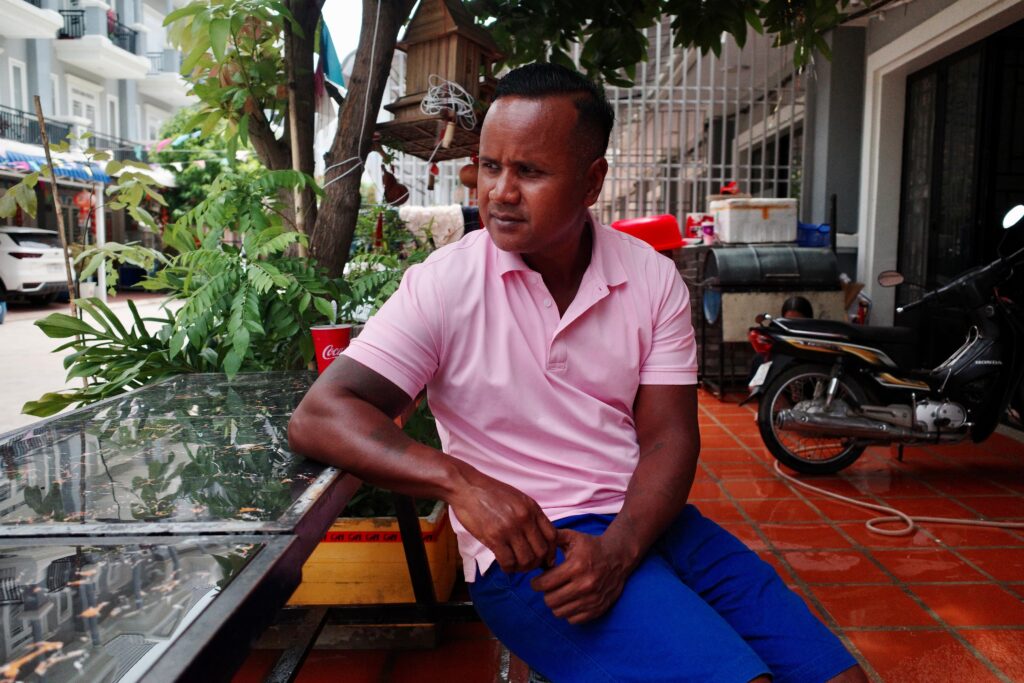
PHNOM PENH, Cambodia — Not long after President Donald Trump was sworn in for the second time, Bou Nou began buying and storing provisions on the second floor of his house on the outskirts of Cambodia’s capital. Shampoo bottles and bars of soap. Razors and deodorant. Cups of instant noodles.
Stepping off the plane in Phnom Penh after being deported from the United States in 2018, these were the items he could have used. Now they’re what he’s packed into plastic bags for the others like him who were coming.
“Those first days will be a blur,” Bou, now 51, remembered. “This will tide the brothers through.”
The Trump administration said it had deported 527,000 people through the end of October. Though Immigration and Customs Enforcement has yet to provide a breakdown, migrant rights groups say the agency has sent record numbers of people to Southeast Asia, in particular Cambodia, Laos and Vietnam, where the United States waged a decades-long war against communist forces that created one of the largest refugee crises in modern history.
Democrats and immigrant families have tried to prevent people from being removed. But that’s becoming increasingly impossible, and far less energy is being invested in providing support on the other side of deportation, advocates say. As Trump expands his crackdown on immigration, that need is only escalating.
“There is no support system. There is no infrastructure. … All there is is individuals,” said Chanida Phaengdara Potter, a Minneapolis-based immigrant rights activist who founded an organization in Laos this year to help people who had been deported.
At least 55 have arrived in Cambodia this year, with droves more expected, according to the Khmer Vulnerability Aid Organization (KVAO), a nonprofit. As many as 500 have landed in Laos and Vietnam, a twentyfold increase from previous years, activists say.
These figures don’t include the increasing number of people who have “self-deported,” leaving the U.S. to avoid being detained in ICE facilities or sent to third countries.
“Thanks to President Trump and Secretary Noem’s strong leadership, countries like Vietnam, Laos, and Cambodia that previously refused to take their own citizens back are now accepting their own citizens,” Department of Homeland Security assistant secretary Tricia McLaughlin said in a statement.
There are more than 14,000 people in the U.S. facing final deportation orders to these countries that the Trump administration is targeting for removal, she said.
The Washington Post interviewed nine recent returnees, who spoke on the condition of anonymity to avoid reprisals from authorities in their new countries and from the Trump administration against their families in the United States. All nine said they arrived in the U.S. as minors and have little, if any, connection to the countries they’ve been expelled to.
A 58-year-old from Rhode Island was apprehended by ICE at the restaurant where he works. A 49-year-old bus manager from Southern California was detained during a routine check-in with ICE — the same thing he had been doing for two decades.
A 47-year-old from Sacramento said he never thought he would be deported because he is Hmong — an ethnic group that has been intensely persecuted in parts of Southeast Asia for collaborating with the U.S. during the war. “Growing up, we never spoke about it because we never thought it would happen,” he said from Laos, a country he wasn’t born in and had never visited until he was deported in March.
These people are arriving in countries where Trump’s sweeping withdrawal of global aid has kneecapped initiatives that might have helped them integrate. For many, some of the only support now is coming from those who had already been living in exile. People who were rounded up by ICE the first time Trump was president.
People like Bou.
A second exile
On a scorching afternoon in August, Bou called the KVAO.
The organization was reeling from the dismantling of the U.S. Agency for International Development, which provided nearly 90 percent of its operating budget. It had been forced to cut its workforce by more than half and move its office to a smaller space that doubles as a temporary dormitory for new returnees.
With the support of groups in the U.S., Bou had been delivering care packages to returnees at the KVAO. The last time he visited, he said, he saw there were three new arrivals who might need new clothes.
“You guys down to go? I gotta sign you out, but I got my car. I can go pick you up,” Bou said into the phone. A muffled “okay” came across the line. Bou grabbed his keys.
In 2023, the KVAO found that 9 percent of those it had supported since 2002 had died, a disproportionate number by suicide. Bou said he knows one returnee who died because he couldn’t get treatment for diabetes. One friend drank herself to death, and another had a heart attack riding his motorcycle. Many others leave Phnom Penh and “disappear,” he said.
When he meets other returnees, especially those who just arrived, he tries to convince them of what he’s spent almost eight years telling himself: “We live here. We’re probably going to die here. It might be hard, but we can’t give up.”
It’s what he believes — most days.
Bou was born in northwestern Cambodia in 1974, at the height of a war between a U.S.-backed regime and the genocidal Khmer Rouge. When he was about 5, his family fled on foot for a refugee camp in Thailand, he said, and two years later, they arrived in Chicago.
Though hundreds of thousands of people escaping the conflict went to the U.S. during this period under official refugee programs, many became undocumented later on because they didn’t have or didn’t produce the paperwork to secure legal permanent residency, researchers and advocates say. Bou was one.
His family settled in Holland, Michigan. Later in life, he found himself having to explain over and over again what happened in Holland — how difficult the transition had been, how he had banded with other Cambodian immigrants for protection against discrimination and violence from other communities, and how that association became what prosecutors called gang activity.
In 1993, a few weeks after his 19th birthday, Bou got into a fight in a parking lot, according to court records. He was convicted of assault with intent to commit murder.
Many returnees share a background similar to Bou’s, going from war-torn, rural villages in Southeast Asia to dense American cities where crime rates were spiking, said Jennie Pasquarella, legal director at the Seattle Clemency Project. They didn’t receive the support they needed, Pasquarella said, and the result was “large groups of kids falling into gang wars.”
In 2016, after 23 years, Bou was released early from prison on good behavior. He was subject to a final removal order, but because Cambodia wasn’t taking returnees at the time, Bou stayed in the U.S., going in and out of ICE detention. In early 2018, under pressure from the Trump administration, Phnom Penh agreed to accept returnees.
Two months later, Bou was escorted onto a plane with 42 others in the single biggest deportation of people to Cambodia.
Making a life
More than 120 people were deported here in 2018, setting a record, according to KVAO co-founder Bill Herod. In the following years, 98 more arrived. The KVAO received them, helped them source jobs and arranged training for some to become English teachers.
When USAID was dissolved, however, the KVAO lost $250,000 in annual funding virtually overnight. Its dormitory, which used to be able to house as many 40, now accommodates 15. Activists have been told to expect more deportations, potentially as many as 50 per month. But the KVAO is significantly less able to support an influx, Herod said.
Only a handful of other groups do this work. Potter’s organization, Roots Laos, sponsors returnees who don’t have other family in Laos so they can leave the government-run holding center, which is congested with new arrivals. Many Uch, 49, runs the Khmer Anti-deportation Advocacy Group, traveling between the U.S. and Cambodia, where he hosts small gatherings for returnees.
An Oakland-based group, New Light Wellness, is trying to corral resources for returnees. It works to distribute the resources through volunteers and advocates here, one of whom is Bou.
After arriving in Cambodia in 2018, he got his certification to teach English and worked at an international school, earning $1,000 a month. A few years in, however, the school found out about his deportation and let him go. Since then, he hasn’t tried to hide his status, he said.
He organizes events for returnees and promotes New Light’s work on Facebook. When he learns of returnees who have died in Cambodia with no family, he tries to ensure they have a proper funeral.
“I’ve accepted who I am,” Bou said. Being open, he reasoned, might let other returnees feel like they can do the same.
It’s still painful to think of home, Bou added. He dreams about bass fishing in Michigan’s lakes and finds himself craving McDonald’s apple pie. But after eight years, he also knows better than to dwell on pain, he said. He married a Cambodian, and they have a 3-year-old daughter. Her name in Khmer means “diamond.”
Someday, he wants to lead a group of returnees north to the temple complex of Angkor Wat, the seat of the ancient Khmer empire, “to show them they come from kings,” Bou said. He wants to open a community center and run businesses staffed by returnees.
For now, though, all he has time and money for is to bring some new arrivals out for clothes. Bou brought his white Toyota to a stop outside the KVAO building, where three men sat waiting. He stepped out and smiled.
“Let’s go,” he said.
The post Deported from the U.S. in 2018, he’s trying to help others survive exile appeared first on Washington Post.