Hours after Michael Virgil, 35, boarded a three-night cruise with his family last December, he was dead.
Last week, his fiancée, Connie Aguilar, filed a maritime wrongful-death complaint against the Royal Caribbean cruise line, which said that he was served 33 drinks and became agitated before he was forcibly restrained by crew members, whose use of excessive force, the federal lawsuit said, led to his death.
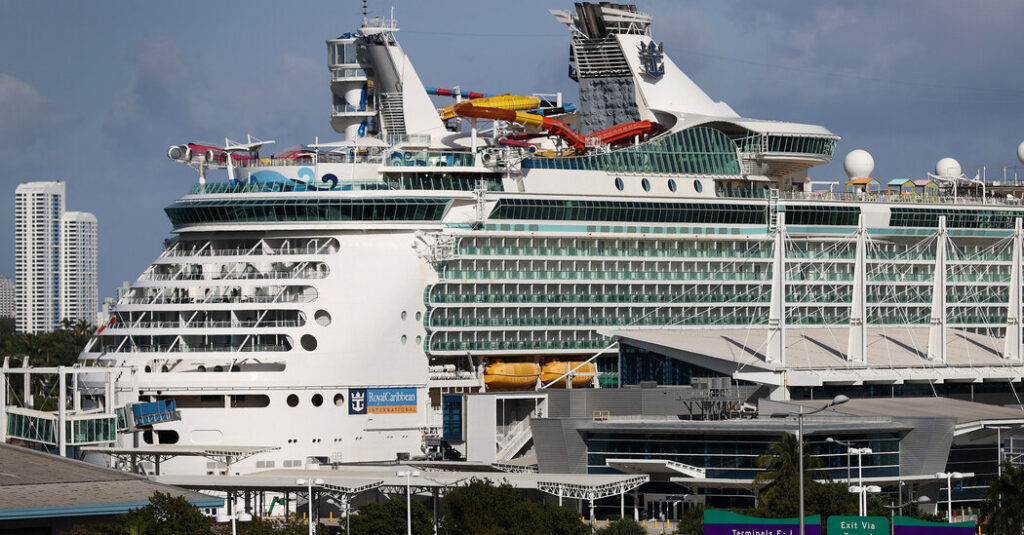
Mr. Virgil, who lived in Southern California, embarked on a cruise from Los Angeles to Ensenada, Mexico, aboard the Navigator of the Seas, a Royal Caribbean ship, on Dec. 13, 2024, with his fiancée, their then 7-year-old son and other family members. Within hours, as the ship sailed in the waters off the California coast, he was dead. The Los Angeles medical examiner ruled his death a homicide in April, and the Federal Bureau of Investigation, which handles most serious crimes on cruise ships, is investigating the case. No criminal charges have been brought.
Royal Caribbean said in a statement that the cruise line was “saddened by the passing of one of our guests,” but would not comment on pending litigation.
Mr. Virgil and his family boarded the Navigator of the Seas at around 10:30 a.m. on Dec. 13, according to the lawsuit. Their cabin was not yet ready, so the family was directed to a bar area to wait, the suit said. After waiting for “some time,” Ms. Aguilar’s lawyers said, Mr. Virgil’s son, who is autistic, grew impatient, and Ms. Aguilar took him to check on the cabin’s status.
Mr. Virgil stayed behind, and internal records from the cruise ship showed that over the course of the next few hours he was served 33 drinks, according to Kevin Haynes, Ms. Aguilar’s lawyer. Mr. Virgil had purchased the deluxe beverage package from Royal Caribbean, which allows guests to order unlimited drinks.
He later tried to find his room but got lost and became aggressive. According to the medical examiner’s report, based on a review of footage from cruise ship cameras and crew members’ body cameras, Mr. Virgil shouted profanities at other passengers and crew members and exhibited “violent and threatening behavior.”
At about 6 p.m., Mr. Virgil charged at crew members who were trying to subdue him and ended up splayed facedown on the floor of a stairwell, the report said. At least five crew members were “on top of him,” the medical examiner said, some of whom stood on his back, “possibly using their full body weight” for three minutes. Mr. Virgil stopped moving.
Crew members then moved Mr. Virgil onto his side and handcuffed him, and they could be heard on body camera footage saying that he had a pulse, the report said. At some point during the struggle, crew members injected Mr. Virgil with haloperidol, an antipsychotic medication used to treat schizophrenia, and “used multiple cans of pepper spray” to subdue him, according to the lawsuit. Mr. Virgil was then moved to the ship’s medical bay, where he was pronounced dead at 8:32 p.m.
The Los Angeles medical examiner found Mr. Virgil’s cause of death to be mechanical asphyxia combined with obesity, an enlarged heart and ethanol intoxication. The report said that haloperidol and etomidate, an anesthetic, were not detected in Mr. Virgil’s system, “despite reported administration.”
“The manner of death is homicide, as the use of force by others directly contributed to the physiologic conditions leading to death,” the report found. The F.B.I., which is investigating the death, did not respond to a request for comment.
This year, almost 38 million people are expected to take a cruise. Through the first three quarters of the year, 138 crimes were reported to the F.B.I., up from 130 during the same period last year and 130 during that time in 2023.
A vast majority of reported crimes on cruise ships were assaults, as homicides are rare. Homicides involving crew members and passengers are exceedingly uncommon, said Matt Shaffer, a personal injury lawyer not involved in this case who specializes in maritime disasters.
Ms. Aguilar’s federal lawsuit, filed in Miami, is being brought under the Death on the High Seas Act, which allows deaths caused by “wrongful act, neglect or default” that occur at sea beyond three miles from American shores to be tried on land in the United States. According to Mr. Shaffer, the act limits the amount of damages that can be awarded in these cases. They are usually directly related to the pain and suffering of the deceased and can be awarded only to those financially dependent on the person who died.
According to Mr. Haynes, Ms. Aguilar was informed about her fiancé’s death via a phone call from members of the ship staff. She asked to go back to Los Angeles but was refused, he said, as the ship was already en route to its single port of call, Ensenada, before it returned to Los Angeles on Dec. 16. As a result, Ms. Aguilar and her son remained on the ship for the duration of the voyage. Mr. Virgil’s body was kept in the ship’s morgue until it could be brought to the medical examiner, he said.
“All they were doing was trying to have a nice long weekend,” Mr. Haynes said. “And this is just something that should never happen.”
Follow New York Times Travel on Instagram and sign up for our Travel Dispatch newsletter to get expert tips on traveling smarter and inspiration for your next vacation. Dreaming up a future getaway or just armchair traveling? Check out our 52 Places to Go in 2025.
Claire Fahy reports on New York City and the surrounding area for The Times.
The post Cruise Passenger Was Served 33 Drinks Before Deadly Encounter With Crew, Suit Says appeared first on New York Times.