A lawsuit over a Virginia school board’s decision to restore the names of Confederate leaders to two schools is headed to trial this week, a case that’s set to determine whether the controversial names discriminate against Black students.
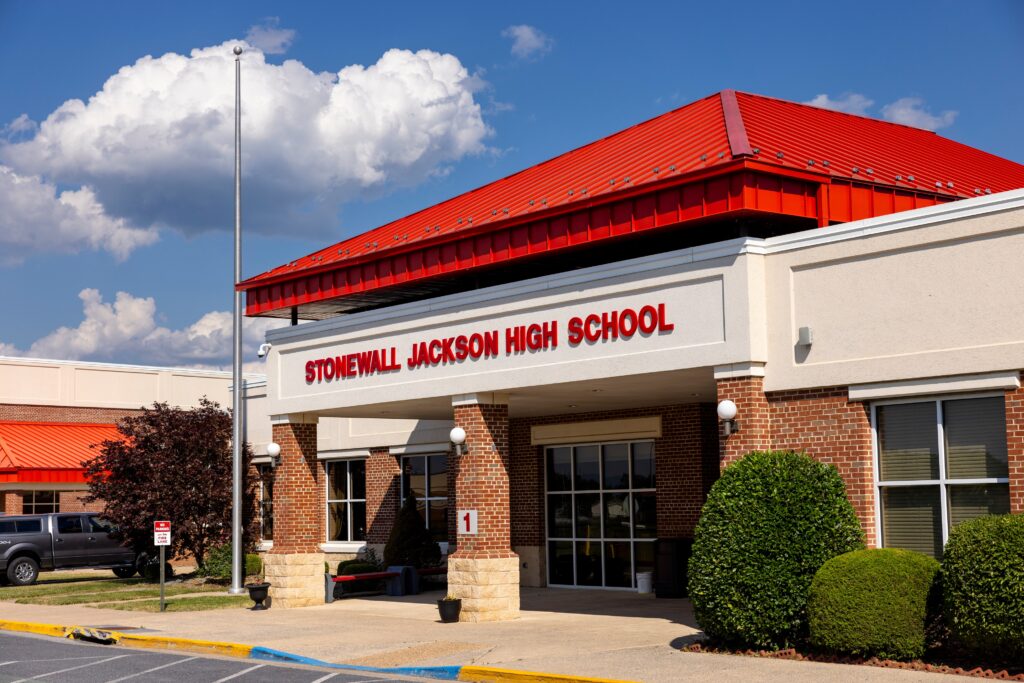
Five students and the Virginia NAACP sued the Shenandoah County School Board last year shortly after the board voted to reverse an earlier decision from 2020 to rename two schools. The vote last year reinstated the names Stonewall Jackson High School and Ashby Lee Elementary School — the latter named for Gen. Robert E. Lee and cavalry commander Turner Ashby Jr. — in a first-of-its-kind move that drew widespread attention and criticism.
The students’ lawsuit alleged that the Confederate names deny Black students equal access to educational opportunities and infringe on their freedom of expression by forcing students to represent a message of racism when they have to represent the name Stonewall, such as when wearing it on a sports jersey.
In September, U.S. District Judge Michael F. Urbanski ruled that the high school name violated the students’ First Amendment rights by making them “walking billboards” for Jackson. In a 71-page opinion, Urbanski wrote the school board could not compel students to carry a message they do not agree with — establishing that Jackson’s name was one that represented “racial exclusion.”
The remaining claims in the case, like whether the names violate a students’ right to a fair and equal education, will be put to the question in a bench trial set to begin Thursday in the U.S. District Court for the Western District of Virginia. The outcome of the trial will in part determine if the Confederate general monikers can remain on the schools.
The school district did not respond to a request for comment, but in court records has argued that the decision to reinstate the Confederate names was “motivated by nothing more than public will and its respect for the democratic process.”
The case in Shenandoah, the small valley county about an hour and half west of D.C., is believed to be the first instance nationwide of a school board restoring Confederate names that were removed during the widespread racial reckoning following the murder of George Floyd by Minneapolis police in 2020. At least one other school district in Texas has since followed suit.
The renaming — then the reversal — drew sharp debate in and attention to the county of about 44,000 that has deep ties to the Civil War with abundant battlefields and landmarks.
“This is actually a very unique case with a very established record of what happened,” said Li Reed, one of the attorneys representing the students. “The school board in this case made clear statements about acknowledging the racist history of the school naming and acknowledging the impact that those names have on Black students when it made the decision to take the names off. And again, in 2024, it made similar acknowledgments, when it made the decision to put the names back on.”
The Shenandoah board voted in 2020 to retire the Confederate names after receiving complaints from residents and school alumni as the biggerpush for changes across the country gave officials a sense of urgency to act. Part of the argument to remove the names came from the schools’ history. Stonewall Jackson opened in 1959 during the era of Massive Resistance to school integration and remained segregated until 1963.
Urbanski wrote in his opinion that “it is an undisputed fact that the name ‘Stonewall Jackson’ historically conveyed a message advocating the exclusion of Black students from public schools.”
When the high school’s name was changed from Stonewall Jackson to Mountain View and the elementary school Ashby Lee to Honey Run, backlash in the community was immediate. Some residents, particularly those in the southern end of the county, where the two schools are located, called the decision a mistake and said it did not reflect the opinion of the community. Others questioned the school board’s process to make the change.
The push to get the older names back came shortly after. In 2023, a local group called the Coalition for Better Schools supported three school board candidates who supported restoring the names. All won their seats, and the measure to reinstate the names passed in May 2024 in 5-1 vote.
The old Confederate signage had been stored on school grounds and, within weeks, the names were back on the buildings. Officials said at the time the work was paid for using private donations from the Coalition for Better Schools.
Shortly after, the students and NAACP filed their complaint.
“I think it’s really important to think about the perspective of the students and the young people in this case,” said Marja K. Plater, a lawyer for the plaintiffs. “Just try to imagine what it would feel like walking through the doors of a school that has a Confederate general name that they themselves have acknowledged their disagreement with, but yet they still have to go.”
The summary judgment ruling in September was a big victory for the plaintiffs, the attorneys said. Plater and Reed said that the trail next week will dive deeper into testimony from expert witnesses and the students themselves about their experiences with the school names.
“We hope that the court will hear our evidence and rule that these names are in fact discriminatory,” Plater said.
The post A fight over restoring Confederate names on schools heads to trial appeared first on Washington Post.