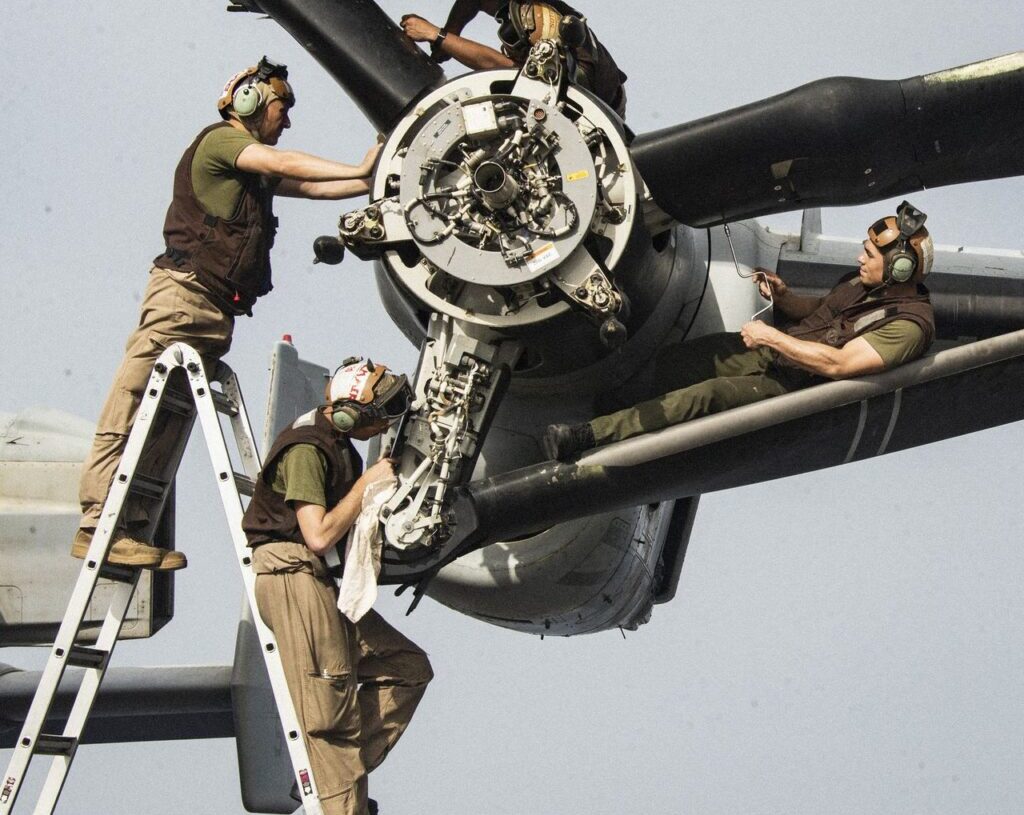
US lawmakers have removed provisions in the National Defense Authorization Act for 2026 that would have ensured military members’ right to repair their own equipment.
The final language of the NDAA was shared by the House Armed Services Committee on Sunday, after weeks of delays pushed the annual funding bill to the end of the year. Among a host of other language changes made as part of reconciling different versions of the legislation drafted by the Senate and the House of Representatives, two provisions focused on the right to repair—Section 836 of the Senate bill and Section 863 of the House bill—have both been removed. Also gone is Section 1832 of the House version of the bill, which repair advocates worried could have implemented a “data-as-a-service” relationship with defense contractors that would have forced the military to pay for subscription repair services.
As reported by WIRED in late November, defense contractor lobbying efforts seem to have worked to convince lawmakers who led the conference process, including Mike Rogers, a Republican from Alabama who is chair of the House Armed Services Committee, and ranking member Adam Smith of Washington, to pull the repair provisions, which enjoyed bipartisan support and was championed by the Trump administration, from the act.
The move is a blow to the broader right-to-repair movement, which advocates for policies that make it easier for device users, owners, or third parties to work on and repair devices without needing to get—or pay for—manufacturer approval. But while ensuring repair rights for service members did not make the final cut, neither did the competing effort to make the military dependent on repair-as-a-service subscription plans.
“For decades, the Pentagon has relied on a broken acquisition system that is routinely defended by career bureaucrats and corporate interests,” wrote senators Elizabeth Warren, the Massachusetts Democrat, and Tim Sheehy, a Republican of Montana, in a joint statement shared with WIRED. Both support right-to-repair efforts and were behind the language in the Senate version of the NDAA. “Military right to repair reforms are supported by the Trump White House, the Secretary of War, the Secretary of the Army, the Secretary of the Navy, entrepreneurs, small businesses, and our brave service members. The only ones against this common-sense reform are those taking advantage of a broken status quo at the expense of our warfighters and taxpayers,” they say.
The NDAA is an annual legislative act that has far-reaching implications for everything from military budgets to how states can implement AI regulations. The House Armed Services Committee released a summary of the 2026 NDAA language put out on Sunday titled “Implementing President Trump’s Peace Through Strength Agenda.” It focuses on “conservative wins” like president Donald Trump’s “efforts to end left-wing ideology, wokeism, and DEI in the military and restores focus on lethality, meritocracy, and accountability.”
The repair provisions may seem relatively minor compared to other aspects of the bill, but they’re of potentially outsized consequence, given the US military’s long history of innovating technologies that work their way into civilian life (the internet, for example). Repair advocates worry that limiting what service members can do in the field will limit the innovations that come from fixing something on the fly.
Kyle Wiens, repair advocate and CEO of iFixit, says moves like this are the result of a long era of the military operating like a commercial business, and becoming intertwined with for-profit defense contractors.
“The standard in the commercial marketplace was ‘no, manufacturers control everything and you’re locked out,’” Wiens says. “The military inherited all these anti-right-to-repair policies.”
The next step of the process for the NDAA is for lawmakers to vote on it one more time, then it will be sent to be signed by President Trump. Next year will bring the need for a new NDAA, though, and you can bet that repair advocates will be pushing to get their provisions in that one as well.
“I think we can get it done next year,” Wiens says. “Momentum is on our side.”
The post The Military Almost Got the Right to Repair. Lawmakers Just Took It Away appeared first on Wired.