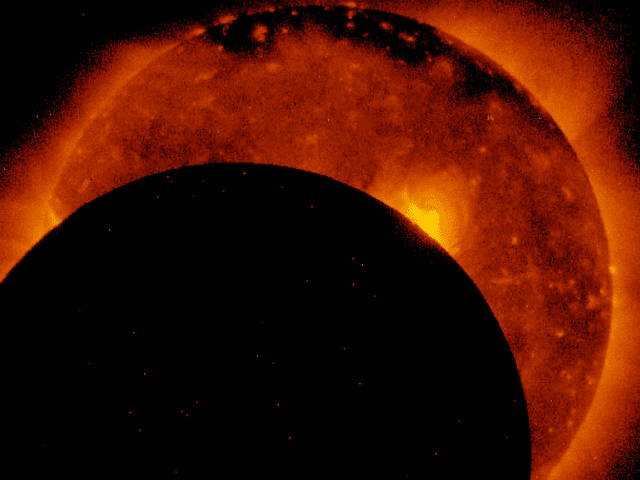
The duration of a total solar eclipse always varies. In April 2024, the eclipse that crossed North America lasted 4 minutes and 28 seconds. By contrast, the one that will reach Spain in August 2026 will only last 1 minute and 43 seconds. In less than two years, both will be put to shame by the longest conjunction of the century.
According to NASA’s solar eclipse calendar, the longest solar eclipse in 100 years will occur on August 2, 2027. Its total phase will last 6 minutes and 23 seconds. During that time, regions of Europe, North Africa, and the Middle East will be under the moon’s shadow.
According to the NASA map, the eclipse will begin in Morocco and southern Spain. It will then advance through Algeria, Tunisia, Libya, Egypt, and Saudi Arabia, culminating in Yemen and the coast of Somalia. Its maximum duration will be recorded in Egypt, specifically in Luxor and Aswan, famous for their funerary temples.
Despite rampant conspiracy theories around every solar eclipse, they don’t affect your health or have any physical impact on the planet. It is a natural and predictable astronomical phenomenon, the result of the interaction between the sun, the moon and the Earth. Moreover, solar eclipses are not exclusive to our planet: Mars and the moon also experience them, as we were able to see recently.
There are more total solar eclipses that will have similar durations, but all involve decades of waiting. According to NASA calculations, these are other solar eclipses of high duration:
- 2045, August 12: 6 minutes, 6 seconds
- 2060, April 30: 5 minutes, 12 seconds
- 2063, August 24: 5 minutes, 49 seconds
- 2078, May 11: 5 minutes, 40 seconds
- 2081, September 3: 5 minutes, 33 seconds
- 2096, May 22: 6 minutes, 6 seconds
This story originally appeared on WIRED en Español and has been translated from Spanish.
The post The Longest Solar Eclipse for 100 Years Is Coming. Don’t Miss It appeared first on Wired.