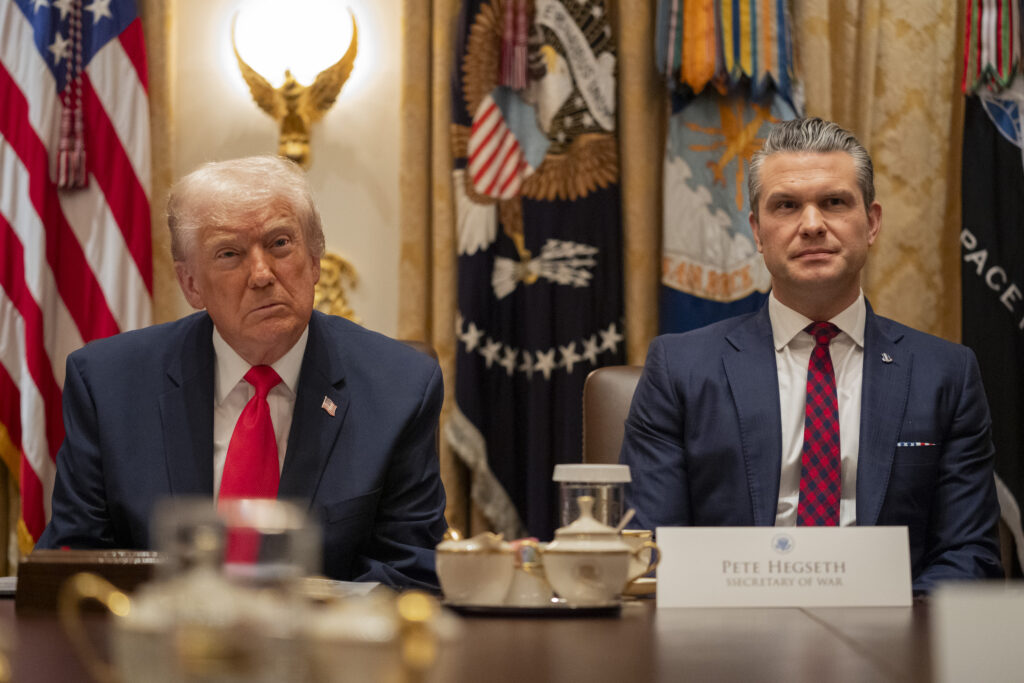
George F. Will’s Dec. 3 op-ed, “A nauseating moral slum of an administration,” raised serious concerns about the Trump administration’s handling of Venezuela and Ukraine. Those allegations deserve thorough investigation and accountability where warranted.
But Will’s sweeping denunciation of the Trump administration as a “moral slum,” and his near-reflexive contempt for anyone who serves in it, overshot the mark.
Condemning an entire administration — and by implication the many men and women in uniform and in civilian posts who are doing their duty — risks turning legitimate criticism into blanket despair.
I have not given up on this administration, nor on the military’s officers at headquarters and in the field who daily navigate impossible choices. The American constitutional system has weathered far worse storms than this one. Congress, the courts, inspectors general, the press and the voters are all part of a self-correcting mechanism that, over time, tends to restore balance.
By all means, scrutinize decisions, demand facts and insist on law and ethics. But we should be careful not to declare our institutions irredeemably rotten while those institutions are still at work testing the truth of these charges.
Stephen M. Flatow, Long Branch, New Jersey
Will’s way with words
I have read George F. Will’s commentary for many decades and have often disagreed with him. Even so, I have never ceased admiring his fluent and penetrating use of the English language. But on Dec. 3, he hit it out of the park.
His description of a “nauseating moral slum” was biting without resorting to profanity — as a minister, I could even say those words from the pulpit. It captured how many of us feel (nauseated); it captured why (moral repugnance); and it offered a scathing description of our political landscape (a slum).
I’ll keep that three-word phrase close at hand whenever my attention is seized by another outrage caused by this administration.
Susan Flanders, Washington
HSAs are an imperfect fix
Regarding the Nov. 27 news article “Health savings accounts aren’t the fix the GOP hopes for, economists say”:
As health premiums spike, the GOP is considering diverting federal subsidies that currently help people buy Affordable Care Act insurance into individuals’ health savings accounts. But this plan might cause further turmoil in premiums. I thought the purpose of insurance was to spread risk; the data shows that the healthiest 50 percent of us use only about 3 percent of all health spending, but the sickest 5 percent use about 50 percent of all health dollars. If a lot of healthy people quit sending money to the insurance pool and instead put their money in private accounts, how will the insurance companies cover the horrific costs of the sickest among us?
Bill Vaughan, Falls Church
Various proposed health care reforms envision expanding health savings accounts, in part to reduce reliance on employer-sponsored health insurance. We need reform, but expanded HSAs would take us in the wrong direction. Instead of putting consumers in charge, HSAs saddle the consumer with time-consuming paperwork. They also benefit middlemen who administer them.
In my experience, using my HSA was rarely a matter of simply swiping my card at the point of service. I first had to understand what my insurance would cover, which usually required waiting some weeks until my Explanation of Benefits was available. Only then could I submit my HSA claim. Plus, I had to keep all receipts related to each claim for three years in case of an IRS audit.
This recordkeeping is burdensome for someone in good health. It could be overwhelming for someone dealing with serious health problems. I imagine many consumers don’t have the ability or patience to handle this paperwork, so they either don’t file claims, or they submit inaccurate claims.
HSAs are supposedly beneficial because consumers can invest the funds and grow their accounts to help cover future health care costs. I invested my funds, but also had to keep a careful eye on when to transfer some back into my cash account to cover new expenses. I imagine many people do not feel comfortable managing this back and forth, so they let their money sit without investing it, to the HSA administrator’s benefit. The HSA administrator also charges an annual fee for each account ($50 in my case).
In short, HSAs don’t put the consumer in the driver’s seat. Congress should not take us down this troublesome path, adding busywork to our lives. As we design health care solutions, we must always seek to reduce paperwork for patients, providers, middlemen and the government.
Sally Cameron, North Bethesda
Post Opinions wants to know: Have you encountered a remarkable act of forgiveness? How did you find out that they were downplaying their personal history? Share your response, and it might be published in the letters to the editor section. wapo.st/forgiveness
The post Stop the reflexive contempt for the Trump administration appeared first on Washington Post.