This personal reflection is part of a series called Turning Points, in which writers explore what critical moments from this year might mean for the year ahead. You can read more by visiting the Turning Points series page.
Turning Point: Millions of protesters attended “No Kings” rallies across the United States in June and October over concerns about the strengthening of presidential powers and creeping autocracy under President Donald J. Trump.
In 1398, Richard II, the king of England, wrote a ridiculous letter to Albert I, the duke of Bavaria. Richard was in a good mood. He had ruled England for more than 20 years, and though he had long been frustrated by political attempts to soften his authoritarian instincts, in recent months he had freed his arms.
For years, he claimed, he had suffered injustices at the hands of his enemies “whose plotting is notoriously more destructive than any plague.” (The most recent plague had killed up to 60 percent of England’s population, but no one was fact-checking.) Now Richard had struck back by exiling or executing anyone who had ever hurt his feelings. “By the just judgment of God our avenging severity has been meted out to the destruction and ruin of their persons,” he wrote in the letter. He claimed to have brought his realm “a peace which, by the grace of God, may last forever.”
Richard was given to hyperbole, but even by his standards, “forever” was a bit optimistic. Within 18 months, he had been driven from his throne and was dead.
In the long run of British kings and queens, Richard stands out as one of the worst. He was thin-skinned, bombastic, paranoid, vengeful, given to exaggeration and lying, contemptuous of political norms, inept, vain, lazy and spiteful. He could discern no difference between his own whims and the duties of high office, and he regarded most criticism as treason. He also surrounded himself with second-rate toadies who told him what he wanted to hear, and he rewarded them for their undiscerning loyalty.
He was, in short, an advertisement for the pitfalls of medieval monarchy: a political system which, even when constrained by institutions, constitutions, checks and balances, still awarded enormous power to a single person and his extended network of family, friends and clients.
In the right hands, monarchy could be an effective way of organizing society.
A formidable body of political theory dating back to Aristotle held that a king who defended his realm’s borders, upheld the law, and governed in consultation with his people for the common good was the key to a well-functioning state. Get you a king who was politically savvy, militarily capable, intelligent, thoughtful, charismatic, pious, virtuous and lucky — a king like England’s Edward III or Henry V — and the good times would roll. As a quasi-divine figure, with an absolute (usually dynastic) right to office, a king could serve as a mythic champion for his people: a figure in whom a realm could root its patriotic pride and civic obedience.
Yet when the crown landed on the wrong head, as the lottery of genetics meant it sometimes did, the consequences were horrible. A bad king might disregard political norms, abuse his power, steal, terrorize his subjects, appoint corrupt advisers, bypass institutions or go mad.
These were the ingredients of monarchy’s shadow-self: tyranny. And once a king turned tyrant, the damage could easily spread. A tyrant could degrade the crown so much that the health of the body politic at large might fail. But removing him could cause even more damage to a polity than leaving him in place.
Monarchy strikes us today as a strange, archaic way to run a country — a relic of the Middle Ages best left there, along with the bubonic plague. Yet for most of human history, it was the default mode of human government. Excepting the noble experiments of the Athenian democracy (the sixth century to the third century B.C.) and the Roman Republic (the sixth century to the first century B.C.), the turn against kingship began in earnest only about two centuries ago with the French and American revolutions. And even then, monarchy has endured: denuded, defanged, but still there. At the dawn of the 20th century, there were about 160 ruling monarchies in the world. Today, 43 nations still have a king or queen as head of state.
Or could there be, in practice, 44?
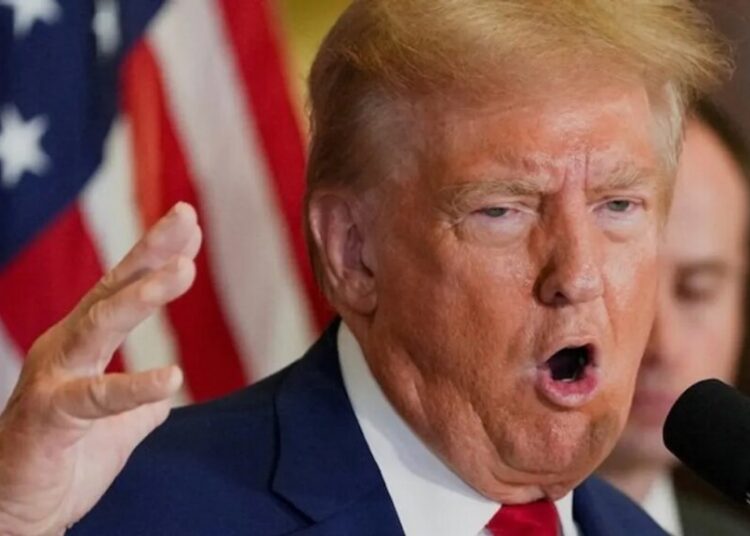
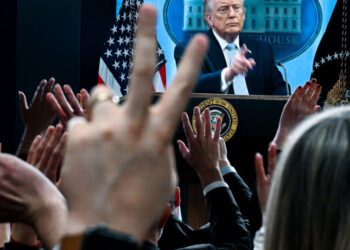
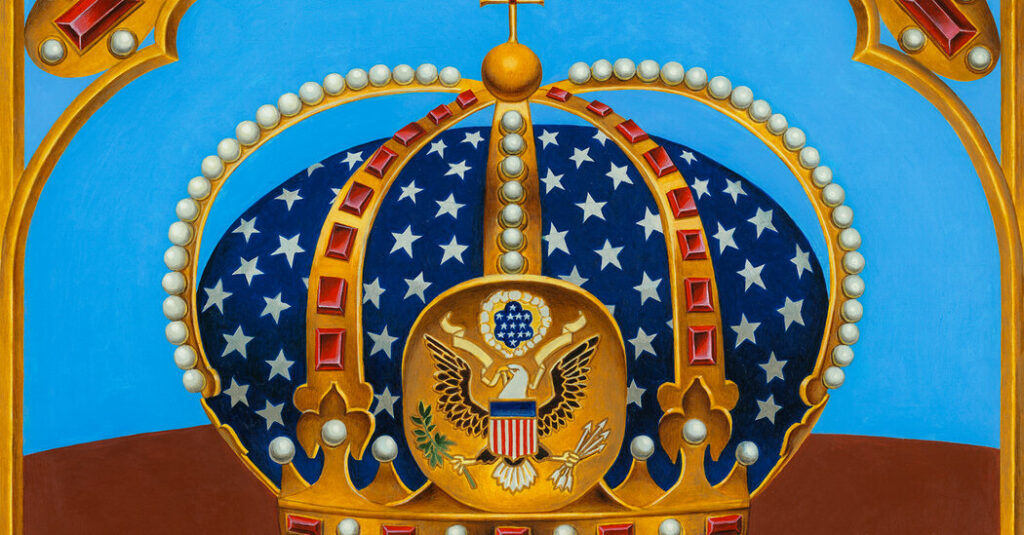
That is the contention of the No Kings movement, which launched in June 2025 with a series of protests to coincide with President Donald Trump’s 79th birthday. The organizers of the No Kings protests argue that Trump’s second presidency amounts to a series of authoritarian power grabs in which the goal is to institute in the United States a form of monarchy. They frame the Trump administration’s pursuit of illegal immigrants, cuts to federal spending, tax breaks for the super-wealthy and alleged moves to curtail fair elections as kingship by any other name. Their mission statement reads: “this country does not belong to kings, dictators, or tyrants. It belongs to We the People … No thrones. No crowns. No kings.”
It would be easy to write this off as alarmist bluster if it was not for the fact that Trump himself has encouraged, trollingly, this very comparison. In February, after he killed an attempt to introduce congestion traffic fees in New York City, the White House’s X account posted a mocked-up Time magazine cover depicting Trump wearing a crown, accompanied by the caption “Long Live the King.” A few days earlier, Trump posted a bromide on Truth Social, reading, “He who saves his Country does not violate any Law.”
The president’s personal fascination with monarchy earned him an unusual second state visit to Britain, where in September he was hosted by King Charles III at a banquet in Windsor Castle. Meanwhile, back home, the Oval Office has had something of a royal makeover, with gilt decorations gummed to every surface. The East Wing of the White House has been demolished to accommodate a new ballroom fit for a Russian czar. If there is a hint in this of Versailles, the palace commissioned by Louis XIV, France’s “Sun King,” that is fitting.
Louis is the king supposed to have said, “L’Etat, c’est moi.” During Trump’s first term as president, he asserted that under Article 2 of the United States Constitution, “I have the right to do whatever I want as president.”
The tone and speed of the Trumpian turn toward what his detractors would call dictatorship, monarchy or tyranny was not unpredictable.
Long before the 2024 election, commentators on the American right, including the academic Hans-Hermann Hoppe and the blogger Curtis Yarvin, were arguing for the replacement of American democracy with a form of executive monarchy. Both found a receptive audience for their ideas in the tech-adjacent, libertarian world of “red-pill” politics, where there has been a growing feeling that the greatest barrier to social and economic progress is the tiresome existence of democratic institutions. That view has been best summed up by the billionaire entrepreneur Peter Thiel, who once wrote, “I no longer believe that freedom and democracy are compatible.”
Sentiments like these, which only a few years ago would have been regarded as profoundly un-American, have lost at least some of their shock value. And perhaps that is understandable. The world’s other superpowers past and present — Russia and China — have for years been ruled by septuagenarian strongmen, wielding power indefinitely, and seeming increasingly to embody their realm.
And though, since World War II, that has not been the Western way, there is a growing sense of unease across the free world of the capacity for postwar institutions to deal with post-Covid problems. Celebrity-fixated societies are coming to regard pillars of the postwar society — the press, the judiciary, Congress — as having been captured by remote elites, incapable of delivering change, or deliberately obstructive to it. During Elon Musk’s short period as Trump’s vizier for government efficiency, he advanced his theory that democracy was structurally hampered by the existence of a large, permanent bureaucracy that blocked meaningful change, regardless of the wishes of the electorate.
The solution to this — the guiding tactic of the Trump administration — has been to attempt to rule by monarchical-style decree, issuing blizzards of executive orders, bypassing or steamrolling opposition from other branches of government, courting obeisance from super-wealthy oligarchs as a condition of their continued prosperity and relying on a cabinet of ministers chosen not for their capacity for independent thought, but either for their family connection to the president himself, or for their doggish loyalty, repeatedly and fulsomely expressed.
Does that make Trump a medieval king in all but name? For all that he may sound like a latter day Richard II, there is one crucial objection. In 1787, after George III had been run out of the colonies and a new United States was being written into existence, Alexander Hamilton recommended to the Constitutional Convention that the president should be elected, but hold power for life. This would have been as close a thing as imaginable to an American monarchy.
But Hamilton was defeated, and the presidency was limited to four-year terms, which, since the passing of the 22nd Amendment, can legally be held just twice. Trump’s flirtation with challenging the Constitution — and the outright claims by Steve Bannon, a podcaster and a former adviser to the president, that Trump will run in 2028 — are so far no more than bluster.
That matters. If there is one feature that sets medieval kingship apart from all other forms of rule, it is permanence and, usually, heritability. The medieval rationale behind accepting a supreme ruler who held power until the day he or she died, and who then passed on the throne to a direct heir, was to remove any question about where public authority came from and where it was going. Around the timeless figure of king and royal line, a stable polity could be built.
Whatever one thinks of the Trump presidency and its policies, this is a line that has yet to be approached, let alone crossed. The real implementation of an American monarchy would be to install not just King Donald I, but a Trump family dynasty. That would be a revolution to match, or even exceed, that of the 18th century.
For all the noise and protest, we are still some ways away from a true return of the king.
Dan Jones is a British historian, writer and television presenter. He is the author of “Powers and Thrones: A New History of the Middle Ages” and “Henry V: The Astonishing Rise of England’s Greatest Warrior King.” He also hosts the podcast “This Is History With Dan Jones.”
The post Return of the King? Not Quite. appeared first on New York Times.