With a vote looming later this week on a Democratic plan to extend federal health insurance subsidies, Republican senators who are toiling to coalesce around an alternative have put forward counterproposals that face long odds in Congress.
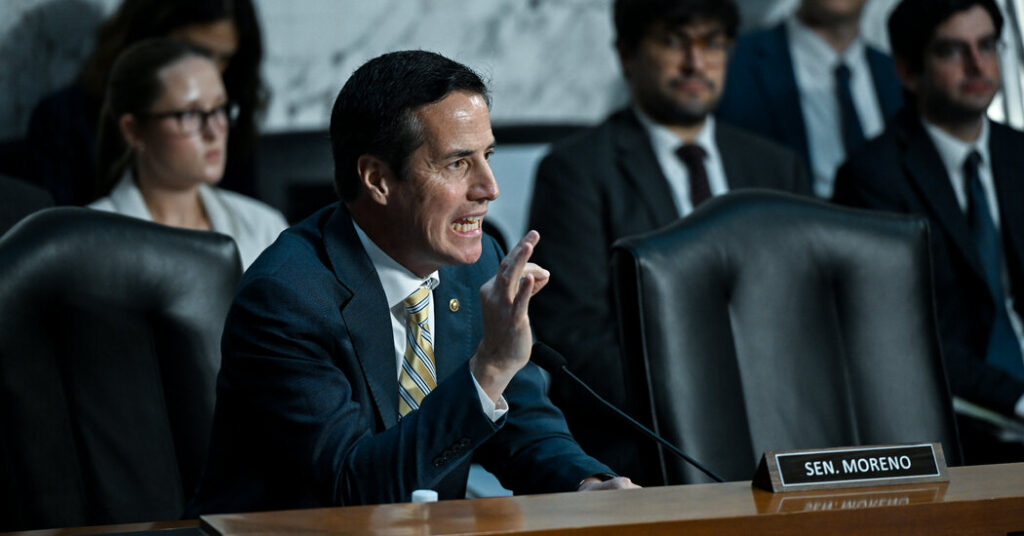
Senators Susan Collins of Maine and Bernie Moreno of Ohio, both Republicans, have teamed up on a plan that would extend Affordable Care Act tax breaks for two years — one less than the three-year Democratic plan — while scaling them back by establishing new income limits and requiring recipients to pay at least a $25 minimum monthly premium. Its backers say the legislation will avert huge premium jumps while cutting into the fraud that they say has driven up the costs of the program.
“This bill would help prevent unaffordable increases in health insurance premium costs for many families by extending the Affordable Care Act enhanced premium tax credits for two years and putting a reasonable income cap on these subsidies to ensure they are going to the individuals who need them,” said Ms. Collins.
Senators Bill Cassidy of Louisiana and Mike Crapo of Idaho, the Republican chairmen of the health and finance committees, respectively, have another approach under consideration that would send money for the premiums directly to consumers, rather than insurance companies.
It would funnel the funds through tax-free health savings accounts, an approach that Republicans have long embraced, with limited success. The legislation would also expand eligibility for high-deductible catastrophic plans and cut federal Medicaid funding to states that provide coverage to undocumented immigrants.
“Instead of 100 percent of this money going to insurance companies, who take 20 percent of it, we give 100 percent, almost, to the patient, to our fellow American, in an account that she controls and use as she wishes,” Mr. Cassidy said. “Let’s give power to the patient, not profit to the insurance company. Let’s make health care affordable again.”
A progressive health care group immediately decried the bill as an “utter joke.”
“Republicans are proving once again how unserious they are,” said Brad Woodhouse, president of the group, Protect Our Care.
Speaker Mike Johnson has also said that House Republicans may come forward with their own health care plan, and other Republican proposals could surface, as well. But so far, the party has yet to unify around any one plan.
Republicans are rushing to come up with a counter to the Democratic legislation, which would extend the subsidies at the center of the fight that shut down much of the government for 43 days. In agreeing to reopen the government, Democrats received a commitment from Senator John Thune, Republican of South Dakota and the majority leader, to allow them to bring a proposal to the floor this month to extend the tax breaks currently slated to expire at the end of the year.
Lawmakers engaged in bipartisan talks to try to come up with a consensus plan that could attract the 60 votes required to overcome a Senate filibuster, but none emerged. A bipartisan group in the House last week proposed scaling back the subsidies and extending them for two years, but that proposal has little chance of being considered, given that it is opposed by most Republicans.
Senator Chuck Schumer, Democrat of New York and the minority leader, said last week that Democrats would now forge ahead with a three-year extension without any of the changes sought by Republicans to rein in costs.
“It’s going to be one of the most important votes we take,” Mr. Schumer said, “because it’s showing who is on the side of the American people and lowering their health care costs and who is on the side of the big special interests and is going to raise health care costs.”
The plan has deep Democratic support and could draw votes from a handful of Republicans. But most G.O.P. lawmakers, who have long railed against the Affordable Care Act, oppose it.
Democrats say the best solution at the moment is to ease the threat of premium increases by extending the tax breaks for three years while pursuing longer-term solutions. They say that the emerging Republican plans are inadequate and will lead to more Americans going without health care coverage.
Republicans say that they are worried about the impact of the rising premiums and are willing to entertain any extension tied to other changes in the program, but that Democrats have chosen to get behind legislation that they know will fail in an effort to create a winning political issue for the midterm elections. They also say that the problem was created by Democrats who beefed up subsidies for the Affordable Care Act during the pandemic and established a cutoff date on their own.
“I refuse to let the American people pay the price for the Democrats’ incompetence,” said Mr. Moreno, the Ohio Republican. “I am willing to work with anyone to finally bring down costs for all Americans, and hope my colleagues across the aisle will commit to doing the same.”
Carl Hulse is the chief Washington correspondent for The Times, primarily writing about Congress and national political races and issues. He has nearly four decades of experience reporting in the nation’s capital.
The post G.O.P. Senators Push Health Care Options as Vote Looms appeared first on New York Times.