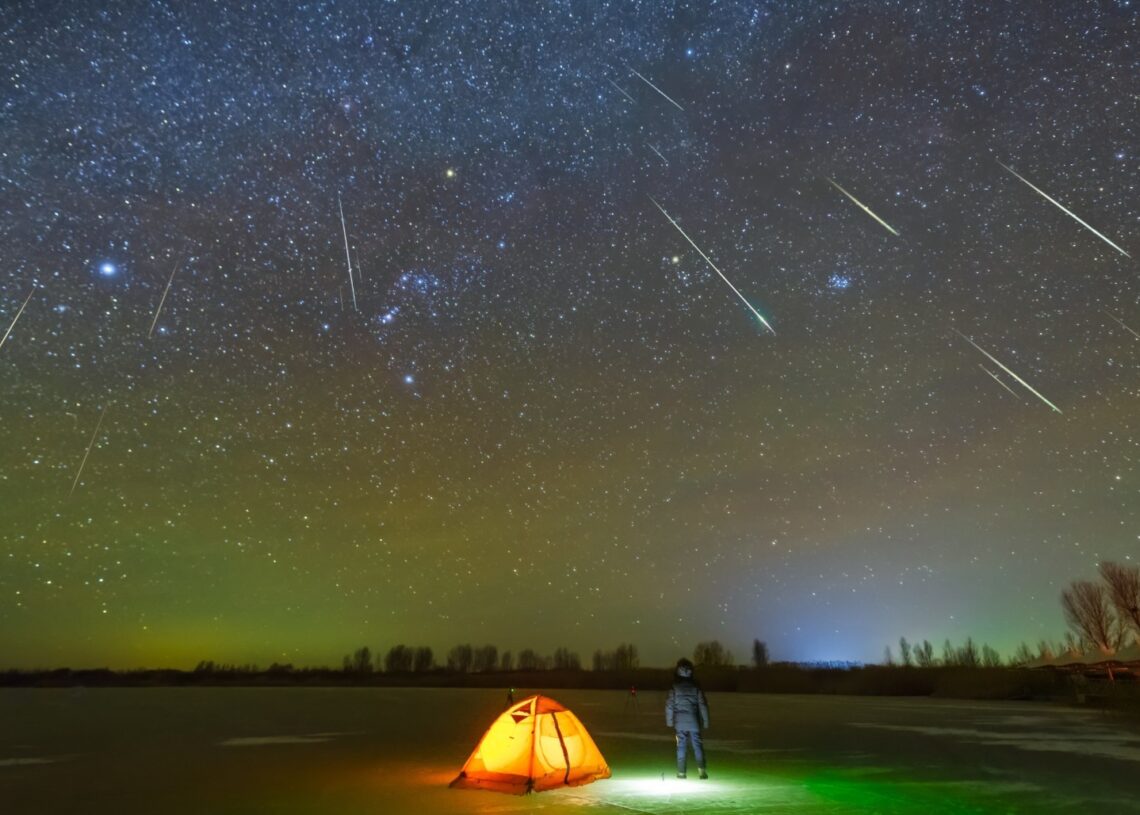
There aren’t many yearly traditions that still feel magical, but the Geminids are one of them. Every December, the sky basically throws free glitter at anyone willing to step outside and look up. This year, the meteor shower is gearing up for its strongest performance, and conditions are lining up almost perfectly for people who forgot how fun it is to feel small under a giant sky.
The Geminids kick off on Dec. 4 and linger for about two weeks, but the real payoff comes the night of Dec. 13 into the early hours of Dec. 14. Live Science reports that as many as 150 meteors per hour could streak overhead during the peak. The Northern Hemisphere gets the best seat, lucky for anyone who wants a cosmic show that costs zero dollars and requires nothing more than warm socks.
What makes 2025 such a standout year is the sky itself. A waning crescent moon, barely 28 percent illuminated, won’t rise until around 2:30 a.m. local time. That gives hours of darkness before moonlight begins washing out the streaks. The Geminids’ radiant point—near the bright stars Castor and Pollux in Gemini—climbs higher through the night, so the later you stay up, the better the odds. The American Meteor Society says anytime after 10 p.m. is fair game.
How to Watch the Year’s Best Meteor Shower: Geminids 2025
The Geminids are also weirdly special in the meteor world. Most showers come from icy comets, but these sparks originate from 3200 Phaethon, a rocky asteroid about 3.6 miles wide. That dense makeup gives the meteors their slower movement and the bright colors people love. BBC notes that elements like sodium and calcium help paint those streaks yellow, green, or even violet if you get lucky.
If you want the best view, find a spot far from streetlights and let your eyes adjust for about twenty minutes. Skip the phone screen unless you’re using a red-light filter. You don’t have to stare directly at Gemini, either. Meteors can slice across any part of the sky. No telescope needed.
After the Geminids peak, the shower fades quickly but stays active through Dec. 17. On the same night, the Ursids begin and will peak Dec. 21 to 22 with around ten meteors per hour. They’re not as active, but the new moon that week will give them dark skies.
Two showers in one stretch is a solid way to close the year. If the universe is offering free entertainment, you might as well go outside and watch the magic. Personally, I think that’s what life is about.
The post Geminids 2025: How to Watch the Year’s Best Meteor Shower (And the One That Follows) appeared first on VICE.