In 2020, Tamara Kotevska’s “Honeyland” became the first film ever nominated in both the Best International Feature Film and Best Documentary Feature categories, leading the way for “Collective” to duplicate the feat the following year and “Flee” to add Best Animated Feature in 2022.
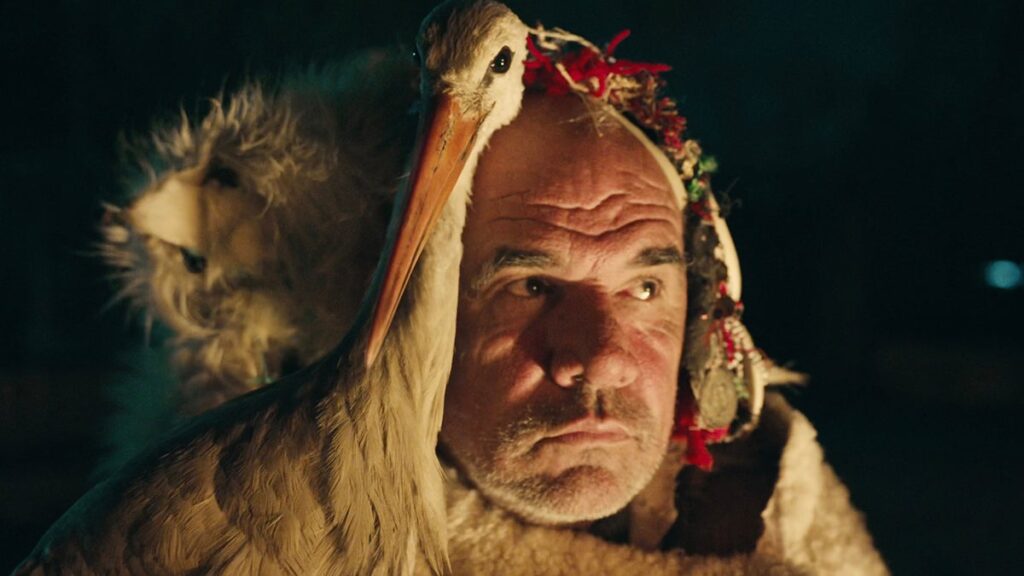
Her new film, one of several that have a chance to repeat the double nomination this year, mixes an ancient North Macedonian legend of a boy who is turned into a stork with the story of a family of farmers who are split apart when climate change and governmental decisions force all but the patriarch to leave the country in search of better jobs. The two stories, which are shot using different techniques and styles, merge when the farmer whose entire family has left the country adopts an injured stork and nurses it back to health.
The film was named the best documentary of 2025 at the International Documentary Association’s IDA Documentary Awards.
What was the genesis of this film?
The storks actually brought us on this journey. We were doing research about storks, and we found out about how many storks live and feed on landfills today. I wanted to show the difference between how they feed on the landfill today and how they used to feed for centuries, which is from the agricultural lands of the people. And while we were shooting the storks on the lands, we got to know a lot of farmers and I saw the similarity between the storks and the farmers.
By following the mirror effect, it brought me to the vicious cycle of why storks are not eating from lands anymore, because there are fewer farmers. Many farmers have had to sell their land and leave the country. It was a great discovery for me to find out the connection between the political situation and the environmental situation. It allowed us to show how the species are interconnected and how everything that we do as humans, we think it only affects the human community, but every political and social decision is actually affecting a lot more circles around us.
I thought that the film would end with storks and people in the landfill. But then this guy captured the stork, and it showed me a whole other act of the story.
The style of the film changes quite a bit between the footage of the farmers and the footage of storks used to illustrate the folktale. What did you want to achieve with the different styles of filmmaking?
The storks required a certain style of filming. Because of logistics, it couldn’t be done any other way but with drones, which creates a different feeling for the audience. For the farmers, we used more static shots, more zoom lenses — a more documentary and observational approach. And in editing, we decided to put music in the sequences with storks and leave out music in the human world, to show the magic of the stork world and the magic they bring in the human world by being present there.
Did the storks have to get used to your filming?
Yes, they did. We actually followed about three generations of storks. So the youngest ones, the babies that were born when we were filming, they were the ones that got used to the cameras.
The music in the film incorporates Macedonian folk instruments and melodies, doesn’t it?
The music is by Joe Wilson Davies and Hun OukPark, who are based in L.A. I met them online and we had long sessions of talking and discovering the true nature of this world that we want to build. Having in mind that the storks are aerial creatures and clapping creatures, we decided that the theme of the storks should use blowing and percussion instruments. And then they went online and ordered a lot of instruments from that area of the Balkans, instruments like the kaval and the okarina and some wooden drums, and they started doing a lot of experimenting with them.
We also got inspiration from folk songs from Macedonia, one of which we actually use as a theme for the human world. It’s called “Ne Si Go Prodavaj Koljo Cifilkot,” which means, “Nikola, don’t sell your land.” (Laughs) It’s a very old love song, it has nothing to do with the environment. It actually means “don’t sell your land for a woman.” But we use the melody from it in the scenes from the human world.
Both “Honeyland” and this film explored the way the situation in the world today is harming both humans and nature. Is your impulse always to focus on that?
Yes, absolutely. I’ve always been drawn to this idea. I’m really attracted by recycling myths that are about to die out and showing the world that these myths and this ancestor stories have value and importance today. The ancestors were holding onto knowledge for survival, and they came to this knowledge through a lot of experience. So myth is not something we should forget and bury together with our ancestors. We need to find different forms to bring them back to life.
At the end of the film, a line in the credits says, “No AI was used.” Why did you want to make that point?
Because at the time when we were shooting this film, (the text-to-video app) Sora came out, which made the first really realistic images of birds. And we were afraid of this. We thought we were making this film for nothing, that nobody will believe what we actually captured. We really fight for true documentaries and true films made by human craft, so we wanted to make this as a movement that other filmmakers could do as well in the future. I think AI is very scary because it puts the film in an entertainment box rather than a social engagement and message. So I’m highly against it.
A version of this story first appeared in the Below-the-Line/Documentaries/International issue of TheWrap’s awards magazine. Read more from the issue here.
The post Can Storks Be Political? Award-Winning Doc ‘The Tale of Silyan’ Says Yes appeared first on TheWrap.