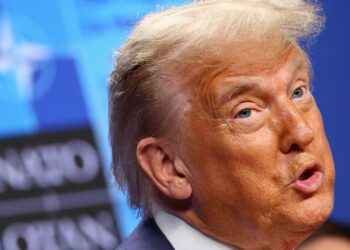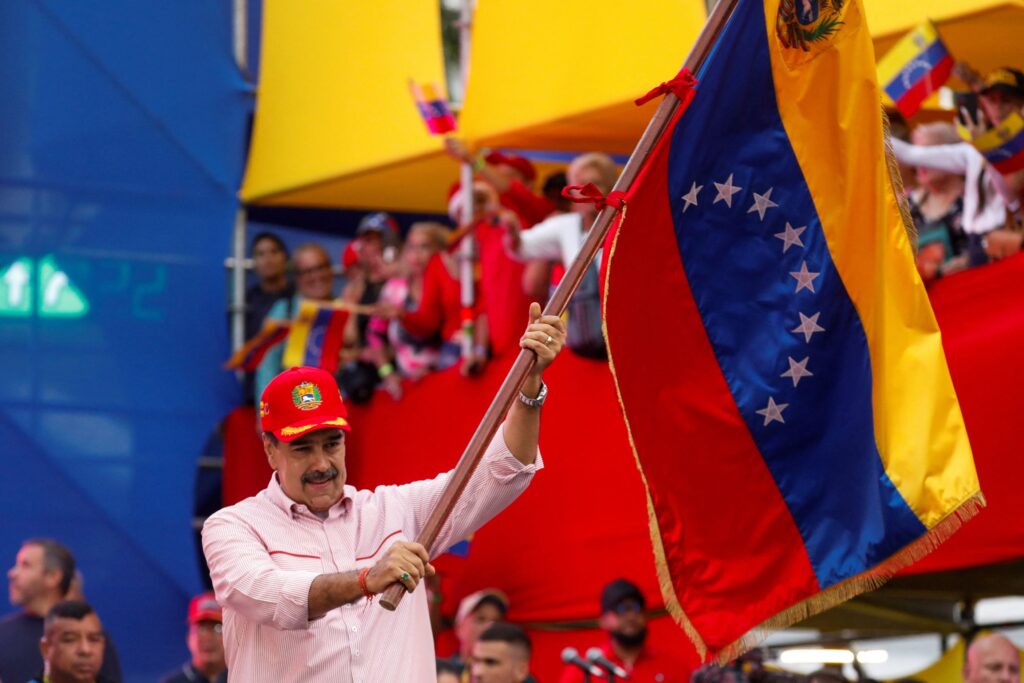
President Donald Trump’s escalating military threats against Venezuela have split some of his biggest boosters in South Florida — who are eager for regime change — from a wider group of “America First” Republicans who loathe foreign intervention.
The growing rift has significant short- and long-term political stakes for Trump as his administration weighs how far it will go to push Venezuelan strongman Nicolás Maduro from power. It could also impact whether the GOP’s dramatic gains with Hispanic voters in South Florida in recent election cycles endure.
In interviews, several of Trump’s biggest Hispanic backers in Miami — home to many who fled leftist autocratic regimes in Venezuela, Cuba and other parts of Latin America — argued that Maduro and his government pose a threat, and Trump should use military force if necessary to drive him out. Ousting him, they said, would not only delight a key bloc of supporters but also further the broader MAGA movement’s goals of reducing drug trafficking and migration, and protecting the United States from adversaries.
“When you think of America First, you need to think of national security first, and the Venezuelan regime is a threat to our national security,” said Lourdes Ubieta, a Venezuelan-born conservative radio host in Miami. “There’s a lot of ignorance regarding the Venezuela issue.”
The U.S. government does not recognize Maduro, a staunch ally of Cuba’s communist regime, as Venezuela’s legitimate leader. He began a third term as president in January after an election that was widely considered fraudulent.
The Trump administration has said it is targeting Venezuela as part of a crackdown on drug trafficking, though the country is not one of the main suppliers of illicit drugs to the United States. Most fentanyl in the United States comes from Mexico, and most cocaine from Colombia. Very little of Venezuela’s drug production flows into U.S. borders, current and former U.S. officials say.
The Trump administration has authorized boat strikes off the coast of Venezuela — which it says are aimed at stopping illegal drugs — that have killed more than 80 people since early September. In recent weeks, the U.S. military has ramped up its presence off the coast of Venezuela, and Trump has approved the CIA to conduct covert operations in the South American nation. And while Trump and Maduro recently spoke by phone, the U.S. president has publicly signaled the potential for land strikes.
Maduro has accused the United States of using a fight against drug trafficking as a pretext to seek regime change and seize Venezuelan oil. Venezuela has the world’s largest oil reserves.
Secretary of State Marco Rubio, who began his political career as a West Miami city commissioner and whose parents came from Cuba, is playing a central role in Trump’s deliberations on Venezuela. Rubio forged many of his foreign policy principles around his opposition to the leftist governments of Cuba and Venezuela, which have grown closer to each other in recent decades as the United States has worked to isolate them.
Ubieta said she doesn’t want to see U.S. troops sent to Venezuela, noting that she has a cousin in the U.S. Army and a son attending a military school. But she would support it as a last resort if it meant ousting Maduro.
“If to free Venezuela and for the best interest of the national security of the U.S., you need to do it, you go for it,” Ubieta said.
The administration has not telegraphed any plans to send ground troops and could opt to attack Venezuela through airstrikes. But that kind of talk alarms some in Trump’s base, who worry he has strayed from his promise to keep the United States out of foreign conflicts.
“The most important pillar of America First is nonintervention. That’s the glue that holds the coalition together,” Republican strategist Steve Cortes said.
Trump’s decision to bomb nuclear sites in Iran in June triggered similar pushback from MAGA influencers. But criticism faded when the strikes did not spark a broader conflict.
Cortes argued that the United States has more interest in Latin America than in Europe or the Middle East, but not enough to justify Trump’s sustained focus on Maduro’s ouster.
“While Maduro creates instability for America, for all of the Americas, by no means is this some imminent threat that we have to take serious, tangible action to depose him,” Cortes said.
Others in the MAGA coalition argue that the issue has already become a distraction from the domestic ills Trump promised to cure — and worry it could hurt Republicans in the 2026 midterms.
“Fix health insurance. Not regime change in Venezuela,” Rep. Marjorie Taylor Greene (R-Georgia), who has become a fierce critic of Trump, wrote on X this week.
Sen. Rand Paul (R-Kentucky) predicted in a podcast interview that Trump’s “movement will dissolve” if he carries out an invasion. Paul has been one of the GOP’s most vocal critics of the administration’s strikes on alleged drug boats, arguing that they lack justification and risk executing innocent people.
Ubieta has sought to engage some of these critics directly. After Laura Loomer, a right-wing influencer, warned that regime change would end in costly failure for U.S. taxpayers, Ubieta sent her an open letter on X.
“I cannot let your comment about the situation in Venezuela go unanswered — a country kidnapped by transnational organized crime, led by the heads of a terrorist drug cartel (not my words, but those of the Trump administration), whose top leader has a U.S. government bounty of 50 million dollars,” Ubieta wrote.
Loomer, who ran unsuccessfully for Congress in Florida in 2020 and 2022, did not follow up on an interview request.
Ernesto Ackerman, president of the Independent Venezuelan American Citizens group, expressed confidence that Trump will deliver on ousting Maduro — and supports him in doing whatever it takes. Anything short of that would be seen as a huge failure and disappointment for the Venezuelans and other South Florida Hispanics who supported him, Ackerman said.
“Pulling back without ending the Cartel de los Soles would be terrible for Trump, for his person, for his ego,” Ackerman said.
The Trump administration has alleged that Maduro and his top officials are the leaders of what they consider to be a drug cartel and foreign terrorist organization, the Cartel de los Soles.
Ackerman and other Miami Republicans have argued openly that ousting Maduro would also be good electoral politics for the GOP, a stance that has further angered some opponents who worry that politics could drive the administration into a drawn-out conflict that results in widespread deaths.
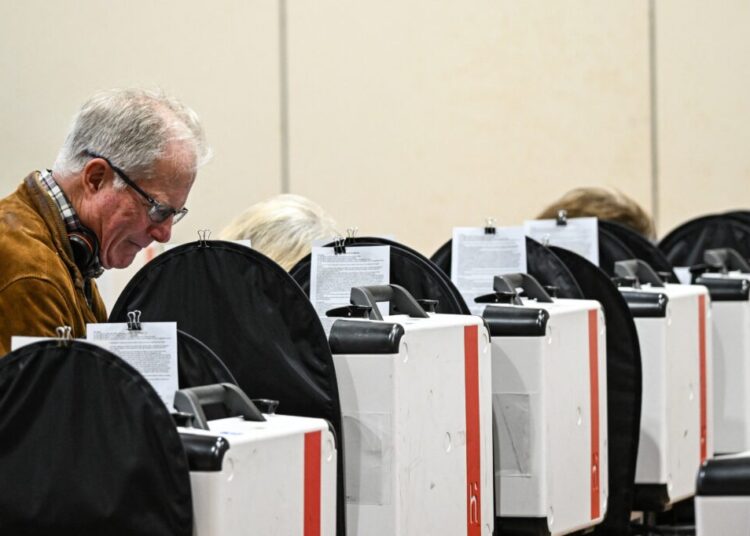
In 2024, Trump became the first Republican presidential candidate to win Miami-Dade County since 1988. His flipping of the longtime Democratic stronghold came after Republicans made major gains in recent election cycles in Miami-Dade, Florida’s most populous county, where Hispanics make up more than 60 percent of the electorate.
“If President @realDonaldTrump liberates Venezuela, Republicans will win Miami-Dade and FL for another decade,” Juan Porras, a Florida state representative and Cuban American, wroteon X.
Porras pushed back on Trump supporters who criticize involvement in Venezuela.
“They don’t represent all of us,” he said in an interview, noting that ousting Maduro would amount to a promise kept to the many Venezuelans and Cubans who heard Trump’s campaign vows to champion their freedom.
Rafael Pineyro, a Venezuelan-born council member in Doral, a Miami suburb with the highest concentration of Venezuelans in the country, said he had a mix of emotions.
Pineyro, a Republican who backed Trump, has been at odds with the administration over its decision to end temporary protected status for Venezuelans, which shielded them from deportation and allowed them to work. But he and many of his constituents and family members fully welcome Trump bringing an end to Maduro’s rule, he said.
“We’re ready, hopefully, to celebrate,” Pineyro said.
Hannah Knowles contributed to this report.
The post Why Miami’s Trump backers are clashing with the ‘America First’ wing over Venezuela appeared first on Washington Post.