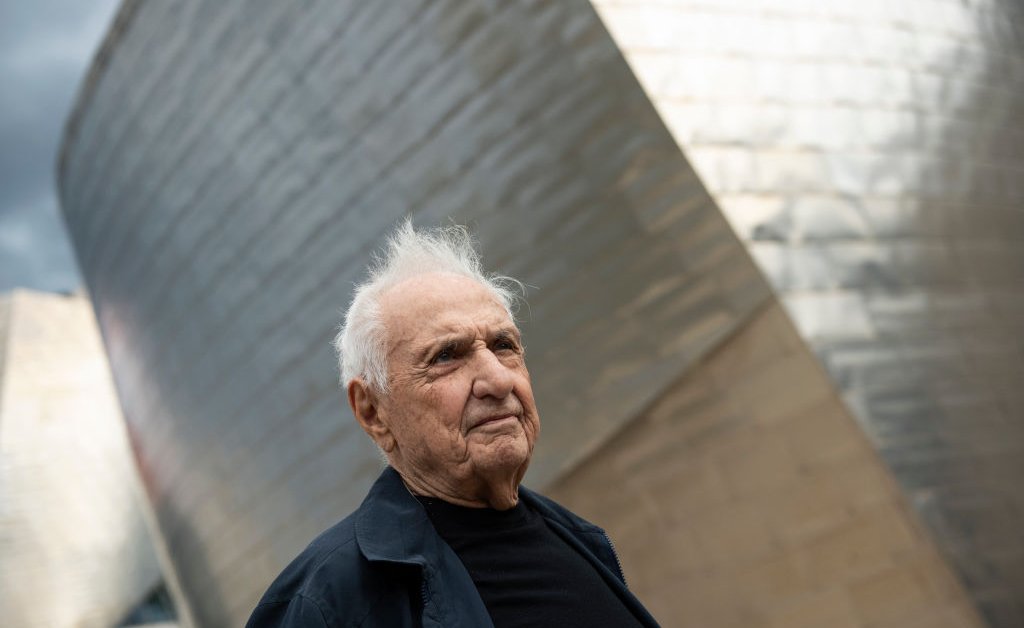
Frank Gehry, the globally famous architect, who died on Dec. 5 at the age of 96, lived much of his life in a bungalow in Santa Monica that is modest in size but expansive in its idea of the number of building materials one home can sustain. Just on one side, visible from the street, there’s plywood, pink stucco, corrugated iron, chain link fencing and glass. Even by L.A. standards, it’s a lot. Unlike many famous architects’ first homes, it has not been sold or upgraded, and it’s easy to see from the street. Less than a decade ago, Gehry moved to a new house designed by his son, Sam, but for many people, including me, the Santa Monica house was the first taste of a type of architectural mischievousness—what is that building?— that charmed a generation.
[time-brightcove not-tgx=”true”]
Read more: How Frank Gehry Changed Buildings—and Cities—Forever
Over a six-decade career, Gehry designed more than 70 buildings, from family homes to city-defining museums and concert halls. Not all of them were hits, but nearly all of them were worth stopping and really looking at, a burst of visual peculiarity in an often humdrum urban streetscape. In person, he was as regular a human as it’s possible to be, leaning into his Canadian modesty, often declaring that despite his impact on the field, he didn’t want to start an architectural movement. When he won an early architectural award from his California peers, he titled his speech “I’m Not Weird.”
Gehry’s visions were nearly always ambitious and his plans meticulous—a study found he was among 0.5% of architects who delivered what was promised, on time and on budget—but one of the qualities that made him so successful as both an artist and a builder was his ability to pivot to make the most of the situation in front of him. I had personal experience of this when I saw him sitting with friends at an open-air table in a cafe in Paris. (We had both misjudged the opening hours of the nearby Pompidou Center). Such is the nature of architectural stardom that nobody recognized him. And such is the nature of architectural opportunism, that when I went over to say hello and he remembered I was a journalist, he immediately began to talk up his newest building in the city, the Fondation Louis Vuitton, which had opened two years prior in 2014. Sure enough, we visited the next day.
Read more: Architecture: The Frank Gehry Experience
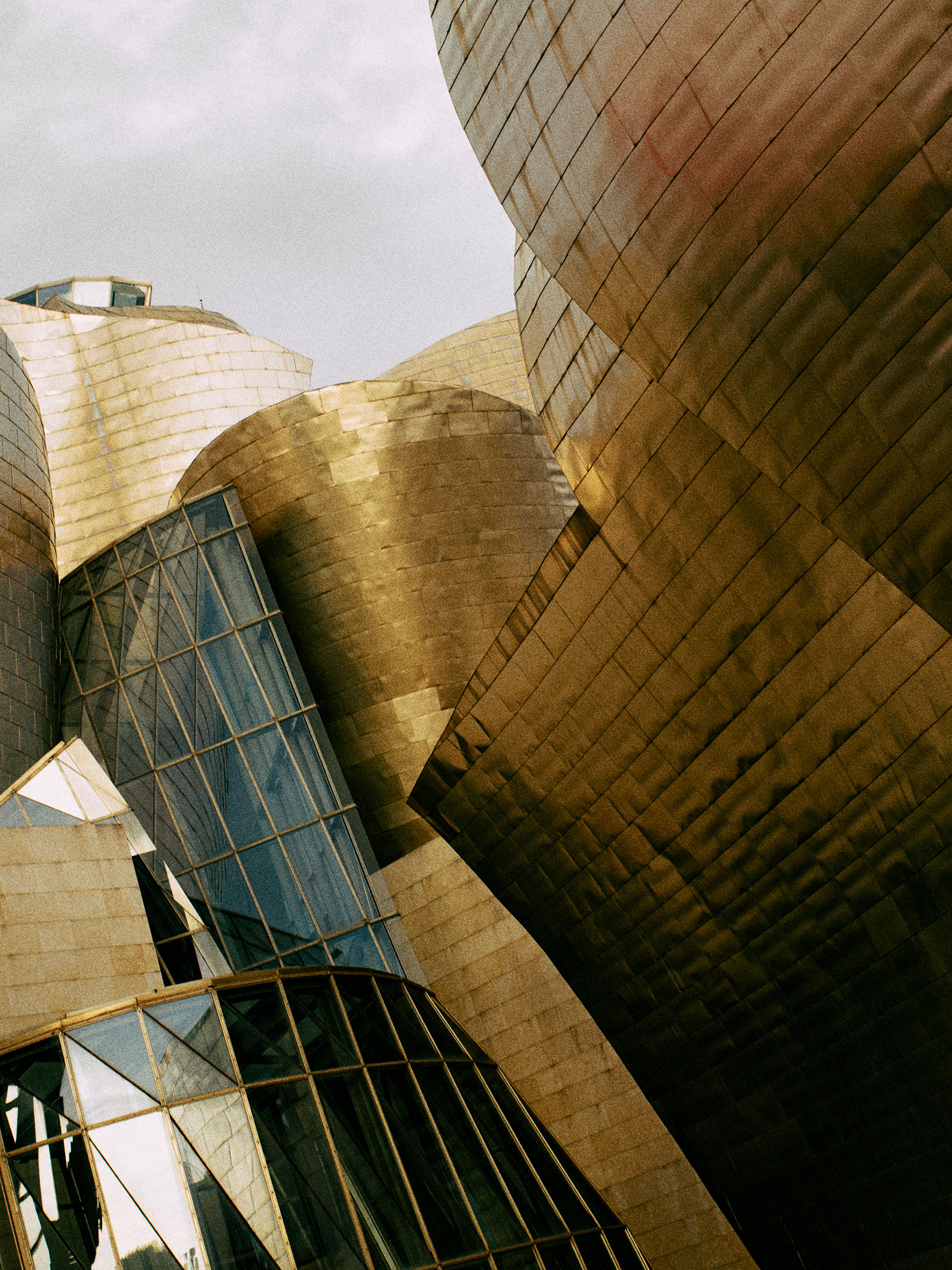
The most famous example of that expediency, however, may be the one that made his career. While designing the Guggenheim in Bilbao, Spain, in the 1990s, the architect would sit by the river that bifurcates the city, looking at different metal treatments. He liked the titanium best, but budget-wise, it was out of the question. Suddenly, in a quirk of world history, the Soviet Union collapsed and needed to offload a bunch of titanium reserves quickly and, ever so briefly, the price dropped below that of stainless steel. The team building the museum pounced just before the market stabilized. “I don’t think you have to spend egregious amounts of money to make buildings that are good for the community, good for our world, that are interesting, and that are humanly accessible,” he told TIME in 2022. “You just have to want to do it.”
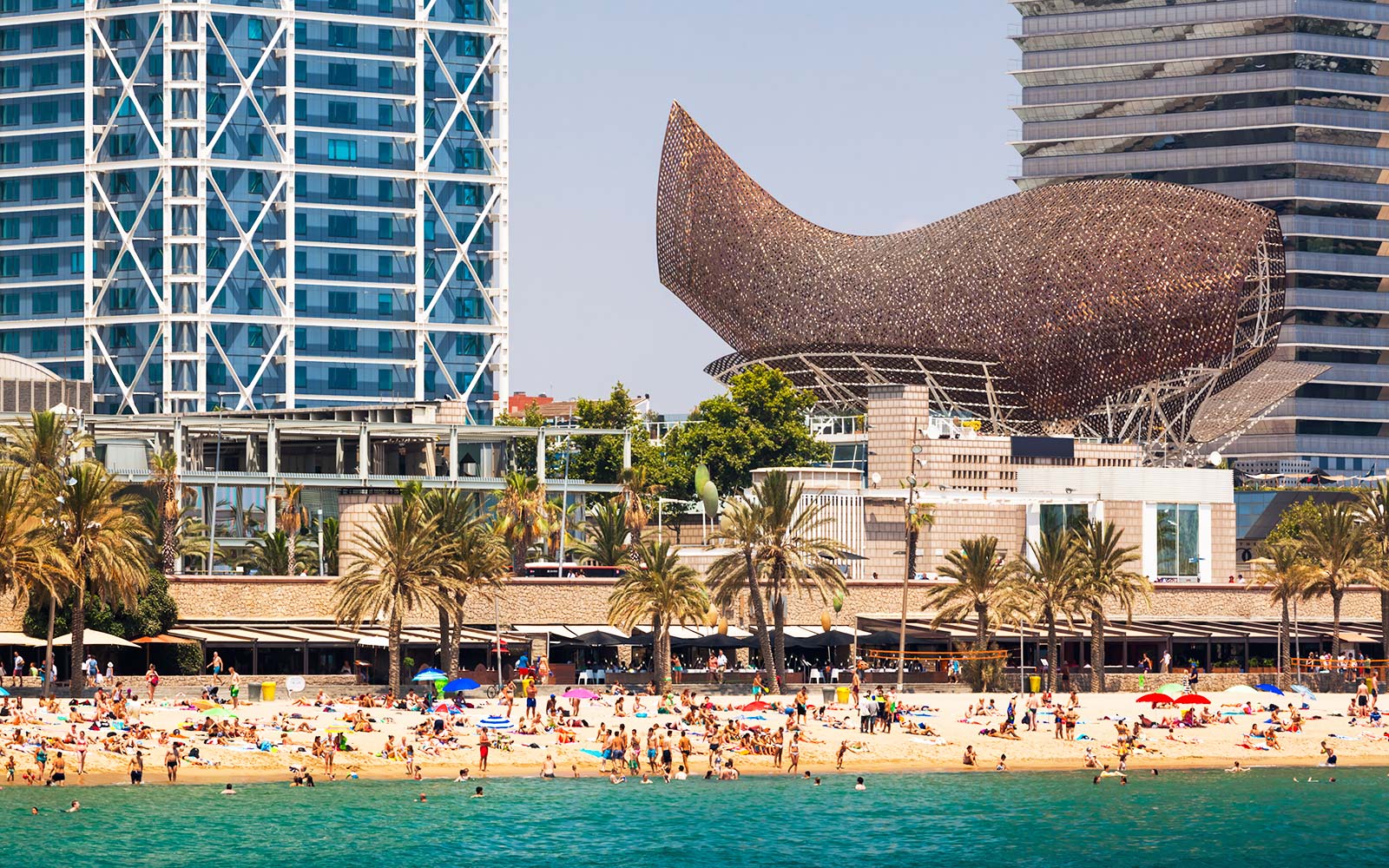
Gehry also famously repurposed French airplane design software to enable him to build the complex geometries—he says he was inspired by fish— for which he became iconic. “Far better than the sharp-edged cartons of modernism, his funky materials and visual ruckus accord with the disorder of real life,” TIME wrote in 2000, when life wasn’t even that disordered. “As manufacturing gives way to the intangibles of e-business and the public square dissolves into the borderless Internet, Gehry’s formulations speak to the ways in which people and ideas circulate today.” Trying to describe his style, Gehry called it “structural jazz.”
In terms of legacy, Gehry was satisfied to have his buildings speak for him. Visiting Bilbao on its 25th anniversary, he stood in the lobby and looked up. “When you look at your old buildings, you’re very critical of every little detail,” he said. “And I love it, I think. I find I love it.”
Architecture is a peculiar profession. Like movie directing, it requires finding an entity to entrust its practitioners with vast sums of money to create an artwork that could go horribly wrong. But unlike movies, buildings have to be lived in, worked in, used. Like growing crops, it is highly dependent on local conditions and resources. Unlike growing crops, there are hundreds of safety, zoning, structural and sometimes landmark regulations that have to be followed before any spade hits the ground. Like diplomacy, it necessitates negotiating with a lot of people who insist on solving the prevailing issues in a different way. Unlike international treaties, the laws of physics allow no amendments.
Somehow, even among all those restrictions, Gehry still managed to make a mark on the landscape that is unmistakably his.
The post Frank Gehry’s Architectural Mischievousness Charmed a Generation appeared first on TIME.