A singer was forced offstage in the middle of a song. Another was left to perform in front of an empty 14,000-seat theater. Comedy troupes and anime artists have had their engagements canceled.
To punish Japan for its expression of support for Taiwan, the Chinese government has already urged millions of tourists to avoid Japan, restricted Japanese seafood imports and increased military patrols in disputed waters.
Now, Beijing is taking its fight to the cultural sphere, targeting prized Japanese exports like J-pop and anime.
The Chinese authorities have in recent days halted the release of Japanese films, scrapped plans for anime-themed festivals and canceled concerts by Japanese artists.
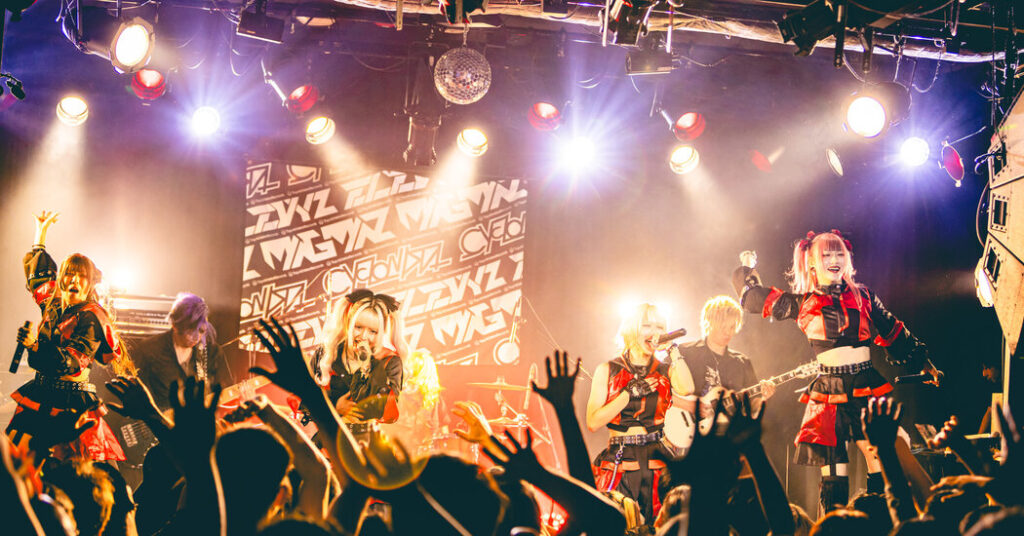
“There’s nothing we can do,” said Yu Sasayama, who manages Magmaz, an all-female rock band that recently learned its upcoming China tour had been canceled. “I’m frustrated that we are being influenced by the international political situation.”
China’s reprisals are part of a broader effort to penalize Japan for comments by its prime minister, Sanae Takaichi. She suggested last month that Japan could intervene militarily if China were to attack Taiwan, a self-governed democracy that Beijing claims is part of its territory.
China responded furiously, accusing Ms. Takaichi of crossing a “red line” and demanding a retraction.
As China has taken aim at Japanese culture, Ms. Takaichi has expressed support for homegrown artists. She vowed on Thursday to help them access overseas markets, saying exports like anime and video games were almost as big as the semiconductor industry.
Ms. Takaichi, who took office in October, has sought to de-escalate the crisis. She said this past week that Japan’s position on Taiwan had remain unchanged for decades. Chinese officials quickly rebuffed her statement, calling it “far from adequate.”
Since Ms. Takaichi’s remarks last month, more than a dozen engagements by Japanese singers, instrumentalists, comedians and others have been abruptly canceled. The authorities halted the release of “Crayon Shin-chan the Movie: Super Hot! The Spicy Kasukabe Dancers,” a popular anime film, and other movies. A touring musical, “Pretty Guardian Sailor Moon,” based on an anime series, was also scrapped.
China’s campaign has alarmed many Japanese artists, who have built devoted fan bases in China, an increasingly important market for them.
Ayumi Hamasaki, a Japanese pop star, was told last Saturday that her concert that evening in Shanghai could not go on; the organizers cited “force majeure.” Ms. Hamasaki decided to go ahead with the performance anyway, singing to an empty 14,000-seat arena.
She said on social media that she did not want to let down more than 200 Chinese and Japanese workers who had spent five days preparing for the event.
“I still strongly believe that entertainment should be a bridge that connects people,” Ms. Hamasaki wrote alongside photographs of the performance.
At another performance last week in Shanghai, the Japanese singer Maki Otsuki was halfway through the theme from “One Piece,” a popular anime series, when the stage went dark and the sound system was cut off. She looked startled as workers escorted her offstage, according to videos posted online.
Chinese officials have declined to comment on the cancellations.
China’s actions recall its attempts to punish South Korea in 2017 over its decision to allow a U.S. missile-defense system on its soil. China responded in part by canceling K-pop concerts and events featuring South Korean music and television stars.
The Chinese government is most likely looking for ways to demonstrate to its nationalistic public that it is serious about punishing Japan for Ms. Takaichi’s comments, analysts said. Canceling artists is a favored option because it does not inflict major economic damage on China.
“They had to do something, and they picked a good target in celebrities and entertainers — something high profile that the nationalists couldn’t miss, and something extremely easy to put into practice,” said Jonathan Sullivan, an associate professor at the University of Nottingham in England who studies China.
He added that from Beijing’s perspective, “it’s much better to grab a celeb offstage than to impose harmful economic sanctions or have rioters in the street burning Toyotas.” (During another flare-up between China and Japan in 2012, violent protests broke out against Japanese businesses, including car manufacturers.)
The Japanese entertainment industry has become increasingly reliant on China in recent years. China is the world’s second-largest market for anime, with fantasy films like “Demon Slayer: Kimetsu no Yaiba — The Movie: Infinity Castle,” which was released last month, rising to the top of the Chinese box office.
Japanese artists said they could probably endure any short-term turbulence. But they worry the dispute could drag on.
Magmaz, the Japanese band whose tour in the Chinese city of Guangzhou was canceled, has long worked to maintain a good relationship with the Chinese authorities, complying with requests to submit song lyrics for review.
With its tour canceled, Magmaz is now using social media to stay in touch with Chinese fans and assure them that the band will return.
“We have to keep communicating with fans,” said Mr. Sasayama, the manager. “It’s not war. We just have to wait for the tensions to pass.”
Javier C. Hernández is the Tokyo bureau chief for The Times, leading coverage of Japan and the region. He has reported from Asia for much of the past decade, previously serving as China correspondent in Beijing.
The post China’s Mad at Japan, and Pop Stars Are Paying for It appeared first on New York Times.