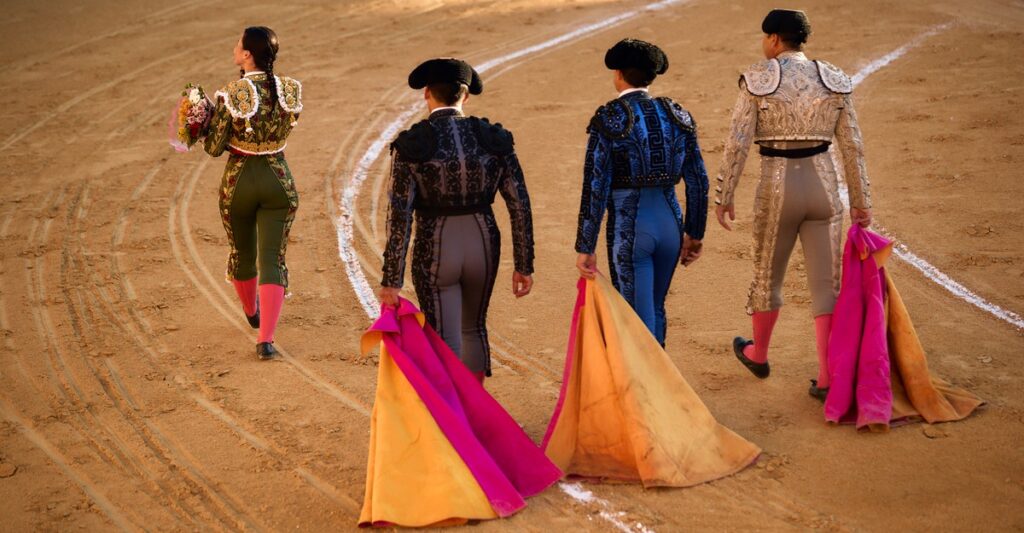
Photographs and videos by Owen Harvey
The week before the biggest bullfight of her career, in Cádiz, Spain, this past July, 24-year-old Miriam Cabas posted a carefully produced video on Instagram. Cabas appears not in a traditional matador costume but in a cream pantsuit, watching a little girl—4, maybe 5—wave a red muleta at an imaginary bull. “Dreams come true,” she wrote in the caption. “The little girl I used to be still guides me.”
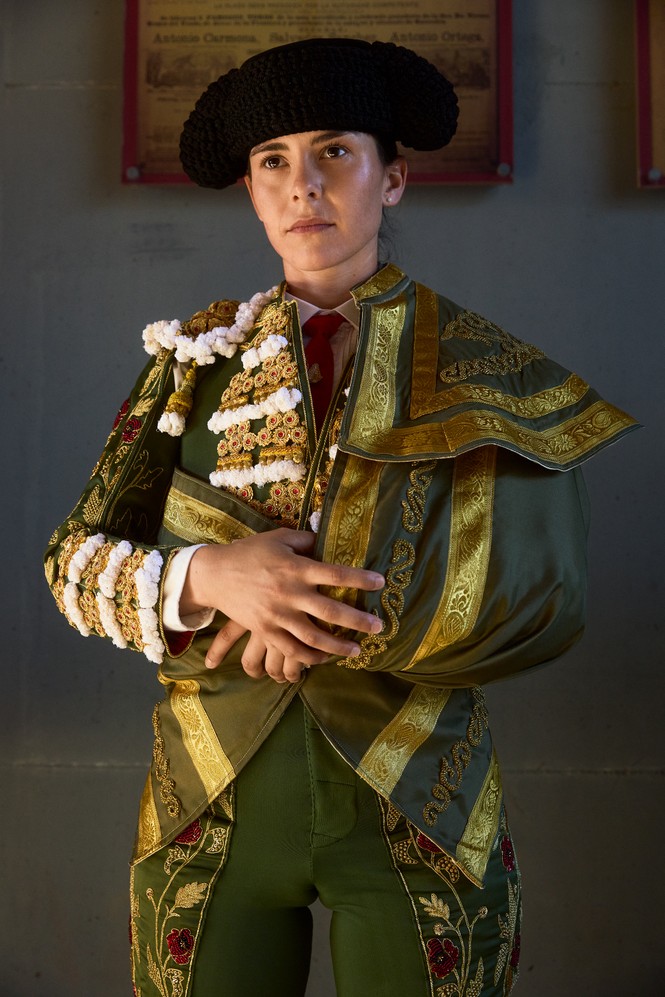
Cabas triumphed that day, killing two bulls and receiving three of their ears as trophies. It was the first time she had fought animals antagonized by picadors, men on horseback who stab the bulls with lances, testing their aggression and forcing them to lower their heads on their subsequent charges at the bullfighters. For the uninitiated, this was a big deal: Cabas had reached the final stage of her training to become a professional matador, one of vanishingly few women to compete in the intensely traditional field.
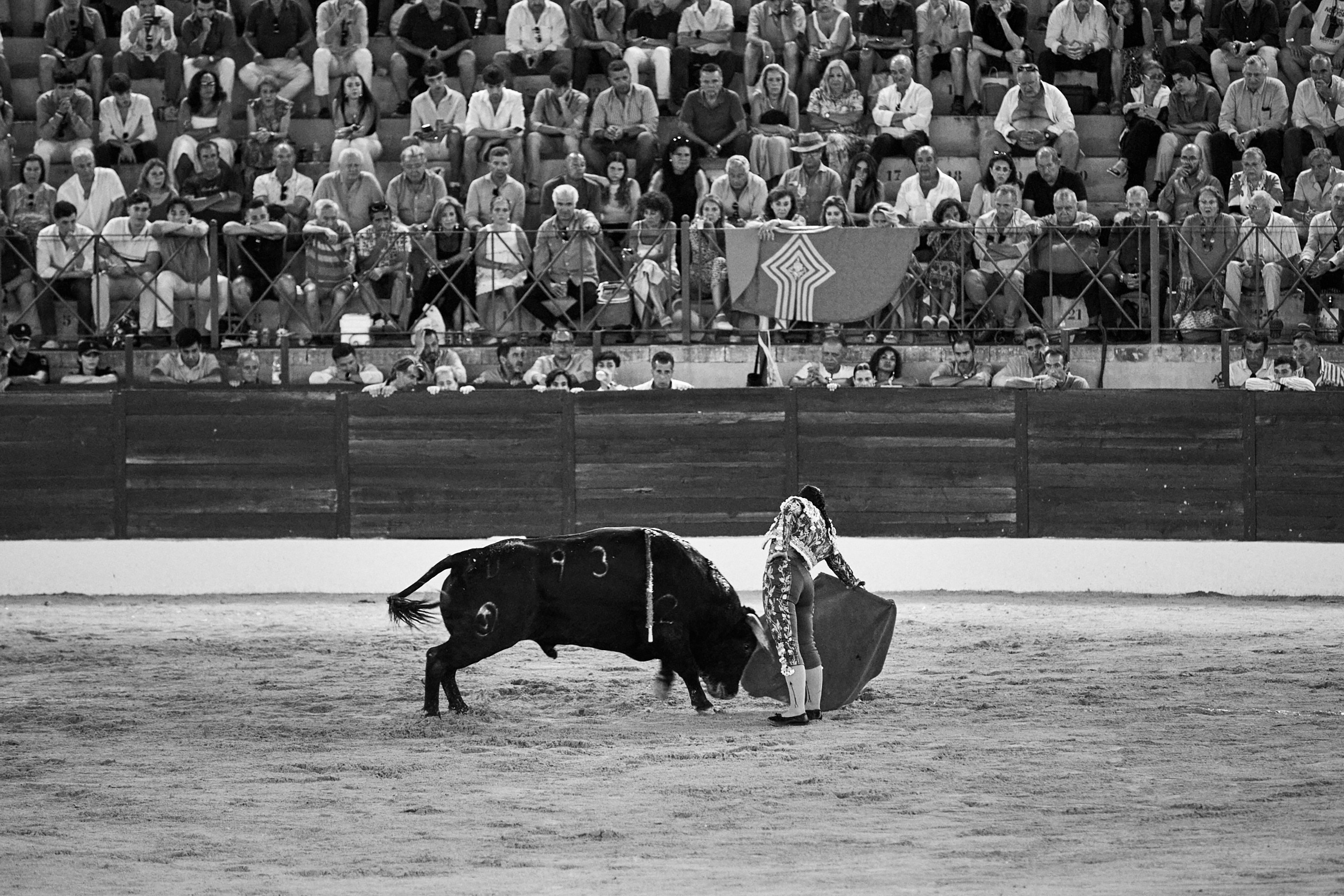
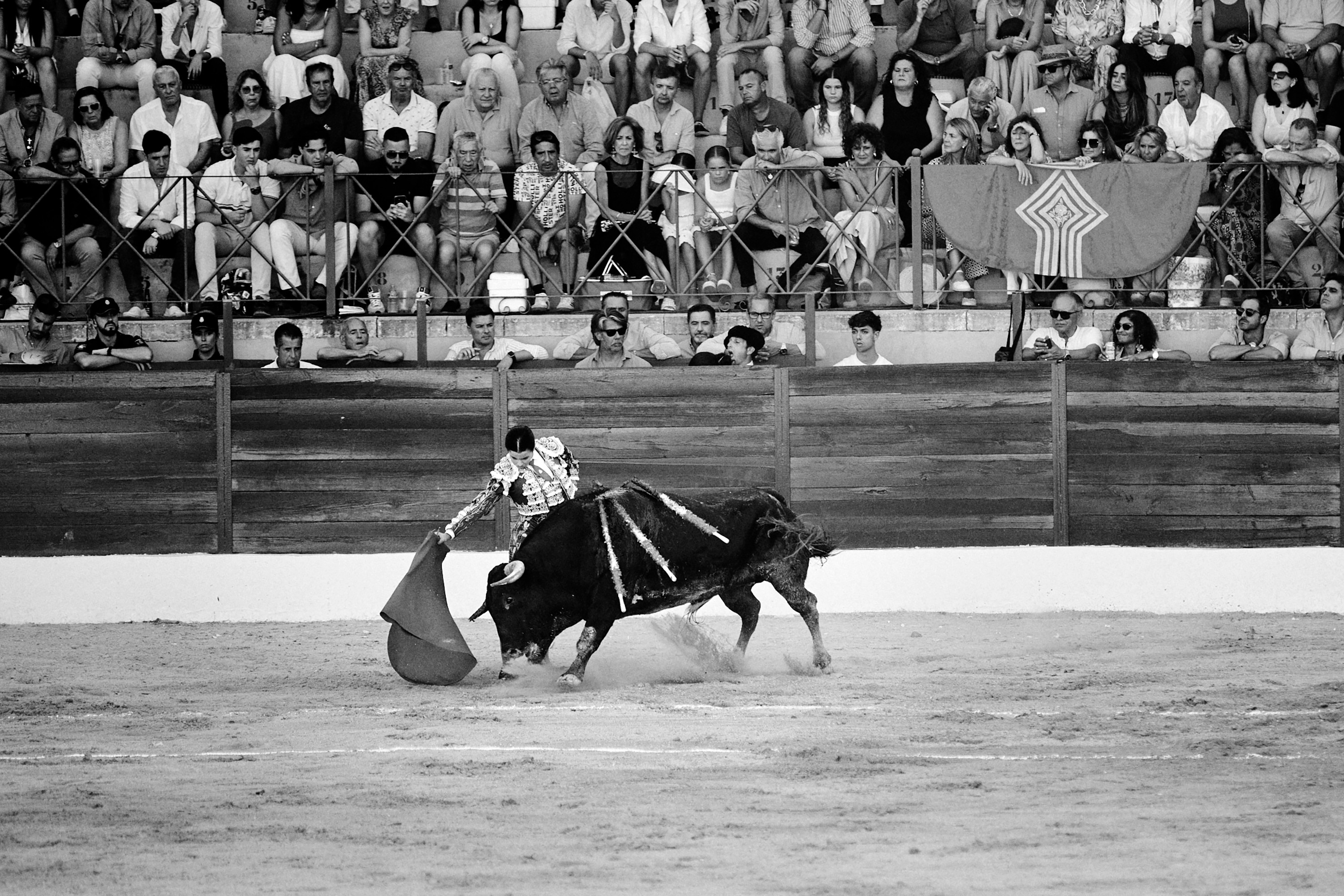
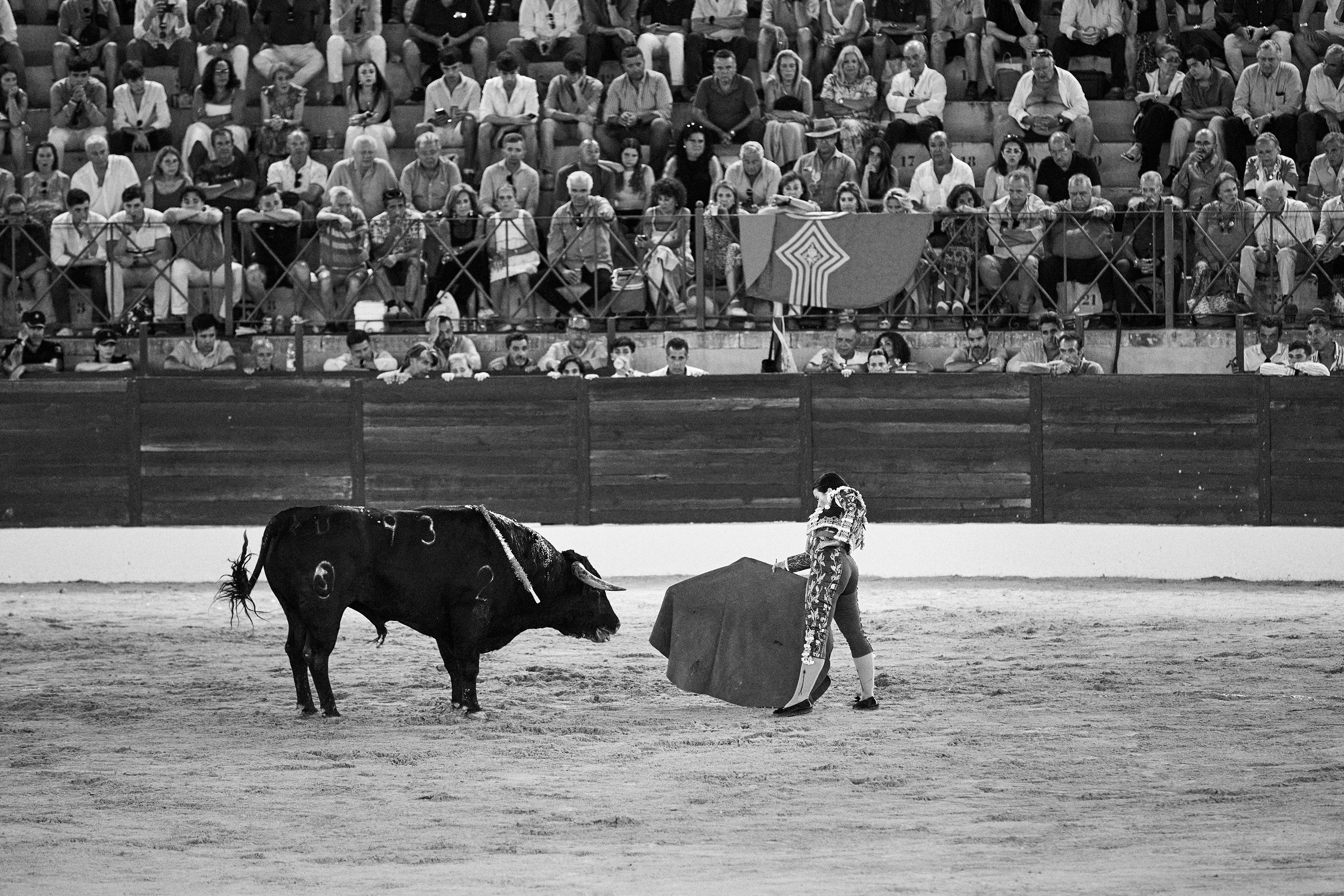
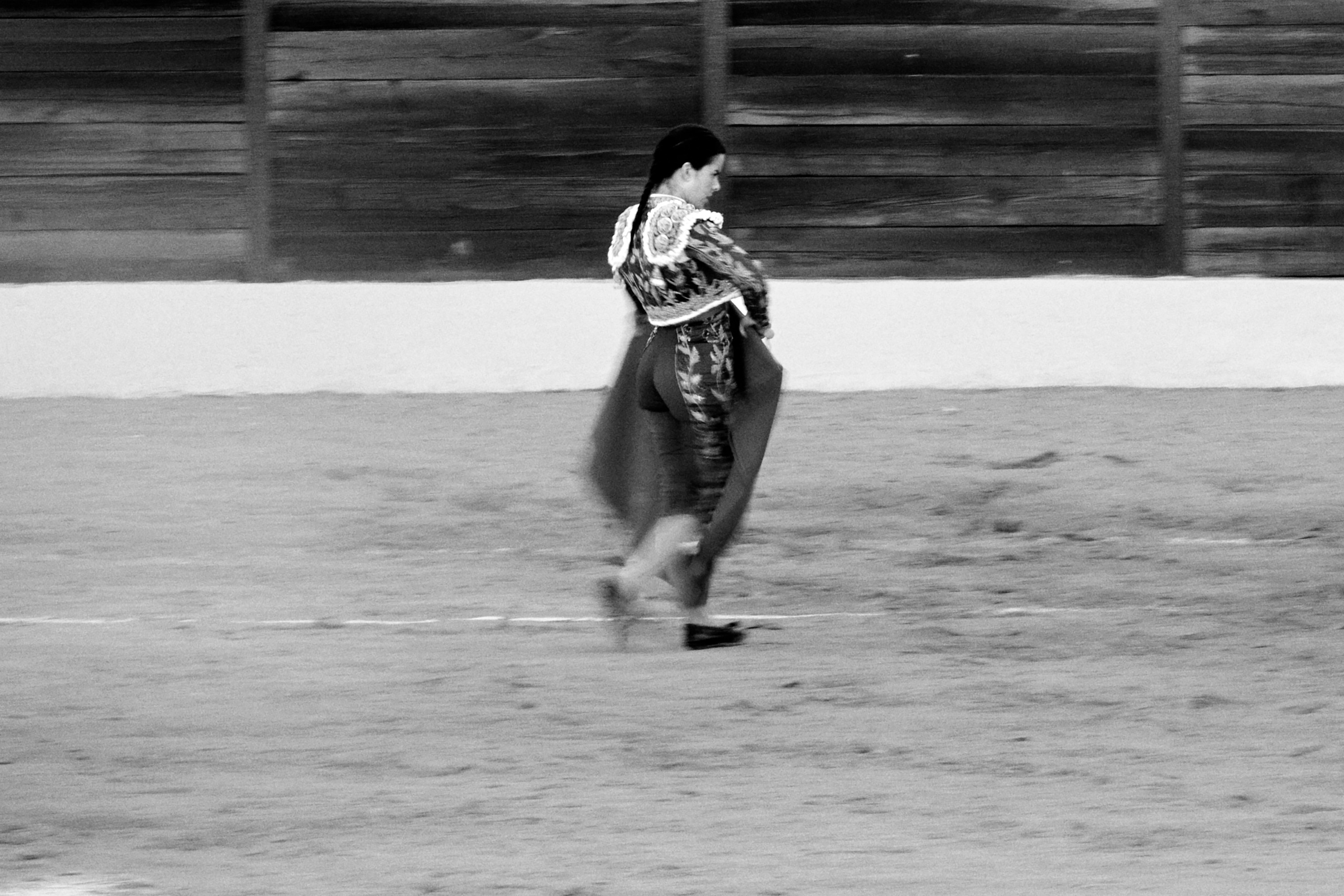
The British photographer Owen Harvey was there to document her victory. Harvey has followed Cabas’s career for more than a year as part of a series on young matadors. He could feel the crowd rooting for her, he told me. Cabas is a local talent, born in Los Barrios, a small town on Spain’s southern tip where bullfighting is still very much alive. She was introduced to the activity by her grandfather, who signed her up for after-school lessons when she was just 5. There were other girls, though not many, and only she persevered to become a professional.

Effectively banned in certain regions and vilified by some members of Spain’s left-wing coalition government, bullfighting has become a potent political symbol for the country’s resurgent far right. The populist Vox party has made a point of celebrating it as an essential Spanish tradition—and of trolling those concerned about animal cruelty. Cabas, for her part, prefers not to be explicit about her politics. She appreciates those who have protected bullfighting and does consider it an important aspect of Spanish identity, but, unlike some of her peers, she doesn’t post photos with far-right politicians. (Though Vox supports the way Cabas makes a living, its leaders are unequivocally anti-feminist.) Cabas doesn’t linger on her role as a barrier breaker, either. “You risk your life before a toro bravo, and that’s equally hard for men or women,” she told me.
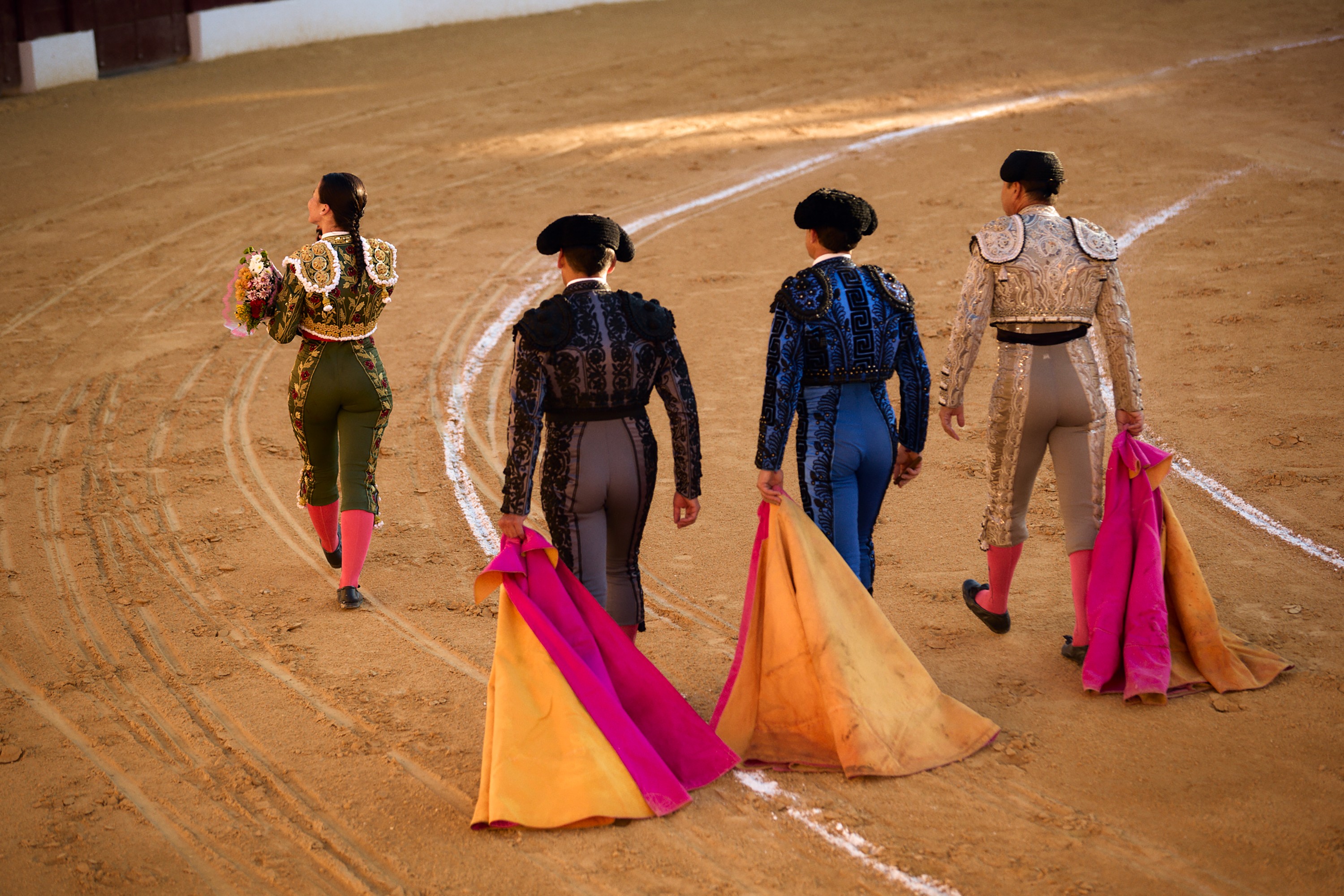
These days, she balances an intense training regimen with her college courses. She’s studying to become a veterinarian. “Nobody loves bulls like us,” she said. “We devote our lives to them—if that’s not love, then what is?”
This article appears in the January 2026 print edition with the headline “By the Horns.”
The post By the Horns appeared first on The Atlantic.