If you are buying a lime in the United States — to juice up a cocktail, say, or to squeeze over tacos — there’s a good chance it was grown in a scorching region known as la Tierra Caliente, in the western Mexican state of Michoacán. It was there that, on Oct. 17, Bernardo Bravo, a lime grower and president of a local producers’ association, filmed a rallying cry on his phone.
In the video, which he posted on Facebook, Mr. Bravo called on fellow lime growers to assemble at the local wholesale market and refuse access to gangsters seeking cuts of the profit. “We won’t allow the entry of any broker or coyote,” he said, “who is putting prices on fruit that isn’t his.” The demonstration was planned for Oct. 20. Hours before it was set to begin, the police found Mr. Bravo dead in his vehicle, his body showing signs of torture and a gunshot wound to the head.
In recent years, Mexico’s cartels have diversified from drug production to a portfolio of criminal rackets, from human smuggling to stealing crude oil — and, increasingly, extorting civilians. The shakedowns, known here as “cobros de piso,” rob workers, from mom-and-pop shop owners to farmers to truck drivers, of their earnings and force up the prices of goods in Mexico and abroad. One business association estimates that such protection rackets cost Mexican enterprises around $1.1 billion this year as of September.
Over the past year, under pressure from President Trump, who has threatened Mexico with punitive tariffs and military strikes, President Claudia Sheinbaum has taken steps to tackle organized crime, primarily to stop the flow of fentanyl and migrants into the United States. But many of these measures — sending additional troops to border towns, targeting drug labs and trafficking networks, transferring criminal bosses into U.S. custody — appear to be aimed at appeasing the Trump administration, and have done little to address the crisis of extortion playing out on Mexico’s streets. That’s quickly becoming a serious political problem for the otherwise popular leader.
Frustration over the status quo of everyday criminality is fueling a wave of anti-government protests across the country, with truckers blocking highways over cartel holdups, citizens holding marches and aggrieved demonstrators rioting from Michoacán to Mexico City. The government has accused opposition politicians and right-wing activists from abroad of stirring up trouble. The charges may hold some elements of truth. But it’s also undeniable that many of those who have taken to the streets are genuinely fed up with being bullied and battered by criminals.
Mexico’s extortion crisis has been building for years. From 2006 to 2018, the country’s leaders played Whac-a-Mole with cartel kingpins. With the United States’ backing, Presidents Felipe Calderón and Enrique Peña Nieto launched a full-fledged war to take down cartel bosses, including the Sinaloa cartel leader Joaquín Guzmán, known as El Chapo.
The groups didn’t disappear, though; as they lost their commanders, they splintered into smaller, even more violent groups. Many of these fragmented gangs lacked the international networks for serious drug trafficking but could make a quick buck with shakedowns. Amid public weariness over the war on cartels, President Andrés Manuel López Obrador, Ms. Sheinbaum’s mentor and predecessor, called for a “hugs, not bullets” strategy that focused on the root causes of organized crime. That didn’t work, either; the cartels simply took advantage of the policy to consolidate their territorial claims.
The signs of the crisis are everywhere, if you know where to look. In October, I traveled to Cuautla, a midsize city south of the capital that has the highest per capita rate of extortion in the country. Francisco Cedeño, a local crime journalist, took me on a quad bike tour of the burned-out, shot-up shops that he said had been punished by gangs for nonpayment. “The butchers have to pay the maña, the criminals. Every kilo of beef they sell they pay 20 pesos,” he told me. “The tortilla shops pay. The public transport, the buses and taxis pay.”
One grocery store owner there told me that gangs had demanded she pay them half a million pesos, around $27,000. When she resisted, they threatened to murder her children, she said, revealing information they had gathered about their schools and jobs. A police friend she turned to advised her to pay — which she ultimately did, to the tune of about $11,000. It has not assuaged her fear.
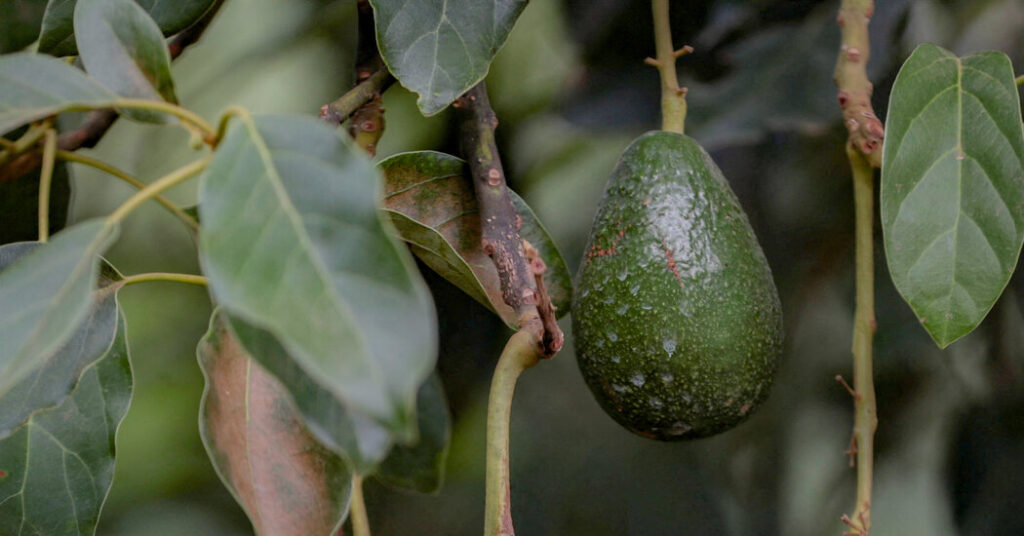
It’s not just these small businesses in the cartels’ cross hairs. Extortion is now so widespread across Mexico’s farmlands that it has pushed up the price of goods including limes and avocados, a phenomenon so widely acknowledged it’s now referred to as narcoinflation.
Uruapan, a hub for Mexico’s avocado trade, has been especially hard hit. Amid soaring American demand, avocados have become an increasingly valuable commodity. Cartels have taken notice. Uruapan’s mayor, Carlos Manzo, became a vocal hard-liner against cartels, ordering the city police to take on local bosses. On Nov. 1, he was fatally shot in a public square, where he had gone with his young son to attend a Day of the Dead event. When protesters marched on Mexico City’s main plaza, the Zócalo, two weeks later, many were holding signs emblazoned with his face.
Ms. Sheinbaum, who won last year’s election with a huge margin on promises to improve conditions for the working class, has maintained a high approval rating. But her failure to assuage citizens’ terror and financial strain could see her lose crucial support. A siege mentality will not help her case: Mexico’s recent demonstrations have been too widespread to have been the sole work of opposition plants, thugs or saboteurs, as her administration has suggested. A new anti-extortion law will increase sentences to up to 42 years for those convicted of the crime — but that needs to be followed by an extensive enforcement campaign.
Ms. Sheinbaum has said that her strategy against the cartels aims to avoid the mistakes of Mr. Calderón by focusing more on tactics such as intelligence collection and interagency cooperation than on armed crackdowns. It’s true that the amount of fentanyl being seized on the U.S. border has plunged since she took office in October 2024. Mexico’s homicide rate has also gone down substantially, according to the police, even if opposition figures claim that’s just because cartels are now disappearing more people, rather than leaving corpses to be counted.
Mr. Trump’s focus might be on drugs and migrants, but Mexicans themselves are more concerned with their own everyday safety and ability to make ends meet. Most people will not — and cannot — simply accept a cartel tithe as the cost of doing business.
Ioan Grillo is a contributing Opinion writer who has covered gang violence and organized crime in Mexico and elsewhere in Latin America for two decades.
The Times is committed to publishing a diversity of letters to the editor. We’d like to hear what you think about this or any of our articles. Here are some tips. And here’s our email: [email protected].
Follow the New York Times Opinion section on Facebook, Instagram, TikTok, Bluesky, WhatsApp and Threads.
The post The Hidden Cost of Your Avocado appeared first on New York Times.