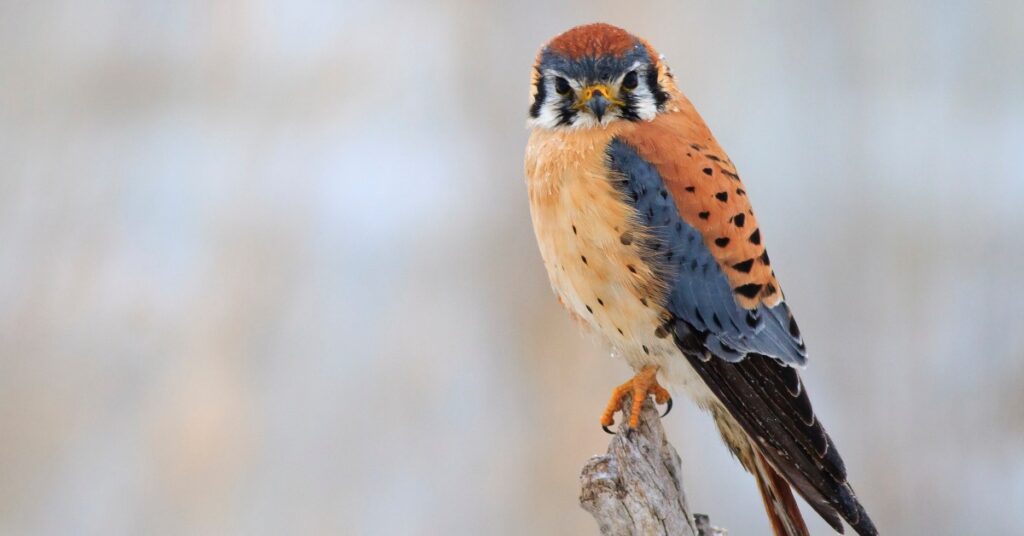
If you’re lucky enough to enjoy a warm slice of cherry pie this holiday, you should probably thank this bird.

It’s an American kestrel, the smallest falcon in North America, which is roughly the size of a blue jay. And in some parts of Michigan — the nation’s tart cherry capital — this bird helps farmers produce cherries.
Key takeaways
- New research shows that American kestrels, small birds of prey, can help cherry farmers manage pests that damage their crop.
- The raptors may even help reduce contamination in cherry orchards from bird poop.
- A wide range of wild predators help fruit farmers manage pests, including falcons, owls, and bats.
- Many of these species, including kestrels, are in decline. Farmers can help bring them back, and benefit in the process.
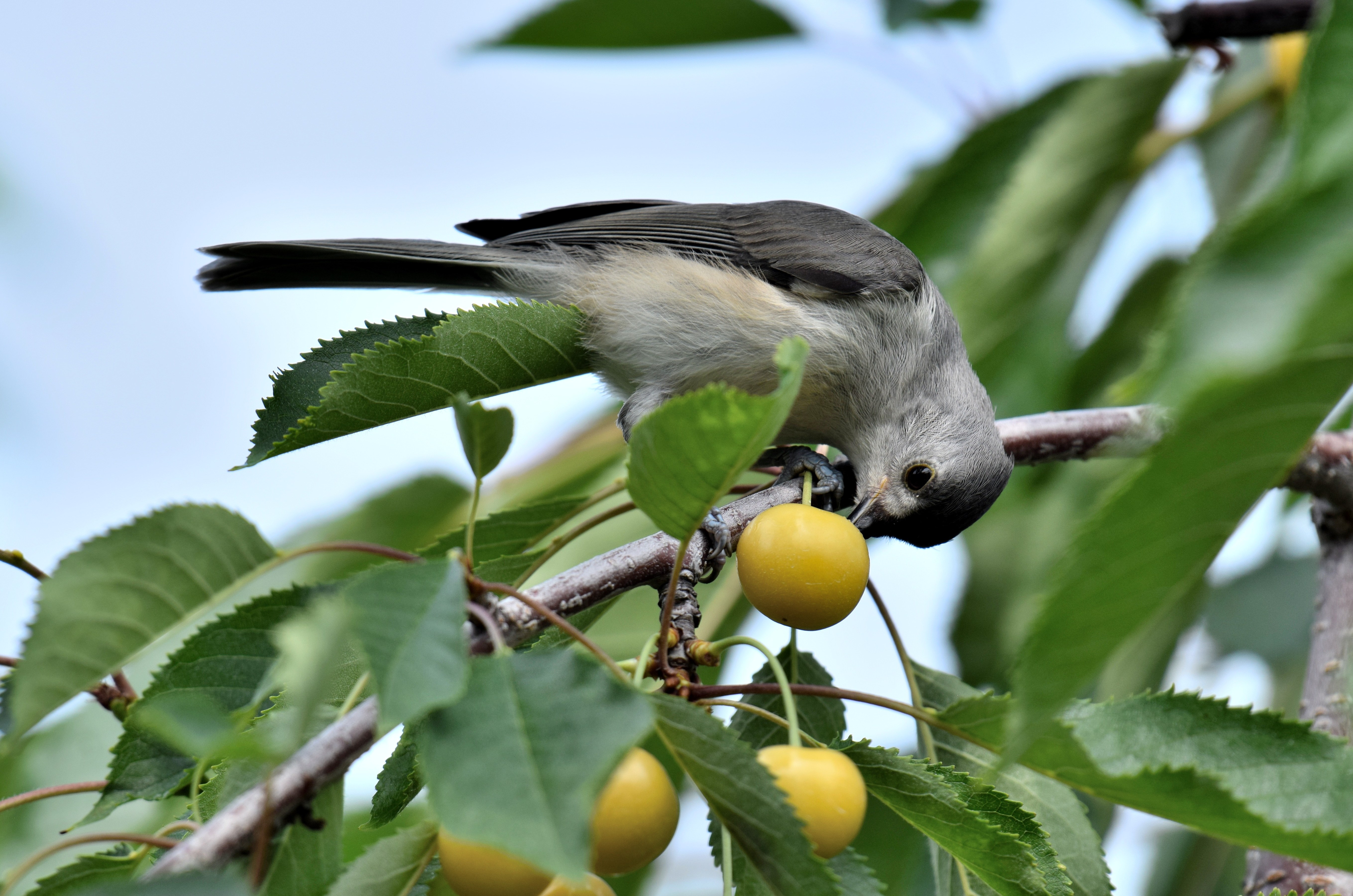
Kestrels are predators, and they prey on insects, rodents, and other birds, many of which eat cherries. So when cherry farmers have kestrel nest boxes in their orchards, they see fewer cherry-eating birds, such as robins and grackles, as one 2018 study revealed. According to that study, farmers can save as much as $357 worth of cherries for every dollar they spend on installing nest boxes, which are essentially elevated wooden birdhouses. If kestrels move in, orchards have fewer bird pests, since the fierce little falcons eat them or scare the pests away.
Now, scientists have published another study that makes the benefits of the raptors even clearer.
It shows that orchards with occupied nest boxes have less damage — less eaten or partially eaten cherries — than those without kestrels. The authors also found that cherry orchards with kestrels had less bird poop.
That’s key, because avian excrement can carry pathogens, such as Campylobacter, a type of bacteria that can give people food poisoning.
The new study is part of a growing body of research on how conserving wild predators benefits humans. Wolves can limit car accidents by keeping deer away from roads. Sea otters safeguard kelp forests that, in turn, support coastal fisheries, by consuming urchins. And falcons — which are in decline throughout much of the US, for reasons that are still unclear — help curb farm pests. They just need a place to live.
What an ecologist learned by collecting bird poop
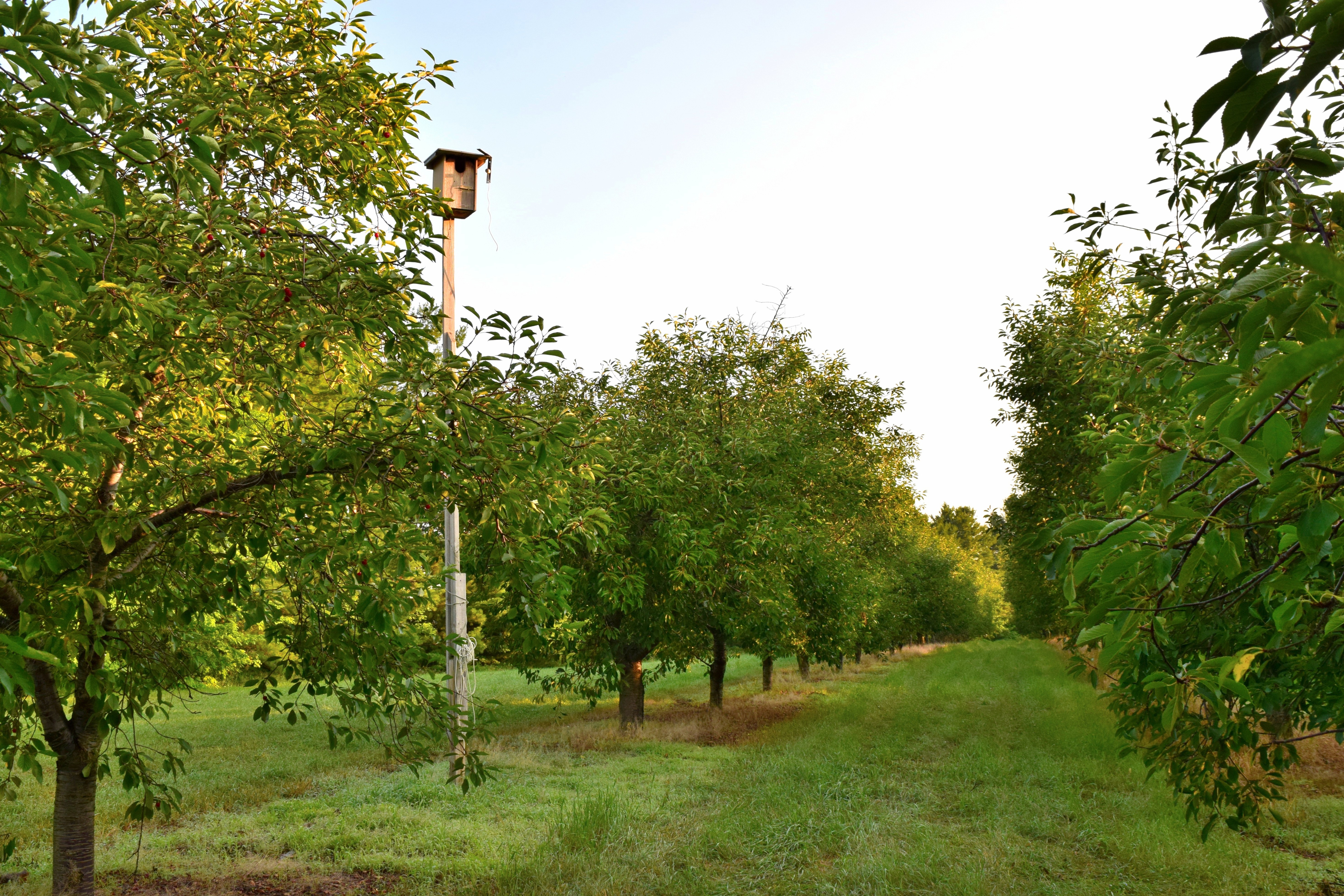
Scientists first figured out that American kestrels are good for Michigan cherry growers by installing elevated nest boxes in orchards more than a decade ago. Those boxes often attract kestrels because the birds like to nest in cavities, according to Catherine Lindell, an associate professor emerita at Michigan State University, who has spent 15 years studying falcons in cherry orchards. After installing the boxes, the researchers compared orchards with and without kestrels, finding that there are fewer pest birds — species that eat cherries — when kestrels are present.
They published their results in a seminal 2018 paper, and it was a big deal. Farmers have a tough time managing fruit-eating birds. They typically can’t poison them, the way they control insects. And other measures, like covering crops with nets, are far more expensive. Kestrel nest boxes cost about $115, including installation (as of 2018), making them a cheap alternative. And the 2018 paper proved that they work.
The new study, published in late November, goes a step further, relying on methods that are, you might say, disgusting.
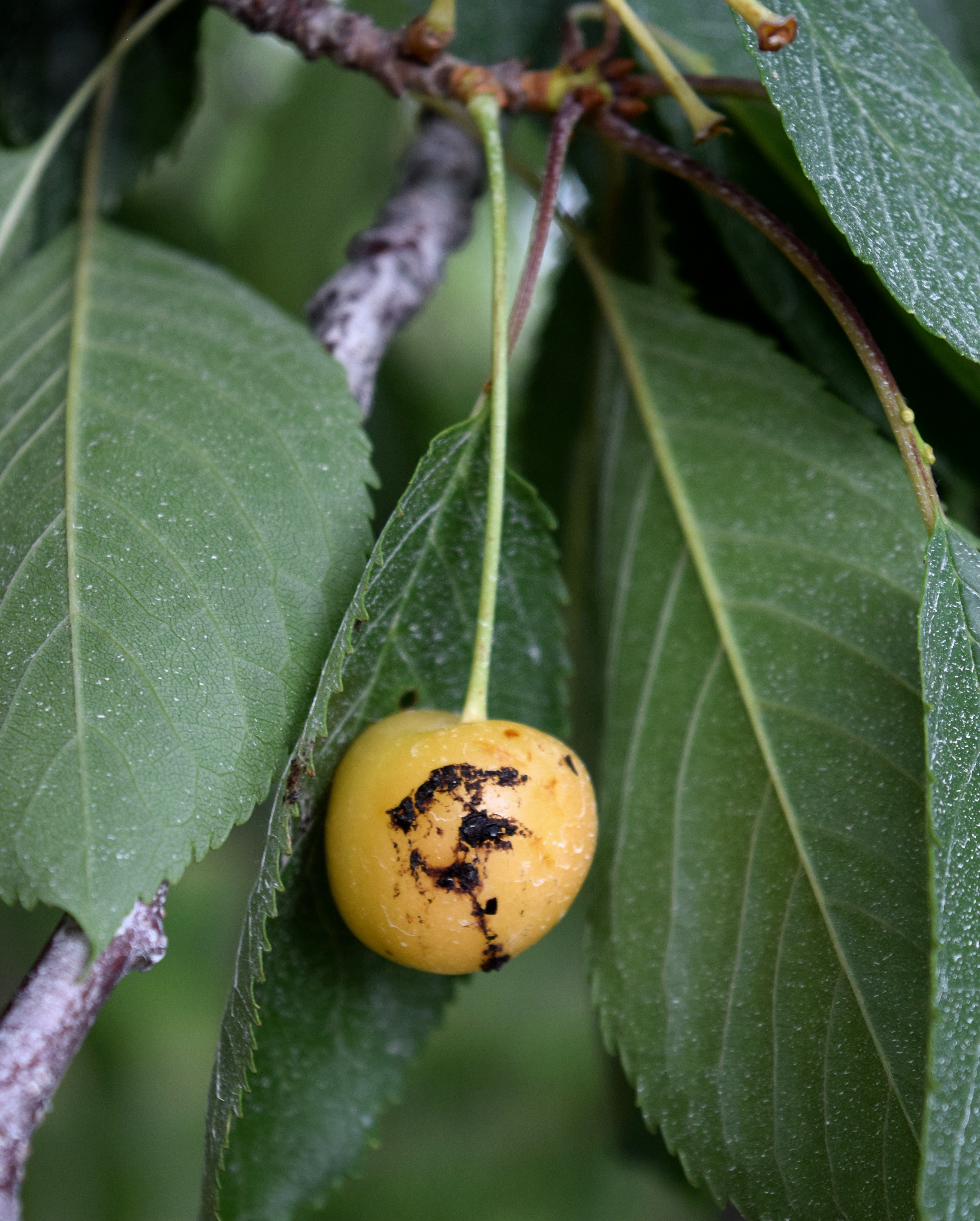
Scientists led by Michigan State University researcher Olivia Smith collected bird poop in orchards with active kestrel nest boxes, and in those without. They then shipped the poop to a lab to test it for Campylobacter, the leading cause of bacterial food-borne illness globally.
Smith and her coauthors ultimately found more poop on branches in orchards without kestrels. The logic here is that avian pests are more common in kestrel-free orchards, and they defecate while raiding the cherries, Smith said.
The study also revealed that some of the poop contained Campylobacter, which can cause diarrhea in humans. That doesn’t mean that cherries from those orchards are always dangerous — Campylobacter doesn’t survive long in the open air, and farmers are not supposed to harvest fruits with feces on them. Plus, the cherries are, of course, cleaned before they’re sold. But the study does suggest that kestrels may at least lower the amount of bacteria on cherries before they’re harvested, and thus lower the small risk that dirty orchards pose to consumers.
“If you [a farmer] can get kestrels nesting, it’s a big benefit,” Lindell, who was involved in the new study, said.
The unsung farm laborers
American kestrels aren’t the only wild predators helping produce our food. Starting in 2005, scientists relocated threatened falcons in New Zealand to wine vineyards that have a number of invasive avian pests, including blackbirds and song thrushes. Those invasive birds eat grapes. Subsequent research on the project, known as Falcons for Grapes, linked the introduction of falcons to a decrease in pest birds and a “95 percent reduction in the number of grapes removed relative to vineyards without falcons.”
Falcon-friendly wine?
A number of US wineries also rely on falcons, including American kestrels, for pest control. A winery in Michigan called Chateau Grand Traverse, for example, has installed three (and soon-to-be four) kestrel nest boxes, winery owner and president Eddie O’Keefe told Vox.
“It’s kind of cool to have a natural predator out there that actually does work,” O’Keefe said. “They take care of the mice, the voles, and in addition, they also keep other birds that could be a problem in flight, because they’re afraid. It’s just a good preventative measure that really doesn’t take much effort.”
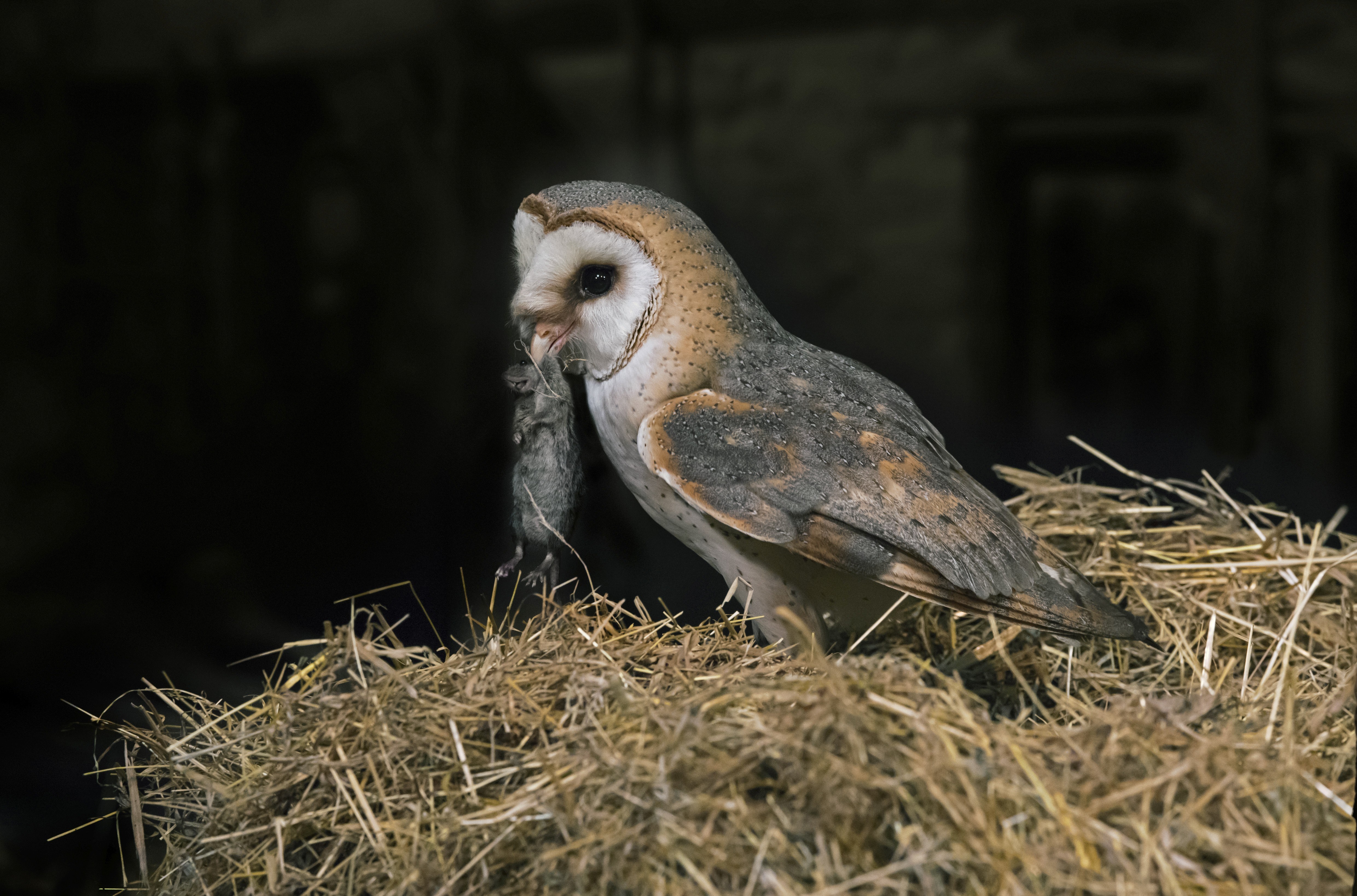
Meanwhile, farmers around the world have for decades been relying on barn owls to control rats, pocket gophers, and other rodent pests that eat crops. Through a program in Israel, for example, farmers have installed thousands of owl nest boxes as an alternative to rodent-killing chemicals that can harm people and native wildlife. In recent years, as more and more farmers started using owl-attracting nest boxes, the use of rodenticide in Israel has plunged by 45 percent.
The role of birds varies from farm to farm, but broadly speaking, having predatory birds on the landscape — those that eat other animals, including insects and rodents — benefits crop production. “Overall, we found that excluding wild birds significantly increased crop damage,” authors of a 2021 analysis of 55 existing studies wrote. “We recommend that wild birds be considered as effective biological control agents.”
But if there’s one example that’s most impressive of all, it’s bats.
Most bat species in North America eat insects, including farm pests like moths and beetles. And research has shown that as bat populations plummet — as they have, largely from a disease called white nose syndrome — farmers use more pesticides, presumably because bats aren’t there to eat pests. That means farmers spend more money growing the same amount of food, and they put more chemicals into the environment that can harm human health. A remarkable study published last year even linked the decline of bats to a rise in infant mortality.
“Nature is providing these services for humans for free,” said Julie Jedlicka, a biologist and bird expert at Missouri Western State University, who was not involved in the research. The question, she said, is, “How can we take advantage of that?”
The irony, of course, is that farmland is the leading killer of wildlife and natural ecosystems. In fact, the agricultural sector, broadly, has contributed to the decline of predatory birds, including kestrels, as farmland has replaced natural habitat and pesticides have killed off their prey. What these studies show is that bringing back at least some natural features of the landscape, such as avian predators, can be good for farmers — and those of us who indulge in the literal fruits of their labor.
The post The fascinating link between cherry pie and this bird appeared first on Vox.