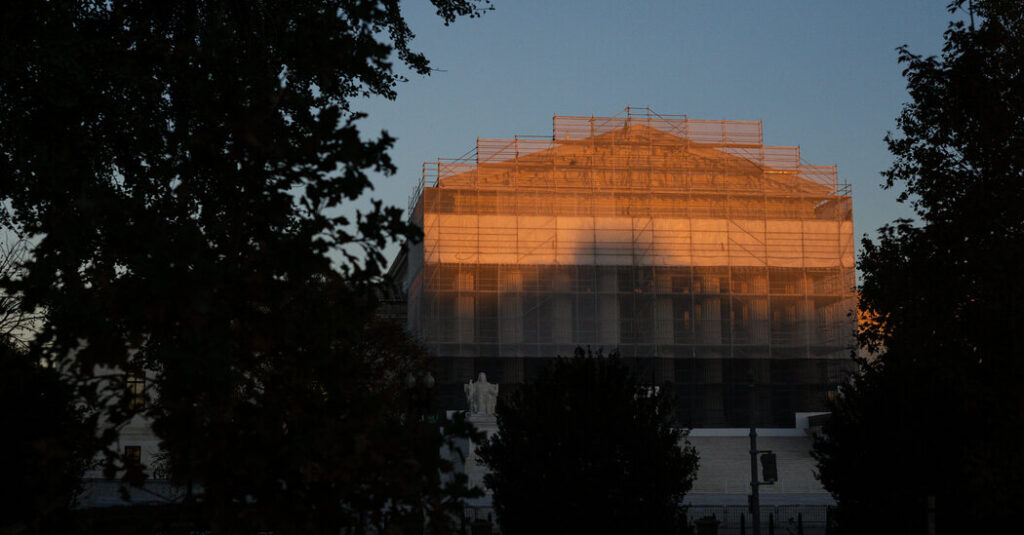
The Supreme Court announced on Friday that it would hear a landmark dispute over the constitutionality of President Trump’s effort to end birthright citizenship.
The legal fight stems from an executive order signed by the president on his first day back in office declaring that children born to undocumented immigrants and to some temporary foreign residents would no longer be granted citizenship automatically.
The executive order, which was immediately paused by courts without going into effect, would upend the commonly accepted view of American citizenship guaranteed since 1898: that citizenship should be extended to anyone born in the United States. It could throw into doubt the citizenship of hundreds of thousands of babies born each year.
The court has not announced a date to hear oral arguments, but the justices will most likely hear the case in next few months. A decision would then be expected by the end of June or early July.
The case joins what is already a consequential term for the court, as the justices hear a series of challenges to other presidential actions, including Mr. Trump’s sweeping emergency tariffs, his firings of the heads of independent agencies and his push to remove a governor of the Federal Reserve Board. In addition to those tests of presidential power, the court is weighing legal fights over transgender athletes in girls’ sports, a challenge to a central tenet of the Voting Rights Act and a high-profile Second Amendment case.
Birthright citizenship, the idea that virtually all children born on American soil are automatically citizens, regardless of the status of their parents, has long been considered a core tenet of the country.
That notion, which is rare among the most-developed countries in the world, is grounded in the language of the 14th Amendment. The amendment, ratified after the Civil War, states, “All persons born or naturalized in the United States, and subject to the jurisdiction thereof, are citizens of the United States and of the State wherein they reside.”
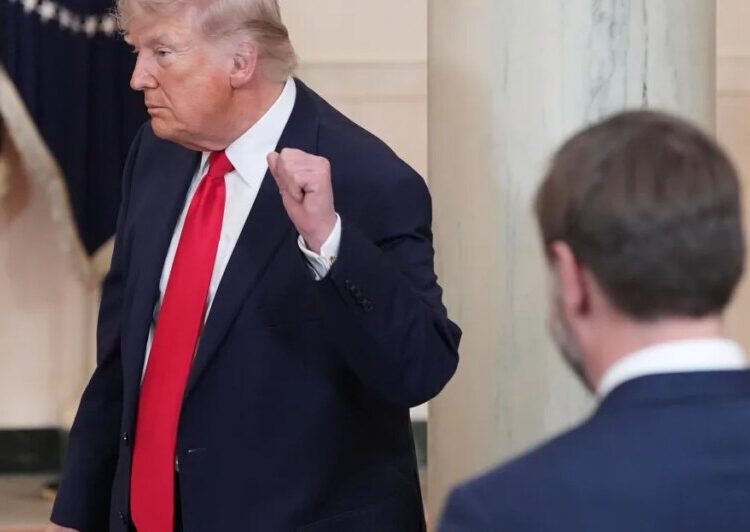
Mr. Trump has long expressed skepticism about birthright citizenship. After winning his second term in November 2024, he told NBC News during his first extended interview as president-elect that he would end the practice.
“We’re going to have to get it changed,” he said then. “We’re going to end that because it’s ridiculous.”
Allies of Mr. Trump have argued that the 14th amendment was intended to extend citizenship only to the children of formerly enslaved people and has been wrongly interpreted as applying to the children of undocumented migrants. The theory was once considered a fringe view, but Mr. Trump’s embrace has popularized it among conservative thinkers.
Mr. Trump attempted to follow through on his promise, signing the executive order that said the policy would go into effect in 30 days. But legal challenges came almost immediately, and judges in Washington State, Maryland and Massachusetts quickly froze the policy for the entire country. One federal district judge in Seattle, John C. Coughenour, called the president’s order “blatantly unconstitutional.”
Lawyers for the Trump administration asked the Supreme Court to weigh in, but the government did not at first focus its legal arguments on the merits of the president’s policy. Instead, the administration’s lawyers asked the justices to consider whether trial court judges had exceeded their power by granting nationwide freezes on an executive order, a long-controversial practice known as a universal injunction.
The justices heard oral arguments about legality of universal injunctions in May. In June, in a 6-to-3 decision, split along ideological lines, the justices sided with the Trump administration, sharply curtailing the power of district court judges.
Hours after the Supreme Court announced its ruling, the American Civil Liberties filed a lawsuit challenging the president’s birthright citizenship order once again. This time, the civil rights organization tested the reach of the Supreme Court’s decision by bringing a class-action lawsuit, which the justices had said remained an appropriate legal tool for addressing policies that affect large groups of people. The challengers asserted that all children born after the president’s executive order was scheduled to go into effect, along with their parents, constituted a class.
The A.C.L.U. argued that, for many families throughout the country, “birthright citizenship represents the promise that their children can achieve their full potential as Americans,” and warned that the president’s order would risk rendering “effectively stateless” children born to parents in the country unlawfully.
To the Supreme Court, the A.C.L.U. has argued that the court should uphold precedent it set in the landmark 1898 case of United States v. Wong Kim Ark, when it held that Mr. Wong, who was born in San Francisco to noncitizen parents, was himself a citizen.
In July, Judge Joseph N. Laplante of the U.S. District Court for the District of New Hampshire sided with the A.C.L.U., certifying a class-action lawsuit.
In a brief to the court, Solicitor General D. John Sauer asserted that the 14th Amendment was intended to ensure citizenship after the Civil War for “the newly freed slaves and their children, not on the children of aliens temporarily visiting the United States or of illegal aliens.”
The view that the 14th Amendment guaranteed citizenship to children born on U.S. territory was “mistaken,” Mr. Sauer wrote, and had become “pervasive, with destructive consequences.” He asserted that Mr. Trump’s order would merely “restore the clause’s original meaning.”
Abbie VanSickle covers the United States Supreme Court for The Times. She is a lawyer and has an extensive background in investigative reporting.
The post Supreme Court Agrees to Review Trump Order Restricting Birthright Citizenship appeared first on New York Times.