Ever since Germany reformed its military after World War II, the primary role of the German defense minister has been to maintain an army large enough to protect the country, but constrained enough to prevent a return to German militarism.
The role of the incumbent, Boris Pistorius, is different.
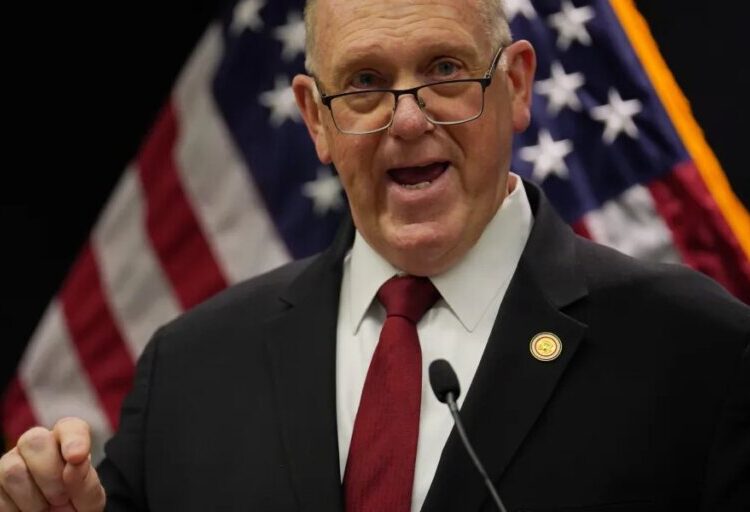
As Russia warns that it is ready for war with Europe, Mr. Pistorius’s goal is to make Germany’s military capable of leading the continent’s defense in a major land conflict — and to prepare the country’s pacifist population for this new posture.
On Friday, German lawmakers approved the latest part of Mr. Pistorius’s plan: a law that aims to increase the number of German soldiers to 260,000 by 2035, a nearly 50 percent boost. To incentivize recruitment, soldiers will be paid more and receive more training that is useful for civilian careers.
All 18-year-old men will be sent a questionnaire requiring them to provide information about their health and fitness, making it easier to identify potential recruits. Women will be able to fill the form out voluntarily.
The law, which had set off one of the most turbulent national debates in recent memory, stops short of actually drafting soldiers. That is a mistake, according to some experts who fear Germany won’t be ready for a Russian attack on NATO territory — even if the law requires Parliament to discuss reintroducing conscription if too few people volunteer for duty.
Mr. Pistorius’s supporters said it was the best he could do, given a deep-seated unease about rearming the country that started World War II.
“This is one of the biggest social changes we have seen in many years in the areas of security and defense,” Mr. Pistorius, 65, said in an interview.
“It affects a generation and future generations who have never had to deal with these issues because the threat did not exist,” he added.
The law is the latest in a sequence of moves that were unthinkable less than a decade ago but that Mr. Pistorius has promoted in order to bolster German defense. In March, he helped lead a successful effort to remove limits on military spending from Germany’s Constitution. That was a major shift for a debt-shy country, and it enabled Mr. Pistorius to spend billions more on arms, tanks, ships and aircraft that the country previously couldn’t buy.
Mr. Pistorius has also championed a stuttering effort to integrate Europe’s militaries. He was a guiding force behind the recent formation of the Group of Five, a bloc of defense ministers from major European countries who seek tighter security coordination.
For some, such moves provoke unease, summoning memories of German expansionism during the two world wars.
In our interview, Mr. Pistorius acknowledged the weight of German history, but said it had given him and others “a sense of responsibility.”
“Namely, that we must do our part to ensure that we continue to live in peace in Europe,” he said, adding that the expanded German Army will still be much smaller than it was during the Cold War. Back then, Germany had as many as 500,000 soldiers but limited military ambitions, and it never sought to lead Europe’s defense in the way that he now seeks.
Mr. Pistorius’s efforts come as other European countries also try to rapidly increase their standing armies to counter an expansionist Russia and as the United States scales back its support for the continent.
The task of rebuilding Germany’s army is even more fraught because of the long shadow cast by the militarism of the Nazi era.
Opinion polls in Germany show a pervasive fear of sending another generation into war. Domestic politics play a role, too, with parties on the far right and left that are partial to Russia or that favor dialogue with it.
Despite pushing for contentious measures, Mr. Pistorius has remained Germany’s most popular politician for most of the past three years, according to monthly opinion polls.
He speaks with the rasp of a drill sergeant who has been yelling all day. His speech is unadorned, to the point, and sometimes self-deprecating. At one point in our interview he compared his work to that of a soccer coach.
I witnessed his brusque charisma on a visit in January to eastern Poland, where a group of German soldiers were helping to staff a missile air-defense system near the border with Ukraine.
Mr. Pistorius, there to boost morale, huddled among the soldiers and praised them, before singling out a young captain to wish her a happy birthday and shaking her hand. He then commended a sergeant’s military record and promoted him on the spot by slapping new insignia on his arm.
It was a simple but recurring trick employed by Mr. Pistorius, who often surprises soldiers with promotions or effusive praise during visits.
That is a major change in tone compared to previous eras when soldiers felt ignored or scorned by the political leadership.
“I noticed how he behaves, how he speaks: concise, factual and precise — and not just empty talk,” Herlinde Koelbl, a veteran photojournalist who followed Mr. Pistorius for a year, told German television in April.
Mr. Pistorius’s popularity has allowed him to survive the electoral fall of his center-left Social Democratic party, which led the previous governing coalition until it collapsed last year. Reappointed as part of a new coalition after the center-right won the last election, Mr. Pistorius is Germany’s first defense minister since World War II to serve chancellors from two different parties.
His rise to prominence follows a career spent in the obscurity of regional politics. Born in 1960, he grew up in Osnabrück, a midsize industrial city in West Germany. After briefly serving as an army conscript in the early 1980s, he worked as a lawyer and civil servant before entering local politics with the Social Democrats in the 1990s. He became mayor of Osnabrück in 2006 and then interior minister of his home state.
In 2023, Mr. Pistorius was thrust onto the national stage when he was unexpectedly appointed as defense minister. He had no experience at the federal level but had gained a reputation as a hard-working and capable bureaucrat.
Working in local politics taught him “to talk to the people for whom I make my policies,” he said. “I tend not to make policy based on the principle that I know what is best for people, but rather I listen.”
Still, early in his tenure as defense minister, Mr. Pistorius provoked a national furor by insisting that Germany become “Kriegstüchtig,” or “war-ready” — a provocative term for a country that, since 1945, had sought only to be “defense-ready.”
The outcry highlighted Mr. Pistorius’s delicate position. He wants to prepare Germany for an escalation with Russia, but critics say that his policies are making that escalation more likely.
“The federal government is frightening an entire generation,” Sahra Wagenknecht, a far-left politician who has long pushed for negotiation with Russia, said in a text message. “The federal government is playing Russian roulette with the prospects and soon possibly with the lives of young people,” she added.
German hawks say that Mr. Pistorius hasn’t gone far enough to counter Russian threats and that the law approved on Friday is ineffective because it doesn’t introduce a compulsory draft.
“Further evidence of the halfheartedness of German security policy over the last three and a half years,” Sönke Neitzel, a military historian, said during a parliamentary hearing before the vote, calling the bill “yet another example of hesitation and procrastination.”
But Mr. Pistorius remains phlegmatic. Debate is healthy, he said, not least because it is slowly acclimatizing society to the need for action.
“The discussion alone,” he said, is “changing the way many people think about the times we live in, about the threats we face.”
Christopher F. Schuetze is a reporter for The Times based in Berlin, covering politics, society and culture in Germany, Austria and Switzerland.
The post After 1945, Germany Constrained Its Army. He’s Trying to Revive It. appeared first on New York Times.