The world is a much better place than it used to be, especially for young children.
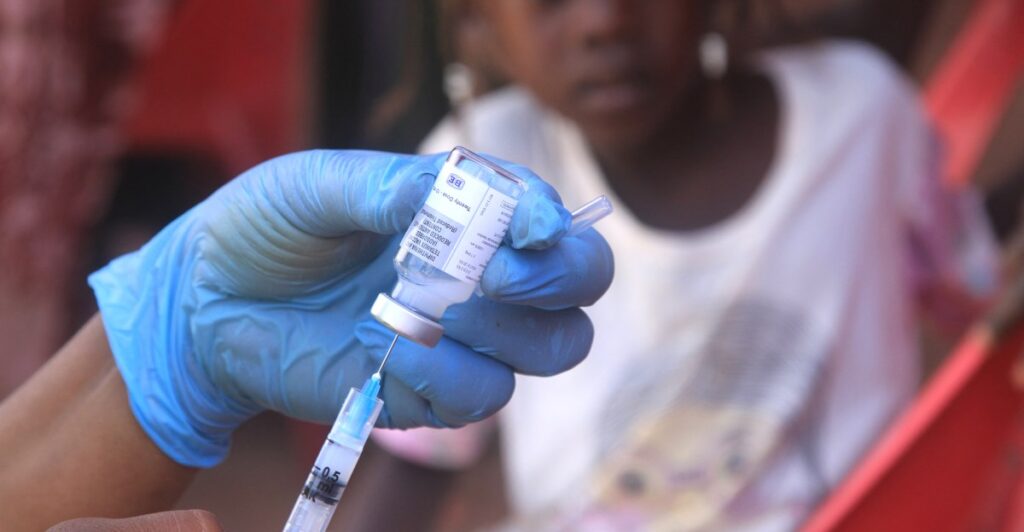
Insecticide-treated mosquito nets and novel treatments have made malaria much less deadly for millions of kids. Many countries now have the tools and techniques they need to nurse even very premature babies back to health. And the stupendous rise of vaccines against deadly diseases — like measles, diphtheria, and pneumonia — have prevented countless children from getting sick to begin with.
But after decades of progress in preventing child deaths, the world is now going in the wrong direction in the very worst way imaginable. According to newly released projections by the Institute for Health Metrics and Evaluation (IHME) done in partnership with the Gates Foundation, an estimated 4.8 million young children died before their fifth birthday this year. That would represent an increase of 200,000 from the year prior. It is the first time this century that child deaths have increased and it comes in large part as a result of massive foreign aid cuts from the United States and most of Europe, a policy change that has proved more immediately catastrophic for the world’s children than the HIV/AIDS epidemic.
Global development assistance for health — which provides the mosquito nets, vaccines, and simple treatments needed to keep kids safe for a tiny fraction of rich countries’ budgets — plummeted by nearly 27 percent this year, according to the IHME.
If funding cuts of 20 percent persist over the next two decades, then 12 million more young children could die by 2045, as compared to a future where aid remains stable.
And if they continue at an even more drastic rate of 30 percent, the number of additional deaths could rise to 16 million, roughly the population of the Netherlands or four times the number of kindergarteners there are in the United States.
“That means more than 5,000 classrooms of children, gone before they ever learn to write their name or tie their shoes,” writes Bill Gates in the new report released this week.
In a worst-case scenario, he writes, “we could be the generation who had access to the most advanced science and innovation in human history — but couldn’t get the funding together to ensure it saved lives.”
Undoing the world’s best story
The number of children dying before age 5 has plummeted by over 60 percent since 1990, but even so, in drastically poor countries like Somalia, South Sudan, and Chad, about one in 10 young children still do not make it to their fifth birthday.
And aid cuts have made those dire odds even worse. When resources dwindle, the effects often “trickle down” first upon the “most vulnerable groups within society” — starting with mothers and young children — “who will carry the burden of those restrictions,” Ruth Gibson, a postdoctoral fellow in Stanford’s department of health policy, told me earlier this year.
In a separate study published in The Lancet in May, Gibson found that up to 30 percent of the progress made in recent decades against infant and young child mortality could soon be lost in low-income and middle-income countries as a result of aid cuts.
It doesn’t have to be this way.
The world now has far more tools and techniques at its disposal to keep kids safe than it did 50 or even 15 years ago. Think of lenacapavir, the biannual jab to prevent HIV that could virtually eliminate new infections in our lifetime. Or new maternal vaccines that could help prevent respiratory syncytial virus (RSV) in millions of babies before they’re even born. Or impressive new malaria treatments and vaccines.
One point of hope is that, even in the face of major funding gaps, lower and middle-income countries are still managing to eke out plenty of progress against deadly diseases.
“The support systems may have disappeared but the need has not. And neither have I,” Josephine Barasa, a community health worker in Kenya, told the Gates Foundation. When she lost her job at a clinic to aid cuts earlier this year, she returned to work unpaid.
These innovations won’t stop just because a few wealthy countries decided that saving children’s lives was no longer worth the investment. Neither will the work of health care workers like Barasa.
But funding cuts to organizations like international vaccine alliance Gavi — which until this year, received around 13 percent of its budget from the United States — will make it much harder to sustain these promising advancements and bring them to the children who need them most. For that, they’ll need money. And now we know the toll if they don’t get it.
The post 200,000 additional children under 5 will die this year — thanks to aid cuts appeared first on Vox.