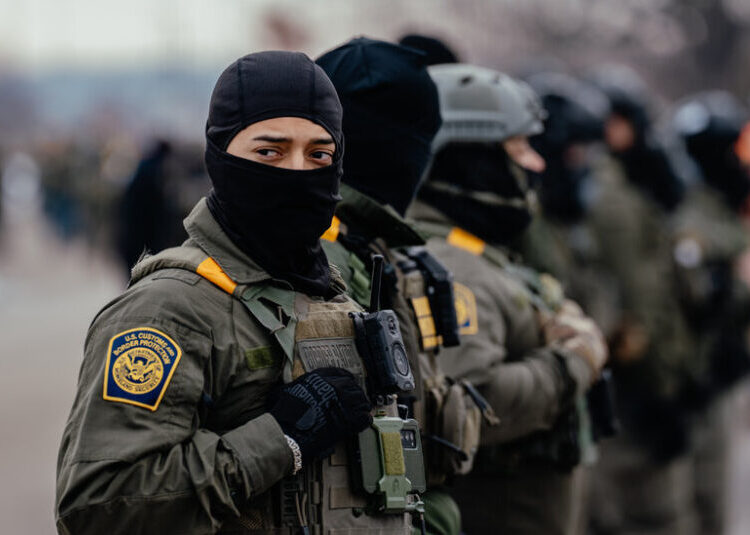
For months, federal agents have made thousands of arrests in cities across the country in what the Trump administration says is an effort to crack down on crime and illegal immigration.
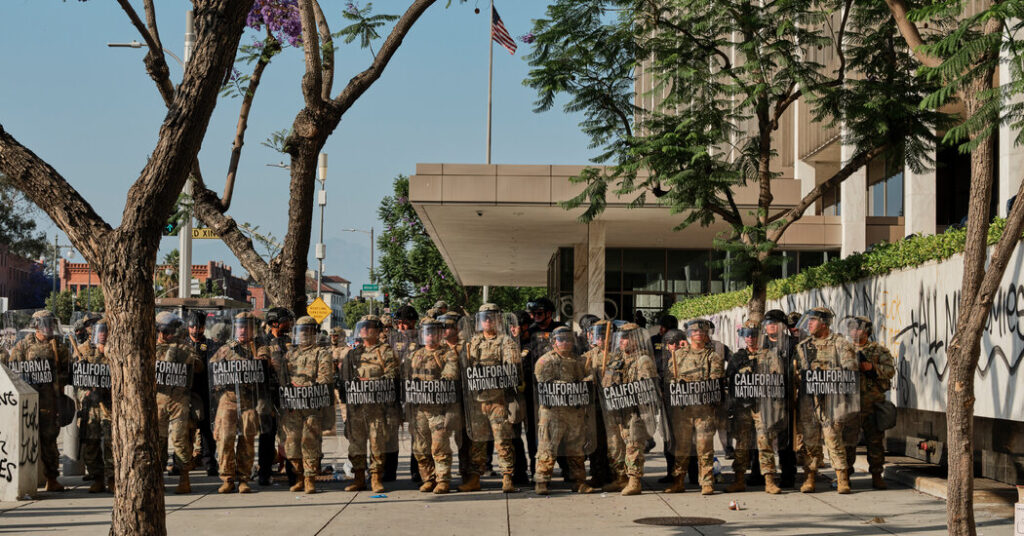
Officials from Immigration and Customs Enforcement and the U.S. Border Patrol have executed attention-grabbing operations targeting Democrat-led cities like Los Angeles and Chicago, and President Trump has called on the National Guard to help local police departments curb crime. Critics say the operations are unnecessary, test the limits of the president’s legal authority and spread fear in immigrant communities.
The scale of the deployments, and the protests against them, have diminished since the summer, in part because of legal challenges. But the operations are still underway and are expanding into other cities. Here’s the latest on the federal presence in many cities.
New Orleans
New Orleans this month became the latest front in the Trump administration’s immigration crackdown, with Border Patrol agents fanning out across the city on Wednesday. A city led by Democrats in a conservative state, New Orleans had been bracing for the agents’ arrival, with immigrant advocates warning residents to stay inside. The Trump administration said that it was pursuing “the worst of the worst” criminals who were in the country illegally. Many of the people detained in similar recent operations in other cities, however, have not had criminal histories.
Minneapolis-St. Paul
The Minneapolis area had not been a major focus of the administration’s immigration crackdown until this week, when the Department of Homeland Security dispatched about 100 agents from out of state as part of an effort to detain Somalis who were subject to deportation.
As of Wednesday, there were few reports of actual arrests in Minneapolis and St. Paul, though immigration rights groups said they were fielding many reports of sightings of ICE agents at residential buildings, parking lots and commercial establishments. Last month, ICE agents conducted operations in two neighborhoods in St. Paul, the state capital, which sparked tense and sometimes violent protests.
Washington, D.C.
The immigration crackdown in Washington began in August, when the Trump administration sent a surge of federal officers into the nation’s capital. But in the months since, the effort has been hampered by legal challenges.
The city became a test case for the Trump administration, which has tried to increase the level of cooperation between the local police and ICE. But this week, a federal judge ordered the Department of Homeland Security to stop arresting immigrants unless officers had a warrant or could show that the person was a flight risk.
Separately, National Guard troops have been in Washington since August, and about 2,300 are stationed in the city. They have not been involved in the immigration operations and instead have been collecting trash and trying to deter crime by patrolling tourist attractions and transit hubs. Last week, two Guard members from West Virginia were shot while on patrol, one fatally. That prompted President Trump to deploy 500 more.
Charlotte
Last month, North Carolina’s largest city became a target in the administration’s enforcement campaign. Though it is far from any border, Mecklenburg County, home to Charlotte, has quietly become one of the largest hubs in the country for international migration, with about 190,000 foreign-born residents living there.
Agents spread into Raleigh and Durham, also liberal strongholds, as well. But most of the focus remained on Charlotte. A Border Patrol operation there led to more than 370 arrests in November and drew criticism for its aggressive tactics.
Chicago
The crackdown in the Chicago area, which began in September and was led by Gregory Bovino, a senior official with the Border Patrol, has tapered off considerably in recent weeks. He and hundreds of Border Patrol agents left the city only days after the first snowfall of the season in November.
Sightings of immigration arrests carried out by ICE officers have not stopped entirely since then — the agency still has a field office in Chicago. But they have occurred in public only sporadically, and there has been no sign of the aggressive tactics, including use of tear gas and pepper balls, that were used frequently by the Border Patrol under Mr. Bovino’s watch.
Los Angeles
Enforcement activity has quieted down in the Los Angeles area over the past few weeks and is not nearly as aggressive as the large-scale immigration raids that began in June and carried over into the summer. Still, county officials say they are receiving reports of immigration operations on an almost daily basis, with arrests at carwashes, food stands and parking lots.
Some of those arrested had criminal records that included charges such as drug trafficking, murder and assault. But in many other cases, those caught up in the raids and detained had no prior criminal charges, or were U.S. citizens or had legal status.
As the operations have decreased in intensity, so have the protests against them.
Memphis
Since late September, Memphis has had hundreds of federal agents patrolling its streets. There have been thousands of arrests, of people including undocumented immigrants, and residents have reported an uptick in traffic stops.
Protests in the Tennessee city have been more muted than in other cities, with residents and community groups focused more on supporting families affected by the arrests. The Republican-led state and a group of Democratic officials in and around Memphis are locked in a legal battle over the presence of National Guard troops in the city, and Tennessee state officials have challenged a ruling that would block their presence.
Portland, Ore.
The administration ramped up its immigration enforcement in the city around June, and a persistent group of protesters has held daily demonstrations outside Portland’s ICE building in the months since. Although skirmishes with the authorities raised tensions during the summer, the demonstrations since then have largely been peaceful, quirky and small.
Mr. Trump has sought to send National Guard troops to the city, saying that the ICE building and federal workers there needed to be protected from “war-ravaged Portland.” That effort remains tied up in court.
Reporting was contributed by Eduardo Medina, Ernesto Londoño, Nicholas Bogel-Burroughs, Jesus Jiménez, Julie Bosman, Emily Cochrane and Anna Griffin.
Jacey Fortin covers a wide range of subjects for The Times, including extreme weather, court cases and state politics across the country.
The post What We Know About Trump’s Immigration Crackdown in U.S. Cities appeared first on New York Times.