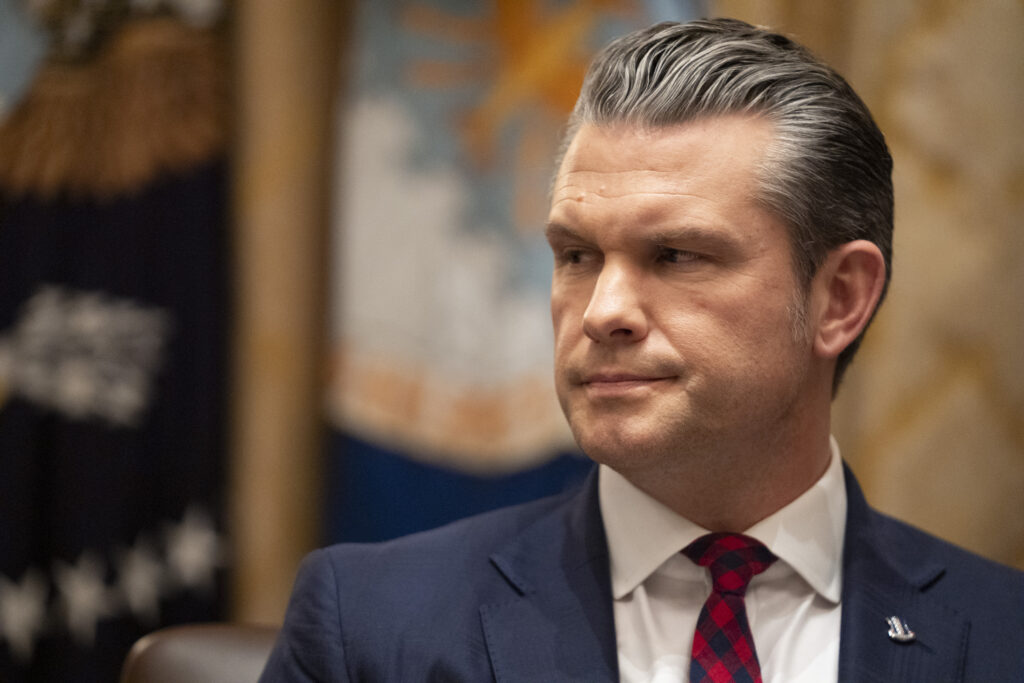
The Post reported last week that, based on a “spoken directive” from Secretary of Defense Pete Hegseth, the U.S. military carried out what is known as a “double-tap” strike in the Caribbean Sea — hitting a Venezuelan vessel that had the signature of a drug boat, then launching a follow-on strike that sank the boat and killed the survivors. The Post quoted experts suggesting that second strike was a “war crime” that could subject those involved to future prosecution.
Hegseth said Tuesday that he was unaware of that there had been any survivors or a follow-on strike until hours later. But even if he had directly ordered the second attack, there is nothing unlawful about hitting a military target multiple times to make sure it has been eliminated.
President Barack Obama did it all the time. Indeed, in targeting cartels it has designated as foreign terrorist organizations, the Trump administration appears to be closely following the playbook pioneered by Obama.
On taking office, Obama dramatically escalated the use of drone strikes against terrorism targets after ending the CIA’s terrorist interrogation program — finding it was simpler to vaporize enemy combatants rather than capture them alive for questioning. So Obama forged what the New York Times called at the time a “take-no-prisoners policy,” ordering over 540 drone strikes on terrorists in Pakistan, Somalia and Yemen (including one that killed a U.S. citizen, Anwar al-Awlaki, leader of al-Qaeda in the Arabian Peninsula).
The strikes Obama ordered were similar to those Trump has carried out in the waters off of Venezuela. Obama used what were called “signature strikes” in which the U.S. targeted patterns of behavior denoting terrorist activity (“signatures”) even when the precise identity of the individuals being targeted was unknown. And he routinely carried out so-called “double-tap” strikes — hitting a target once and then striking again to take out any survivors or other terrorists who rushed to the scene after the initial hit.
“We used double-taps all the time,” said David Shedd, former deputy director and acting director of the Defense Intelligence Agency in the Obama administration. “You would get the initial signature off of a target that’s been hit,” he told me in a podcast interview, “and if you saw that they ‘squirted’ and were injured … you hit them again.” In fact, he said, “there was often a second predator ready to go … that was fully expected to be used if you didn’t have a 100 percent coming out of the first hit — and maybe a third hit,” adding that “it was done routinely” and there “was bipartisan support on the Hill for doing it.”
Obama personally approved the “kill lists” for these strikes. “Turns out I’m really good at killing people,” Obama reportedly declared to aides. According to one estimate, the strikes Obama authorized killed an estimated 3,797 people.
So, anyone who wants to charge Pete Hegseth with war crimes should charge Barack Obama first.
Obama declared that his strikes were legal, effective and necessary. Well, so are Trump’s. This year, the administration formally designated eight international drug cartels as Foreign Terrorist Organizations and Specially Designated Global Terrorists. His administration then notified Congress that “the United States is in a non-international armed conflict with these designated terrorist organizations” and had “reached a critical point where we must use force in self-defense and defense of others.” The Justice Department’s Office of Legal Counsel issued a classified legal opinion that set the parameters for this military campaign to ensure that it is carried out in compliance with U.S. law and the laws of armed conflict.
Pentagon spokesman Sean Parnell told The Post in November that “lawyers up and down the chain of command have been thoroughly involved in reviewing these operations prior to execution” and were given “the opportunity to disagree” and “no lawyer involved has questioned the legality of the Caribbean strikes.”
Even if one did not accept that Trump’s terrorist designation justified strikes against the cartels, there is another legal basis for military action: The administration has also argued in court that cartels — including Tren de Aragua and Cartel de los Soles — have “infiltrated” the Venezuelan regime’s “military and law enforcement apparatus” and “taken control over Venezuelan territory” resulting in a “hybrid criminal state.” As John Yoo, former deputy assistant attorney general in the Office of Legal Counsel, told me, if the cartels are part of the Venezuelan regime, then they are effectively “an auxiliary attachment to the regular armed forces and the intelligence agencies in Venezuela” and are thus legitimate targets of military action against the Venezuelan state.
No doubt the Pentagon will investigate this strike to determine if that it was carried out according to the OLC’s legal guidance and the laws of war. But the Trump administration’s military campaign against the drug cartels is backed up by sound legal reasoning and legal precedent set during the Obama-Biden administration.
Which means everyone should take a breath before throwing rhetoric like “war crime” around. Because if Barack Obama can launch double-tap strikes to take out terrorists, so can Donald Trump.
The post Trump’s boat strike playbook was written by Obama appeared first on Washington Post.