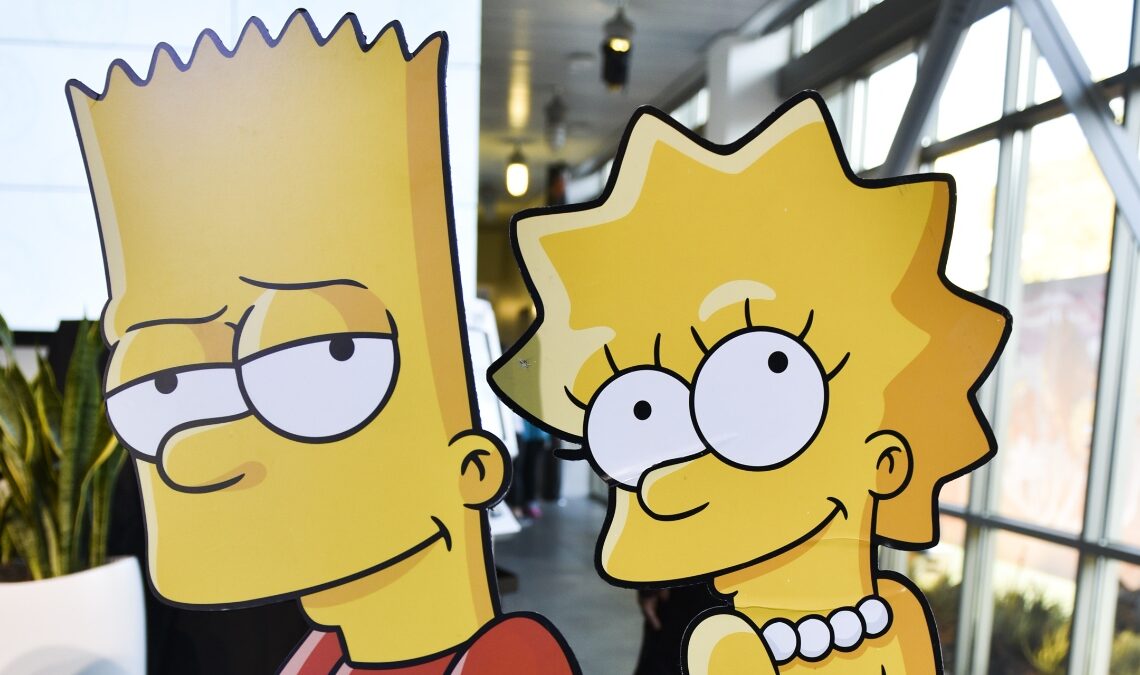
December 4, 1990, was a special day for anyone on the ground floor of The Simpsons fandom. Two months after the premiere of season two, the show’s first album, The Simpsons Sing the Blues, dropped just in time for Christmas. If anyone needs their memory refreshed, this album produced the lead single “Do the Bartman”, which quickly became a cultural phenomenon.
The entire album went double Platinum in the U.S. after just two weeks. Additionally, “Do the Bartman” topped the U.K. singles chart in 1991 for a handful of weeks. The concept of a fictional animated family making a hugely popular album sparked a run of copycats in the industry. Barbie, the Mario Bros., the Teenage Mutant Ninja Turtles, even Sebastian from The Little Mermaid. Anyone with some sort of animated franchise wanted in on the fast-selling success of The Simpsons Sing the Blues.
Even before its official release, The Simpsons Sing the Blues gained enormous publicity. Mostly, this was due to rumors of celebrity guests, notably Michael Jackson. While this turned out to be true, as Jackson provided backing vocals on “Do the Bartman,” Fox execs wanted to keep this a secret during negotiations. Still, the news leaked, and publicity around the album grew.
“Oh, it’s so frustrating,” said Matt Groening in a September 1990 interview. “I said to a reporter a while ago that I would like to have [Michael Jackson on the album] and it was printed as if it was true.”
‘The Simpsons Sing the Blues’ Sparks a Cultural Phenomenon Led by The Bartman
The Simpsons Sing the Blues explored several different musical styles through cover songs and originals. There were also some big-name guest artists. Joe Walsh of the Eagles and Buster Poindexter of the New York Dolls both played guitar on a rendition of “School Day” by Chuck Berry. B.B. King also played guitar on “Born Under a Bad Sign”, originally by Albert King. And John Sebastian of Lovin’ Spoonful provided harmonica on “Moanin’ Lisa Blues”.
Of course, there was also Michael Jackson on “Do the Bartman”, which led to a popular dance of the same name. Not only did Jackson provide vocals, but he also wrote and co-produced the song anonymously. It wasn’t until around 1996 that Matt Groening revealed Jackson’s true involvement, expressing surprise that no one ever figured it out.
Meanwhile, Bart Simpson’s two rap songs, “Do the Bartman” and “Deep, Deep Trouble”, were in response to the Black community’s embrace of the character. It was somewhat of an homage to Bart’s resonance with Black youth in America. A 1990 article in The Washington Post about the bootleg Bart Simpson t-shirts that flooded New York City noted this phenomenon.
“I think the Bart character is appealing because—I don’t want to say he’s kind of Black. I don’t mean that,” said Harry Allen, publicist for Public Enemy, at the time. “He’s just got some very unusual characteristics, from his haircut to his use of the word ‘homeboy’ infrequently, to even his general sassiness.”
Allen, described as an avid fan of The Simpsons (which was “the most attention I give white people during the course of a week”), noted the show’s portrayal of averageness. Specifically, he said its “lack of pretension just resonates in general with the way Black people view the world.”
Photo by Rodin Eckenroth/WireImage
The post On This Day in 1990, the Simpsons Release an Album With Chart-Topping Single ‘Do the Bartman’ appeared first on VICE.