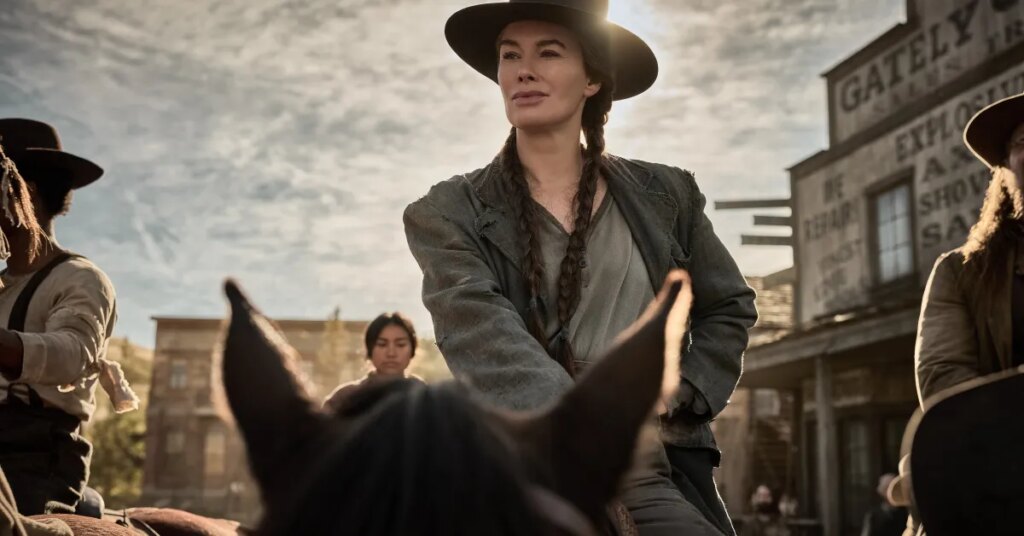
The Abandons is a Rorschach test. What you see in the new Netflix western says at least as much about your perspective on the current TV landscape as it does about the show itself. Look at it one way, and it’s an innocuous potboiler—no masterpiece, sure, but entertaining enough to please fans of the genre. The girl-power themes; the casting of two beloved franchise leads, Gillian Anderson and Lena Headey, opposite one another; and the fact that it was created by Sons of Anarchy’s Kurt Sutter are guaranteed to delight various key segments of the platform’s meticulously quantified subscriber base. But for anyone who sifts through huge quantities of television, The Abandons embodies everything that’s frustrating about the medium right now.
[time-brightcove not-tgx=”true”]
In its ongoing quest to become the only streaming service any person could possibly need (an objective it recently furthered with a cash-heavy bid to purchase Warner Bros. Discovery), Netflix reliably develops an analog—or five—for every breakout hit its competitors release. As fan sites have dutifully noted, The Abandons is the platform’s latest answer to Paramount’s Yellowstone, which ended in 2024 but continues to fuel an ever-growing franchise, rounding out a year of next-big-Western-series candidates that included the brutal period drama American Primeval, the flimsy but visually stunning crime procedural Untamed, and the romance-tinged Ransom Canyon. (An Australian take on Yellowstone, Territory, premiered on Netflix last fall.) Like the show that set the trend, most of these stories are premised on land conflicts between rugged individualists and voracious capitalist vultures: two quintessential American archetypes.
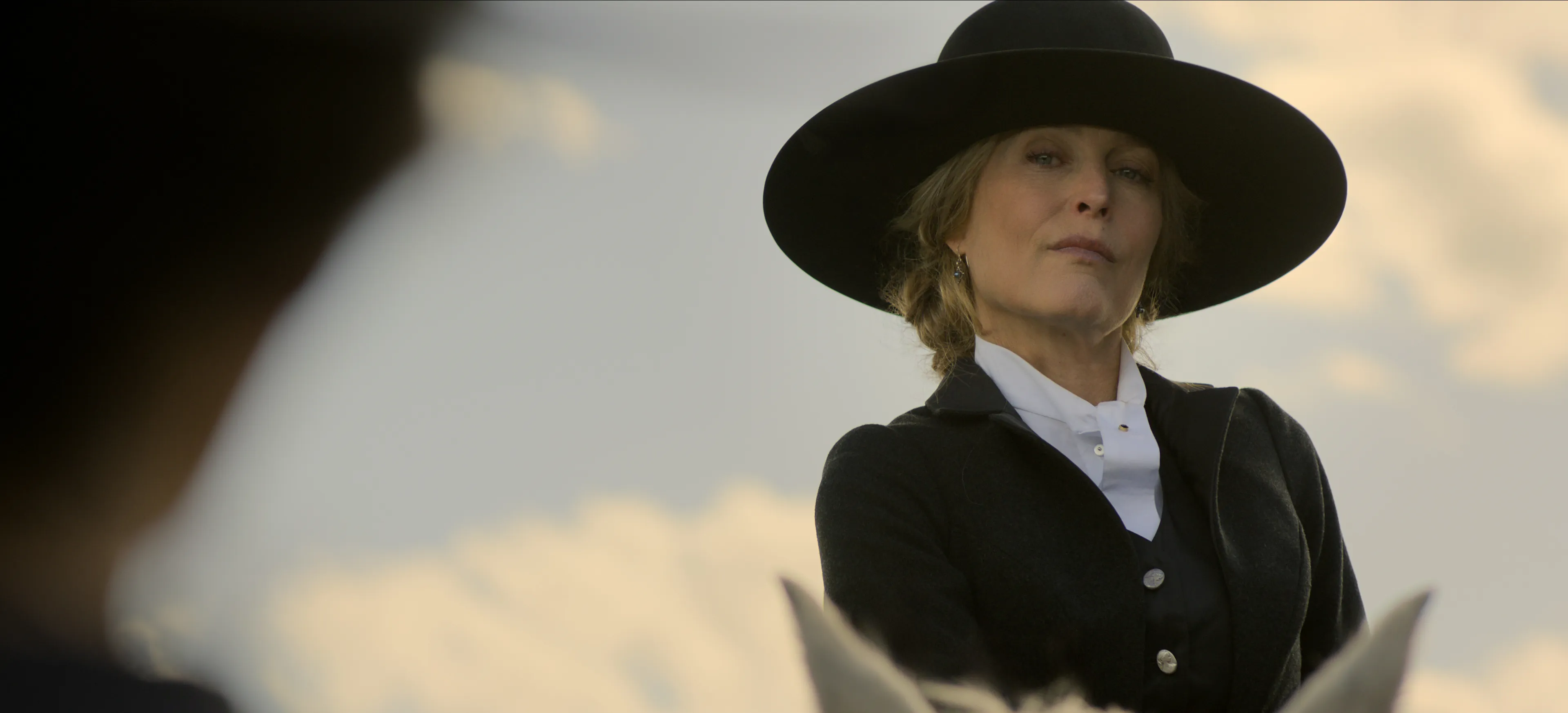
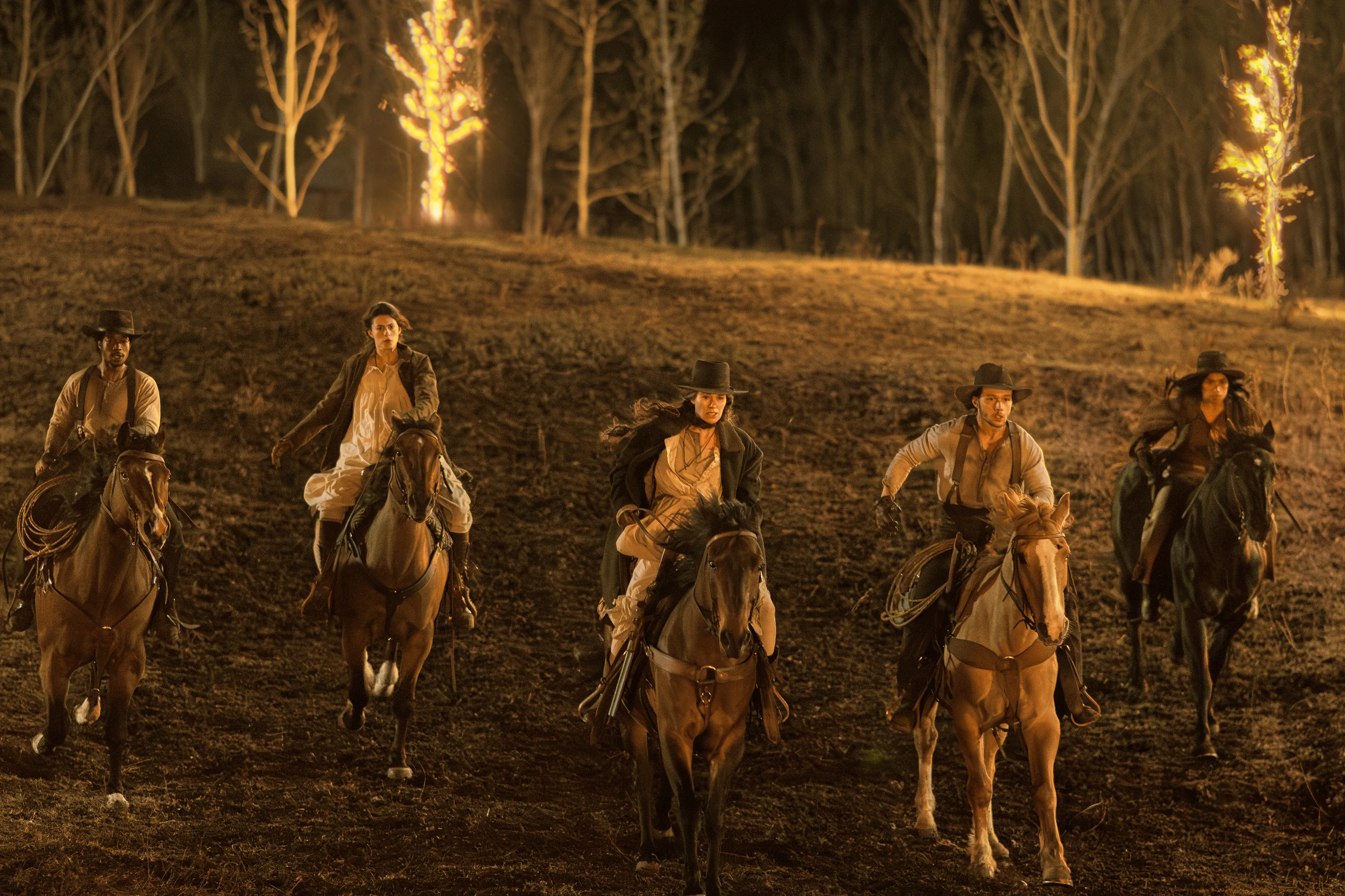
So it is in The Abandons, set in 1854 in what was then the Washington Territory. Except this time the principals are both women. Headey, one of Game of Thrones’ most consistently compelling performers, plays a near opposite of the brutal yet sometimes sympathetic Cersei; her devout, loving, yet sometimes ferocious hero, Fiona Nolan, has built a cattle ranch and a chosen family on land rich in silver. Anderson’s cutthroat Constance Van Ness, the recently widowed matriarch of a wealthy and powerful local dynasty, is desperate to mine that vein. But Fiona and her neighbors aren’t selling. As her investor grows impatient (where Deadwood had a Hearst lurking in the background, The Abandons has a Vanderbilt), Constance sends minions to set fires, release livestock, and generally lean on Fiona’s household, a.k.a. the Orphans.
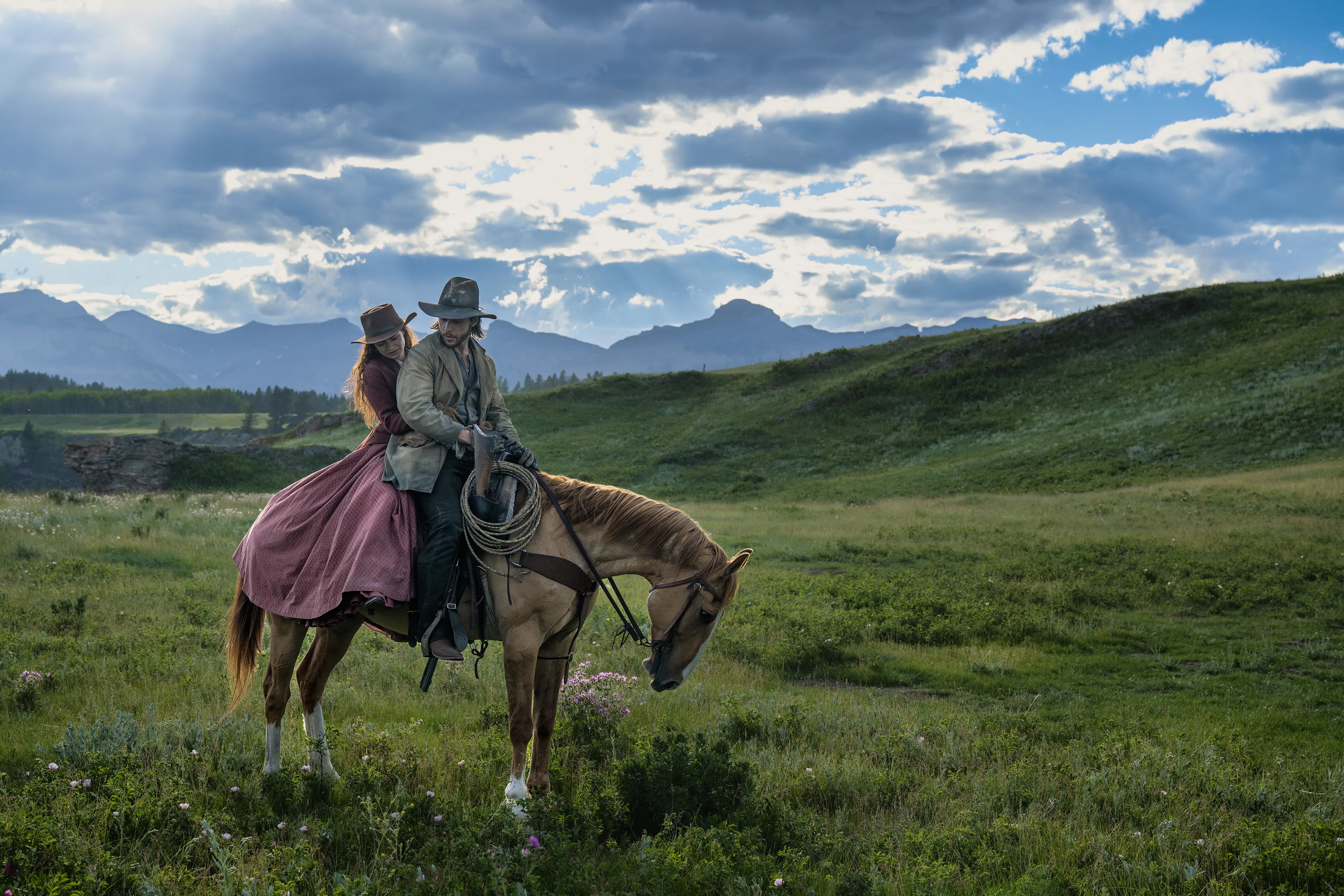
Complicating the conflict, though not in ways more inspired than the main plot, are the relationships between Constance’s young adult children and Fiona’s adoptees. The eldest Van Ness boy, Willem (Toby Hemingway), has his predatory sights set on the defiant Orphan Dahlia (Diana Silvers). A kind outlier in that cruel clan, Trisha Van Ness (Aisling Franciosi) is drawn to Dahlia’s brooding brother, Elias (Nick Robinson); if Anarchy was Sutter’s take on Hamlet, this is his bathetic Romeo and Juliet. An educated Black Orphan, Albert (Lamar Johnson), affords The Abandons the opportunity to wag its finger at blatant racism. Scenes involving the local Cayuse tribe check a Western box without coalescing into full stories. Other Indigenous characters, like the Orphan Lilla Belle (Natalia Del Riego) and Constance’s consigliere Jack Cree (Michael Greyeyes, squandered), are similarly underdeveloped. Fiona’s neighbors get their own thin plots, broadening but not deepening the world of a show that moves haltingly towards a cliffhanger in its scant, 7-episode first season and so presumably means to continue.
The pairing of Anderson and Headey should, in theory, make The Abandons worth watching on its own. Headey is, indeed, the show’s biggest asset. Brash, righteous, and fiercely protective of her Orphans, Fiona is the standard neo-Western patriarch in braids; it’s the performance that makes her warmth and piety and defiance cohere into a distinct person rather than a stock type. Anderson, for all her charisma when she’s smartly cast (in The Fall, Sex Education, and, of course, The X-Files), is less consistent. Historical grande dames don’t seem to be her forte. She was stiff as Eleanor Roosevelt in The First Lady, stiff as Margaret Thatcher in The Crown, and she’s stiff here, too, repurposing her Iron Lady’s citric pucker and frosty glare. Confrontations between the leads are treated as climactic moments, yet this disparity—exacerbated by direction that fails to commit to either blunt realism or diva-vs.-diva camp—makes their scenes fall flat. The younger cast members mostly play 19th century 20-somethings as if they were teen soap characters (also likely a directing problem). Headey never gets a worthy scene partner.
Everyone would probably be in better form if the writing were decent. Anderson might’ve had more nuance to grab on to if Constance possessed even one redeeming quality. (Her two boys, Willem and Lucas Till’s Garret, are equally soulless.) Elias starts stammering every time he tries to talk to Trisha, like a smitten kid in a goofy comedy. Most characters are simply unmemorable. Story beats feel cobbled together from Westerns any potential viewer has almost definitely seen before. Rape is used to drive the plot. Suspense should build as a showdown between the Van Nesses and the Orphans becomes inevitable, but because nothing surprising ever happens, it doesn’t.
It’s hard to tell what Sutter is trying to do with the dialogue. There’s too much anachronism, adornment, and profanity for it to be believable 1850s frontierspeak. But if this is an attempt at stylized speech in the Deadwood mode, it’s an awfully clumsy one. “There’s a mountain of sh-t between us, Trisha,” says Elias. “I don’t fool myself it can ever be climbed.” Characters constantly elide pronouns and verbs (“Our vengeance—wrong”) in a way that makes them sound out of breath even when they’re standing still. Anderson gets the purplest pronouncements: “That perception of savagery is what I require.” “Fate is merely a victim of circumstance.” “Do our children still need such concern? Or do we slyly foster it, clinging to our motherly purpose?” Al Swearengen she ain’t.
Brought to some semblance of life using generic Western sets and lighting that gleams unnaturally even in many exterior shots, The Abandons is not the kind of well-constructed but formulaic series that James Poniewozik christened “mid TV.” (A recent example of the latter would be Netflix’s thrilling but in no way groundbreaking The Beast in Me.) To steal a term from the tech sector, of which Netflix is very much a part, I would call it minimum viable product (MVP) TV. The platform has installed just enough features in the show—with its famous leads, its trendy genre, its creator who has a following of his own, some flimsy ideas about motherhood and what makes a family that men must think will go over big with women—to put it in front of viewers and be confident they’ll watch. MVP TV is everywhere in this bland, gunshy moment for Hollywood. It’s plugging Sarah Snook and Jake Lacy into the nonsensical, David-E.-Kelley-lite domestic thriller All Her Fault. It’s giving Glen Powell his own Ted Lasso but forgetting to write any endearing characters. It is the cynical aggregation of brands and stars that is All’s Fair.
Of course, when a tech company releases an MVP, its aim is to collect user feedback and keep iterating in hopes of improving the product. If only television worked that way. When Hollywood executives score a hit by delivering the bare minimum, they tend not to mess with the formula.
The post Netflix Western The Abandons Is Everything Wrong With TV in 2025 appeared first on TIME.