A nation gagging on its own political bile needs another political novel like a late-night swig of Reddit rage. But in these poisoned times, Brian Schaefer’s “Town & Country” serves up something refreshingly thoughtful.
This is an election story set far from Washington and the clashing swords of cable news, in a district where funding for a new sewer can be debated without sinking into one.
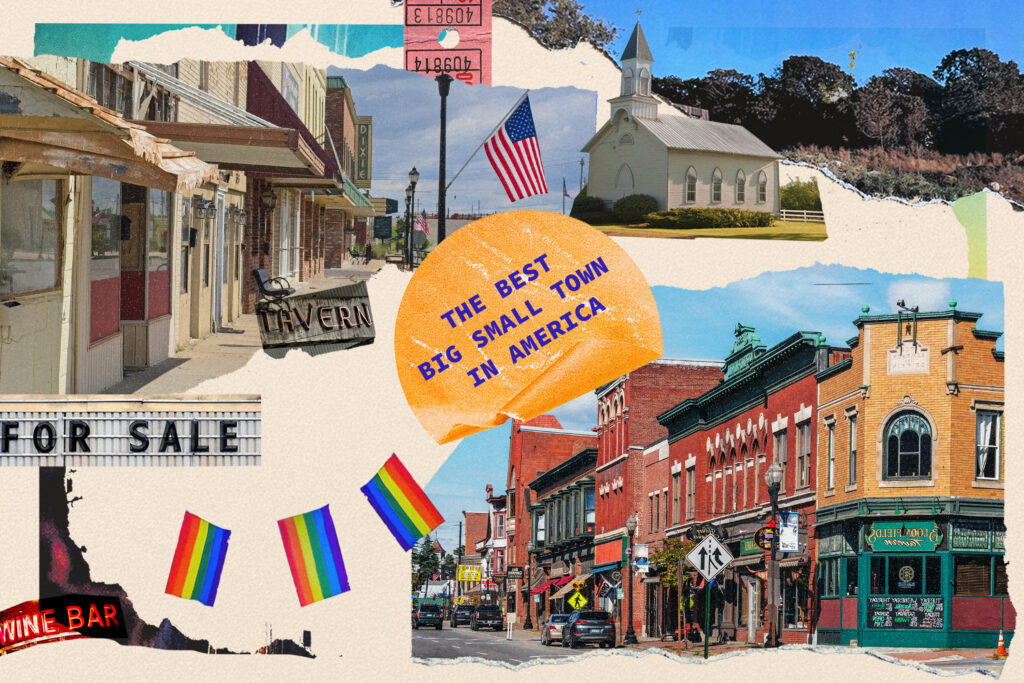
Schaefer doesn’t specify where the town of Griffin is located, but he sketches the annual Memorial Day parade with such charm and verve that we recognize the familiar sounds of the band’s Sousa march. Here is a once-depressed rural community that’s suddenly earned the affection of wealthy folks from a nearby city. Somehow, without changing its character, Griffin has upgraded its style. Old Main Street now sports fancy boutiques, high-end hair salons and gourmet tea shops. It’s even been named “The Best Big Small Town in America” by National Holiday magazine. While drug addiction continues to haunt the alleys, housing prices have soared, sparking the usual tension between owners happy to see their equity spike and renters locked out for good.
Driving much of this gentrification is a group of affluent gay men who appreciate Griffin’s bucolic tranquility and nostalgic charm. With their good taste and big-city incomes, the town is a vast green canvas on which they can paint the perfect weekend getaway.
For the longtime residents of Griffin, though, Paul’s candidacy represents something else, a conflation of irritants that Schaefer draws with considerable delicacy. It’s not just that Paul is gay — almost everyone is savvy enough to know that’s no longer a legitimate disqualification — it’s that he’s lived here less than two years. They see Paul as a political mercenary. One homophobic barfly even coins a crude pun on the term “carpetbagger.”
As they sing in “The Music Man,” “You gotta know the territory!”
The man who does know the territory in this swing district is Paul’s brawny opponent, Chip Riley, owner of the local pub. Chip and his conservative Christian wife, Diane, have raised their two boys in Griffin and, along the way, lifted themselves from poverty.
Given this Country Mouse/City Mouse setup, I thought I knew exactly where “Town & Country” would scurry off to, but Schaefer immediately starts complicating the election campaign in clever ways. Eight years ago, for instance, Diane co-chaired her church’s fight against same-sex marriage, but now she makes a good living selling homes to gay men who love Griffin’s pastoral setting. “God has a sly sense of humor,” she thinks, “and a knack for imaginative punishment.” What’s more, her younger son, Will — the raw, tender heart of this novel — recently came out of the closet and finds with Paul and his coterie a sense of community, acceptance and erotic experience he’s never known before. As Election Day approaches, Chip’s family is far more entangled with his opponent than he realizes.
The words “Democrat” and “Republican,” “liberal” and “conservative” never appear in the pages of “Town & Country,” and Schaefer isn’t just being coy. He’s trying to drill down beneath the labels that make Americans snarl at each other and plumb something essentially humane about our hopes and dreams. That effort gives the novel an uncanny-valley vibe. In an era when every close congressional race inspires ferocious national attention, panicked fundraising and existential dread, the campaign for Griffin’s seat remains suspiciously free of outside media and interference, as though it were a pie-eating contest in Mayberry.
In an earnest essay for LitHub about his artistic intentions, Schaefer revealed that he began “Town & Country” six years ago as a sharp satire but eventually swerved to produce “a heartfelt political novel that resists cynicism in favor of empathy.” Signs of that renovation are plainly visible, like sacred stained-glass windows left in a trendy nightclub. Indeed, “Town & Country” sometimes feels as torn about its tone as Griffin feels about its identity. These so-called “power gays” are comically glib until we slip off into their individual tales of authentic yearning; Diane is a classic religious hypocrite until the agony of her faith cracks that facade.
Indeed, there’s a poised elegance to Schaefer’s prose in this confident debut novel, the sense of a writer who appreciates when to jab and when to comfort. He also demonstrates a reporter’s energetic pace and omnivorous scope. “Town & Country” is never short of engaging, but its focus moves around faster than a canvasser getting paid by the doorbell. Members of Paul’s friend group get their own side stories, some quite dramatic, as do all the members of Chip’s family. Jonathan Franzen or Nathan Hill would have blown this plot out to 700 pages before lunch. As is, the novel feels like a bright rom-com version of something Alan Hollinghurst might have written in a different universe — a book perfectly positioned for adaptation into a stylish and witty HBO series.
Not that there’s anything wrong with that.
Ron Charles reviews books and writes the Book Club newsletter for The Washington Post. He is the book critic for “CBS Sunday Morning.”
Town & Country
By Brian Schaefer
Atria. 304 pp. $28
The post In ‘Town & Country,’ the political novel gets a refreshing makeover appeared first on Washington Post.