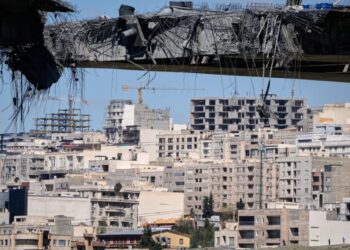
The luckiest of unlucky drug smugglers was one of two in a crew of four to survive a U.S. drone strike on a semi-submersible on Oct.16.
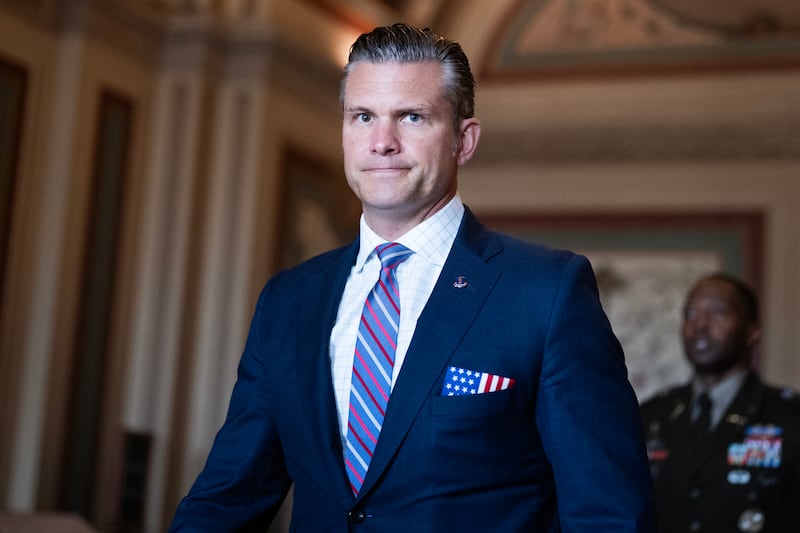
Had Pete Hegseth’s rebranded Department of War simply lived up to its lethal new name, the U.S. would have just sent another missile.
After all, that was what it did on Sept. 2 to kill two other survivors out of a crew of 11 in the first of the U.S. attacks ordered by President Trump on suspected drug boats in the open sea.
Maybe by Oct. 16, somebody suggested that the second strike constituted a war crime.
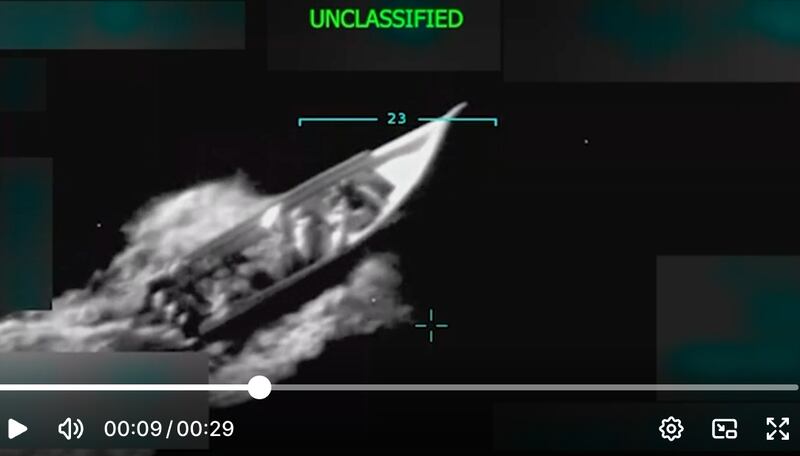
Instead of just unleashing an added missile to handle another pair of unwanted survivors from a suspected drug boat attack, the U.S. dispatched a rescue helicopter.
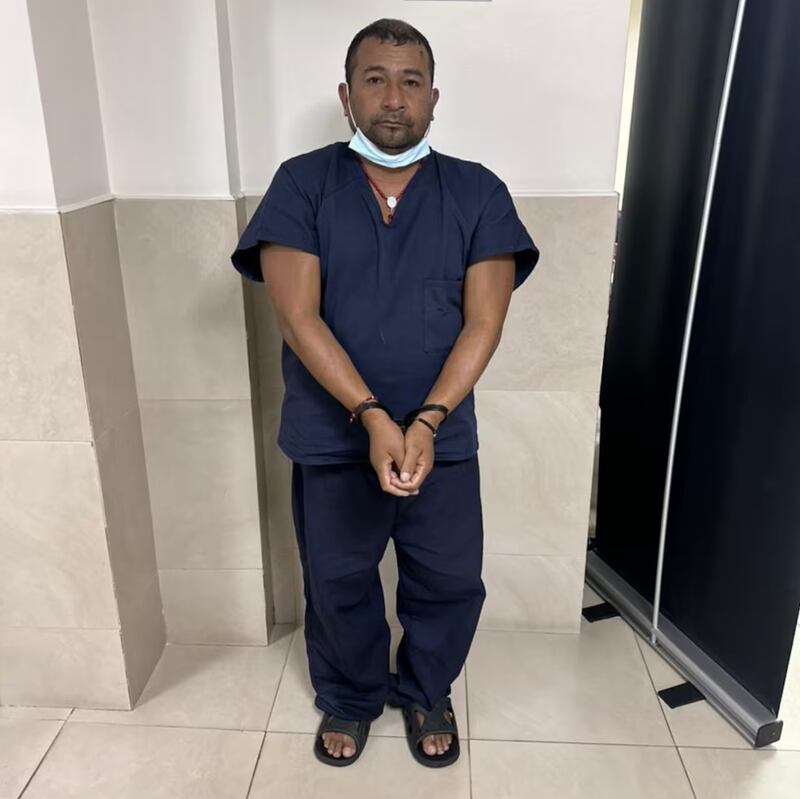
Where the two from Sept. 2 were obliterated, this subsequent pair was flown to a Navy warship. One of them, identified as 34-year-old Jeison Obando Perez, was treated for a serious head injury suffered in the strike that killed two others on the semi-submersible. He was intubated when he arrived at a hospital in his native Colombia, but is reportedly expected to recover. He is not expected to face criminal charges, making him doubly lucky not just to walk free, but to be walking at all.
Even luckier, and perhaps amongst the luckiest of all unlucky drug smugglers, is 42-year-old Andres Fernando Tufino Chila of Ecuador. He was not injured and also was not charged, despite a 2020 conviction for being the captain of a go-fast boat carrying more than a ton of cocaine.
Some bad luck came into play for Tufino Chila on Sept. 6, 2020, when a U.S. Maritime Patrol Aircraft spotted what court papers call “Go Fast Vessel 1 (GFV 1)” moving at a high rate of speed 380 miles east of Clipperton Island, a remote, uninhabited coral atoll in the north Pacific Ocean.
“Coast Guard Cutter STEADFAST diverted to intercept and launched a helicopter and two small boats with embarked boarding teams to interdict,” court papers say.
One of the small boats intercepted GFV 1 and ordered it to stop.
“Instead, GFV 1 began moving erratically and executing tight turns.”
The boarding team on the small Coast Guard boat fired warning shots across GTFV 1’s bow.
“The helicopter went over and GFV 1 stopped moving,” court papers recount. “One small boat came alongside GFV 1 and gained control. ANDRES FERNANDO TUFIÑO CHILA was identified as the master of the vessel and he made a verbal claim of Ecuadorian nationality for the vessel.
“The team reported the deck of GFV 1 had a fresh fiberglass patch around the entire deck… When the boarding team drilled a hole in the deck/hull of GFV 1, the drill bit came back covered in a white substance that field tested positive for cocaine. After removing the deck of GFV 1, the boarding team removed approximately 1,073 kilograms (2,360.6 pounds) of packages from GFV 1.”
The Maritime Patrol Aircraft spotted another go-fast boat, dubbed GFV 2 in court papers. It was approximately 26 nautical miles away on a high-speed course to rendezvous with GFV 1. The helicopter approached and ordered GFV 2 to stop in both English and Spanish. GFV 2 kept going.
“The helicopter first tried warning shots, which were ineffective. The helicopter then tried two rounds of disabling fire, which were effective in stopping GFV 2 approximately 11 NM north of GFV 1. A Coast Guard smallboat came alongside and gained control of GFV 2.”
The three men aboard claimed Mexican nationality and said they were shark fishing.
“But there was no fishing gear other than a net that was severely tangled in a ball, and there was no ice, bait, or catch onboard GFV 2.”
The boarding team did discover a large blue container with two chainsaws with full gas, extra chainsaw blades, several small hatchets and hammers, along with two pry bars, a fiberglass repairs kit, and piles of empty white burlap sacks “commonly used to package contraband such as cocaine.”
“None of this equipment is consistent with fishing,” court papers say. “Instead it is the equipment that would be needed to access the cocaine hidden beneath the deck of GFV 1.”
Tufino Chila ended up pleading guilty in San Diego federal court to conspiracy to distribute cocaine. The pre-sentencing report noted that he had been raised in poverty in a small village just north of the equator in Ecuador.
“He has eight brothers and sisters and never enough food,” the report says. “Mr. Tufino can hardly read or write. He left home at 12 to start his own fishing life.”
He also started his own family and has five children.
“Ecaudorian fishermen are aware of the drug trade, and the lure of easy money is always lurking,” the report says. “Last year, he was recruited for a king’s ransom—$6,000—to transport cocaine in a small board with a small crew on the high seas.”
He accepted.
“Once embarked, he and his fellow crew men took turns at the helm, refueling, and the like, for several days until the Coast Guard discovered them.”
On Dec. 6, 2021, Tufino Chila was sentenced to five years in prison. He caught a break and was freed early on Jan. 29, 2024.
But according to the U.S. government, Tufino Chila was back on another drug-laden vessel—this a semi-submersible—on Oct. 16. He had terrible, and then great luck as the boat was hit by a missile and then he survived, along with Perez.
Had they been the two survivors a month earlier, the end would have come moments later with a second strike. But somebody must have reconsidered, and instead of another missile there was a rescue helicopter.
Anything GV 1 may have been carrying was left behind and maybe sank with the boat. And, despite having a conviction for attempting to smuggle more than a ton of cocaine, he was reportedly allowed to walk free alive, seemingly because somebody high up in Washington must have decided that at least sometimes, it is better to go by the rules.
The post How a Saved Smuggler Makes Hegseth’s Claims Even Fishier appeared first on The Daily Beast.