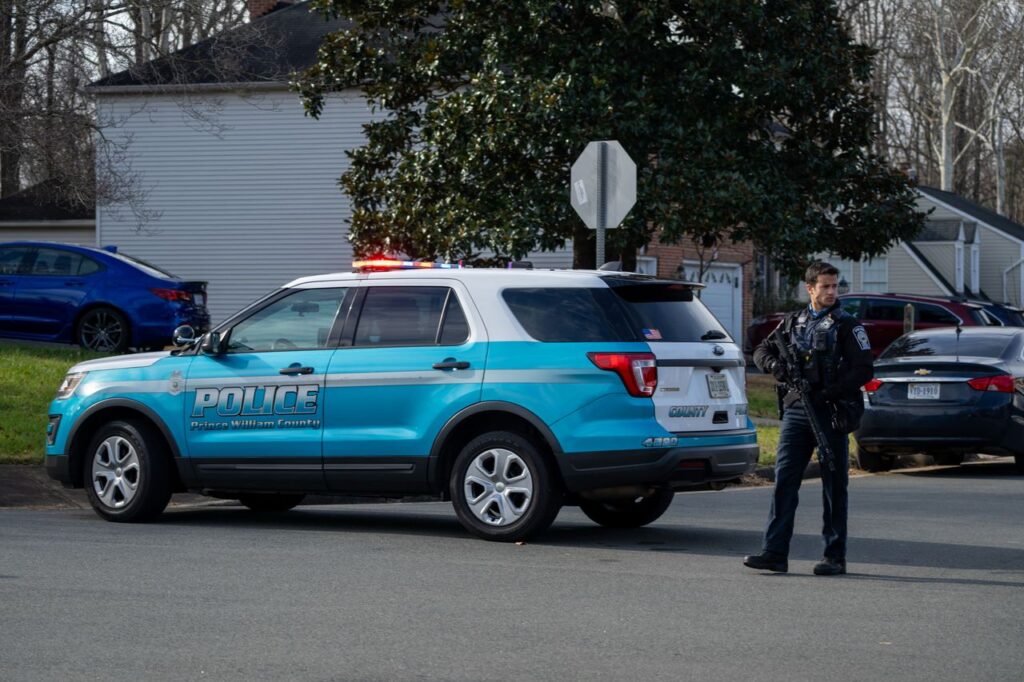
Federal agents on Thursday announced the arrest of a suspect charged with planting the two pipe bombs discovered near the US Capitol complex on the eve of January 6, 2021. Authorities identified the suspect as Brian J. Cole Jr., a resident of Woodbridge, Virginia. The arrest marks a major break in a case that has vexed authorities for nearly five years.
Cole, 30, is charged with transporting an explosive device across state lines with the intent to kill, injure, intimidate or destroy property, and with attempting to damage and destroy the headquarters of the Republican and Democratic national committees by means of an explosive device. If convicted, he would face the prospect of decades in prison.
According to an affidavit, investigators linked Cole to the bombs through a combination of surveillance footage, historical cell-site data, and years of purchase records showing he bought each major component used to construct the devices. Agents allege Cole acquired the same model of galvanized pipe, matching end caps, and nine-volt connectors, among other items, across multiple hardware stores in northern Virginia between 2019 and 2020.
Cole continued buying components used in bomb making after his bombs in the Capitol were discovered, agents allege, listing the purchase of a white kitchen timer and two nine-volt batteries from a Walmart on January 21, as well as galvanized pipes from Home Depot the following day.
Senior Trump administration officials quickly cast the arrest as a vindication of their own leadership, claiming the case had gone cold. Attorney General Pam Bondi said she hoped the arrest would restore public trust following what she characterized as a “total lack of movement” on a case that had “languished for four years.” In their telling, the breakthrough was proof that the case only advanced once they were empowered to “go get the bad guys” and stop “focusing on other extraneous things,” as FBI deputy director Dan Bongino put it.
“Though it had been nearly five years, our team continued to churn through massive amounts of data and tips that we used to identify this suspect,” said Darren Cox, deputy assistant director of the FBI’s criminal investigative division.
The bombs were planted near the headquarters of the Republican and Democratic national committees the night of January 5, 2021, as Congress prepared to certify Joe Biden’s electoral victory over now-president Donald Trump. Both failed to detonate, but their discovery the following day added to the chaos and confusion unfolding as a pro-Trump mob stormed the US Capitol building, causing millions in damage and injuring approximately 140 Capitol and Metropolitan Police Department officers.
The FBI says the pipe-bomb suspect moved through Capitol wearing a gray hooded sweatshirt, mask, gloves, and Nike Air Max sneakers, placing one device in an alley near the RNC and another beneath a bench outside the DNC. The bureau has consistently said that the devices, built from threaded metal pipe, a kitchen timer, and homemade black powder, were “viable” and could have been lethal, though it remains unclear whether they would have detonated absent intervention.
A passerby spotted the RNC bomb the following day and reported it to Capitol Police, who logged the call at 12:42 pm. A police counter-surveillance team discovered the second bomb at the DNC headquarters around 1:05 pm. Then-Vice President-elect Kamala Harris, who was inside the building, was evacuated. US Secret Service agents had conducted a security sweep earlier in the day—with a bomb-sniffing dog.
Perimeter failures were extensive at both sites as police responded simultaneously to breaches at the east front and west front of the Capitol building. Security footage captured two civilians walking by the RNC bomb more than half hour after its discovery, with no officers nearby to hold a blast perimeter. At the DNC building, numerous cars and pedestrians passed through what should have been a secured zone.
Identifying the January 6 pipe-bomber became an obsession in large swathes of Trump’s MAGA base in recent years. Indeed, FBI deputy director Dan Bongino played a significant role in his previous life as a right-wing influencer in criticizing the agency he now helps lead over its perceived lack of process in the case.
Bongino called the failure to identify a suspect “the biggest scandal in FBI history” on his podcast in January, adding that the agency already knew the name of the bomber and “just doesn’t want to tell us because it was an inside job.”
Last month, far-right media outlet the Blaze, founded by Glenn Beck, claimed it had identified the alleged suspect as a former Capitol Police officer, basing their findings on an analysis of how the person walked. Bongino dismissed the allegations as “grossly inaccurate” but the report led to many on the right once again slamming Bongino and his boss for failing to find the bomber.
Despite little being known about the suspected bomber, far-right figures online were already speculating on Thursday morning before he was officially named that he was a member of “antifa.” Others simply didn’t believe that the FBi had arrested the right guy: “Let’s see what they’ve got,” Republican congressman Thomas Massie wrote on X, adding: ”I’m not buying it.”
The post FBI Says DC Pipe Bomb Suspect Brian Cole Kept Buying Bomb Parts After January 6 appeared first on Wired.