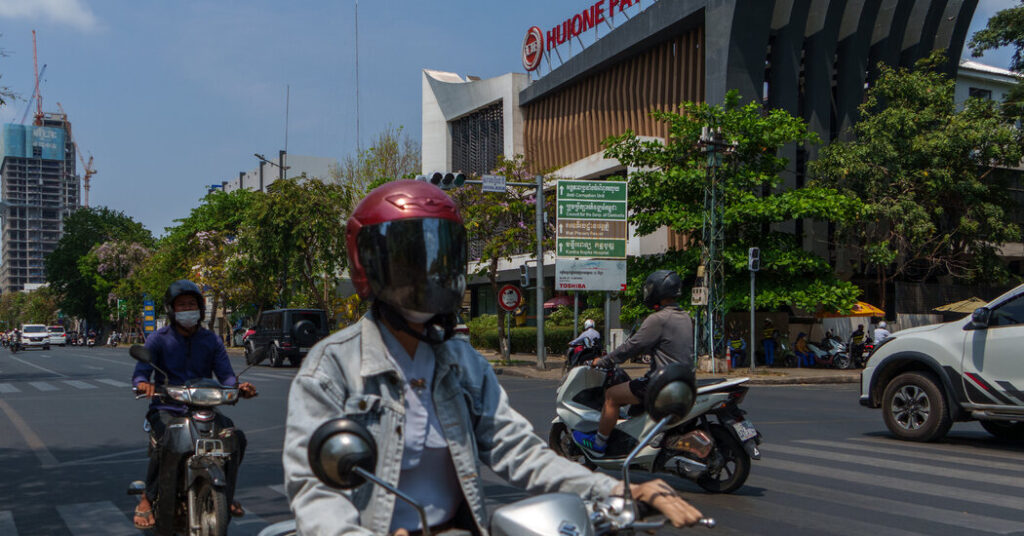
The Cambodian National Bank announced on Wednesday that it had shut down a notorious hub that was used to launder billions of dollars from criminals, scammers and fraudsters, including hackers in South Korea and Southeast Asia.
Huione Group, an established payment service provider with several companies based in Cambodia, is believed to be responsible for laundering more than $4 billion in illicit profits since August 2021, according to the U.S. Treasury Department.
A New York Times investigation published in March found that Huione’s group of companies were at the heart of a global money laundering network. Online scammers who defraud victims with bogus investments or other schemes relied on Huione and its affiliates to move money overseas while evading law enforcement authorities and banks’ anti-laundering departments.
The organization was blacklisted in November by the Treasury Department, which designated the group as a money-laundering front and forbade American financial institutions from dealing with any of its subsidiaries.
In a statement posted on LinkedIn on Wednesday, the Cambodian National Bank said that it had revoked Huione’s license and liquidated its assets.
The revelation of Huione as an international money-laundering hub brought new shape and sophistication to the shadowy networks that embezzle billions of dollars a year from victims across the world.
Huione was a polished and well-established financial institution in Cambodia and elsewhere in Southeast Asia. But its legitimate business shielded a covert network of laundering hubs, platforms and online markets, a sort of one-stop shop to clean dirty money.
Among Huione’s most lucrative laundering machines was a marketplace that has been linked to more than $26 billion in cryptocurrency transactions since 2021. Although it was difficult to parse which transactions were legitimate and which were not, Elliptic, an analytics firm, said the platform was the world’s largest illicit internet marketplace.
In its statement issued on Wednesday, the National Bank of Cambodia said there were no financial or banking institutions authorized to conduct cryptocurrency transactions in the country.
“The National Bank of Cambodia would like to remind the public as well as all banking and financial institutions to exercise extreme caution when conducting transactions involving crypto assets,” the National Bank said in its statement, which was posted in Khmer.
Phone calls and emails to the National Bank on Thursday were not returned.
Selam Gebrekidan contributed reporting.
Ali Watkins covers international news for The Times and is based in Belfast.
The post Cambodia Shuts Down Group That Laundered Billions in Scam Profits appeared first on New York Times.