James Poniewozik
In Conversation With One Another
Many of us, from time to time, talk back to the TV. (Elvis Presley once gave his television set some helpful feedback with a gun.) A few of us even end up making a living at it.
But what I was struck by, while whittling down my favorite shows of 2025, was how many of them seemed to be talking to each other, having spirited dialogues about art, human nature, even politics.
And why not? TV series emerge from the same culture and climate. They breathe in the same air. So in 2025, we watched the same ideas grow and take different forms in fanciful animations and realistic dramas, in documentary and in comedy. I present my top picks in the form of five complementary duos, for a total of 10 shows worth pairing off with. (I list them alphabetically, by first item in the pair.)
‘Andor’ (Disney+) and ‘Pluribus’ (Apple TV)
Revolution was in the air in 2025 (even in Ken Burns’s latest documentary). And the theme of social upheaval ran through these two series, each working in the tradition of the sci-fi parable.
In Tony Gilroy’s “Star Wars” prequel “Andor” — which followed the beginning of the beginning of the plan to bring down the Empire — the parallels to real-world resistance movements were blatant even before “No Kings” protesters began quoting its line “I have friends everywhere.” Combining the rebel thrills of the earliest “Star Wars” films with a gritty sense of revolutionary praxis, the second and final season was a confident, moving exploration of what the fight for freedom takes and what it costs.
In the Earthbound “Pluribus,” rebellion is a lonelier project. After alien RNA causes almost every living person to join a blissed-out collective consciousness, Carol Sturka (Rhea Seehorn), one of a handful of people left unchanged, fights to retain her individuality even if it means misery. It’s a wild, wholly unpredictable fantasy whose central event is wonderfully multivalent: Is it about isolation? Conformity? Hedonism? Artificial intelligence? None or all the above?
In “Andor,” community is a lifeline; in “Pluribus,” forced communalism is a nightmare. In both, big ideas made for big thrills. (Stream “Andor” on Disney+; “Pluribus” on Apple TV.)
‘Common Side Effects’ (Adult Swim) and ‘The Lowdown’ (FX)
Conspiracy hunters are among the defining figures of our time, posting on social media, hosting podcasts, sometimes holding high positions in government. In these very different but complementary series, they’re the heroes.
The animated pharma-thriller “Common Side Effects” centers Marshall Cuso (Dave King), an eccentric natural-medicine enthusiast who discovers a mushroom that can cure — well, apparently everything. If this sounds like a miracle, it is a curse to the drug-company moguls who decide to shut him down by any means necessary. Steve Hely (“Veep”) and Joseph Bennett (“Scavengers Reign”) created a smart, hallucinatory suspense story about the business of sickness and the audacity of health.
In “The Lowdown,” from Sterlin Harjo, the picaresque paranoiac is Lee Raybon (Ethan Hawke) a Tulsa “truthstorian” yanking on the loose threads of a real-estate and politics scheme involving a powerful local family. As in Harjo’s “Reservation Dogs,” it’s the regional specificity that brings the story to life; at root, this noir adventure is about who owns Oklahoma and whom it was taken from, a series of crimes going back generations.
Both series identify a kind of sickness in the land; both suggest that righteous outsider kooks might be the cure. (Stream “Common Side Effects” on HBO Max; “The Lowdown” on Hulu.)
‘Dying for Sex’ (FX) and ‘Long Story Short’ (Netflix)
You could say that every story is about death; knowing that we will die is what makes humans human. But in these two series — one a comic drama, one a bittersweet comedy — the fact of mortality brings us to grapple with life.
“Dying for Sex,” created by Kim Rosenstock and Elizabeth Meriwether, presents Michelle Williams as Molly, a woman whose terminal cancer diagnosis sends her in pursuit of one thing missing in her life: an orgasm. Equal parts moving and adventurous, it is an audacious exploration of what it means to live and die in a body.
The first season of the animated Jewish family comedy “Long Story Short” begins and ends with funerals, and its time-hopping story is informed by the revelation that the family matriarch died in the Covid pandemic. But it’s also flat-out funny, full of cacophonous spirit and not afraid of a shameless pun. Reuniting the creator Raphael Bob-Waksberg and the animator Lisa Hanawalt, who wrung slapstick laughs from trauma in “BoJack Horseman,” it is a psychologically perceptive sitcom equivalent of the classic Jewish toast: To life! (Stream “Dying for Sex” on Hulu; “Long Story Short” on Netflix.)
‘Pee-wee as Himself’ (HBO) and ‘The Rehearsal’ (HBO)
Who are you? No, who are you really? The answer can be complicated: There is the you that lives inside your head, and the many yous that you present to others.
Creating personae was the life’s work of the actor Paul Reubens, who died in 2023, as it is for the comedic mad scientist Nathan Fielder, and in these works — a documentary and a documentary-adjacent social experiment — the performance of the self can be an art, a curse, even a lifesaver. Matt Wolf’s film “Pee-wee as Himself” is partly a collaboration with Reubens and partly a subtle sparring match. The actor wants to explain himself and refute the unfair accusations of sexual misconduct that derailed his career, but he also fears letting someone else tell his story. That story, though, is spectacular, as Wolf details how Reubens’s creation — the kids’ show man-child Pee-wee Herman — both made his career and turned him into a side character in his own life.
Fielder, meanwhile, has embraced layers of meta-performance in his work. In the second season of “The Rehearsal,” he posits that role-playing can prevent airplane crashes by improving communication among pilots. However aeronautically sound his theory, his increasingly audacious simulations convincingly argue that the secret to success — and maybe to life itself — is a willingness to commit to the bit. (Stream “Pee-wee as Himself” on HBO Max; “The Rehearsal” on HBO Max.)
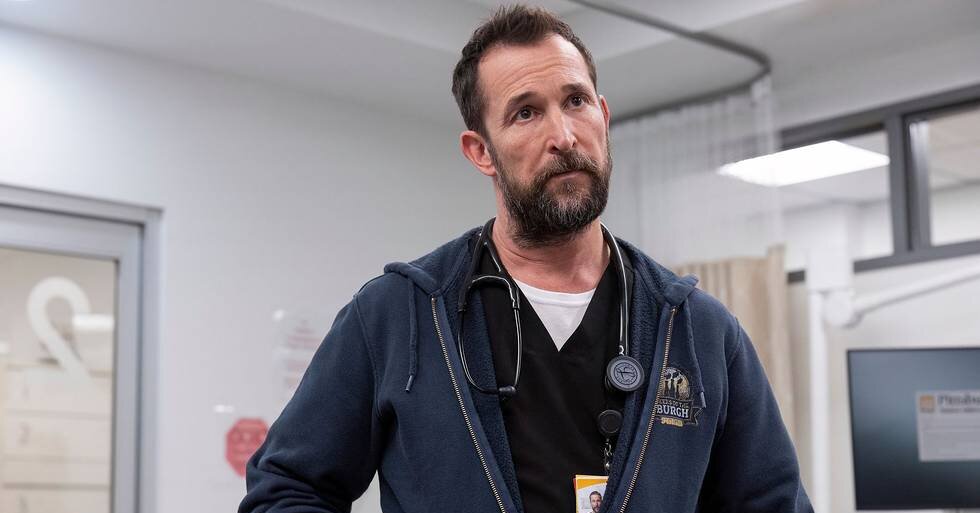
‘The Pitt’ (HBO Max) and ‘Severance’ (Apple TV)
Two of the year’s most addictive dramas were yoked together not so much by their own choice but by the narrative that cast them as adversaries in a battle over the future of TV.
In this telling, which peaked around the Emmys, the sci-fi office drama “Severance” was the paragon of the newfangled streaming model of television (short seasons spaced an eternity apart; sleek, expensive, labored-over episodes; elaborate serial plot). And the hospital melodrama “The Pitt” was the resurrection of good ol’ meat-and-potatoes broadcast-style teevee (15-count-’em-15 episodes released weekly; the second season on track to arrive a year after the first; short, tight story arcs).
But these addictive entertainments were not entirely at odds. “The Pitt” was itself a streaming series, taking advantage of the format’s freedoms (both in terms of language and realistic medical gore) and using a real-time format that also works well as a binge watch. And the engrossing Season 2 of “Severance,” which released episodes weekly after its premiere, built the kind of obsessive water-cooler discourse that recalled the glory days of “Game of Thrones” and “Lost.”
In the end, there’s more than one way to deliver that classic TV pleasure — watching somebody else have an extremely stressful day at work. (Stream “The Pitt” on HBO Max; “Severance” on Apple TV.)
Honorable mentions: “Alien: Earth” (FX); “The American Revolution” (PBS); “The Chair Company” (HBO); “Death by Lightning” (Netflix); “Hacks” (HBO Max); “Hal & Harper” (Mubi); “King of the Hill” (Hulu); “Murderbot” (Apple TV); “North of North” (Netflix); “Platonic” (Apple TV); “South Park” (Comedy Central); “The Studio” (Apple TV).
Flawed but fascinating: “The Bear” (FX); “Foundation” (Apple TV); “Paradise” (Hulu).
mike hale
Best International Shows
Watching international television series this past year was a little like the old days of art-house cinema. New shows arrived from some of the world’s most distinguished filmmakers, including Marco Bellocchio (“Exterior Night”), Hirokazu Kore-eda (“Asura”), Thomas Vinterberg (“Families Like Ours”) and Joe Wright (“Mussolini: Son of the Century”).
Those series are on my list of the 10 shows from outside the United States that I most enjoyed, presented here alphabetically. (Once again, my personal spreadsheet of new and returning international shows hit an astonishing new high: 1,022 titles in the last 12 months.)
‘Asura’ (Netflix)
In the last three years, the Japanese director Hirokazu Kore-eda released two idiosyncratic feature-length masterpieces, “Broker” and “Monster.” He also found the time to write and direct this very different mini-series for Netflix, a lush, old-fashioned family melodrama (shot on film by Mikiya Takimoto) about four sisters in 1979 Tokyo who discover that their elderly father has been hiding a second family. Its deft depiction of changing times and roles recalls the domestic sagas of Yasujiro Ozu and Kon Ichikawa’s “The Makioka Sisters,” but it makes more room for a wry sense of humor. (Stream “Asura” on Netflix.)
‘Dan Da Dan’ (Crunchyroll/Hulu/Netflix)
Momo and Ken, supernaturally powered high school best friends (and sharers of chaste sexual tension), are a match made in anime heaven: cute, snarky, vulnerable and really, really good at smashing things. That also describes “Dan Da Dan,” whose quotient of kinetic enjoyment per frame is exceptionally high. Momo, Ken and their friends and foes — in Season 2 these included a volcanic death worm and a Godzilla-size space kaiju — feel both fantastic and real, a tribute to the show’s writing and to the wild but beautifully detailed work of the animation studio Science Saru. (Stream “Dan Da Dan” on Crunchyroll, Hulu and Netflix.)
‘Diary of a Ditched Girl’ (Netflix)
Amanda (Carla Sehn), a 30-year-old Swede, has not had a boyfriend for the last 10 years, and this distinctively textured series — raucous but bittersweet — looks on as she does her best to break that dry spell. She is surrounded by the usual faces: charming, feckless men; an exuberant posse of girlfriends; self-absorbed, boomer parents; a sister she depends on and resents. But the familiar elements of the rom-com, the coming-of-age story and the sex farce are handled with unusual sharpness and finesse, and Sehn gives a remarkably sympathetic performance of a character who is not always easy to like. (Stream “Diary of a Ditched Girl” on Netflix.)
‘Exterior Night’ (MHz Choice) and ‘Mussolini: Son of the Century’ (Mubi)
Two Italian historical dramas directed by notable filmmakers examined the embrace of violence at opposite ends of the political spectrum. Marco Bellocchio’s “Exterior Night,” first released as a 344-minute feature, took a semidocumentary, almost scholarly approach to the 1978 kidnapping and murder of the politician Aldo Moro by the Marxist terrorists known as the Red Brigades. Episodes presented the fate of Moro (Fabrizio Gifuni), and the atmosphere of terror in which it took place, from the perspectives of his government colleagues, his family, the papacy, the terrorists and finally, heartbreakingly, Moro himself.
Joe Wright’s “Mussolini: Son of the Century” went in a different stylistic direction, rendering the early years of Benito Mussolini’s ascent as a darkly comic phantasmagoria, incorporating circuslike theatricality, Futurist cinematic montages and a Mussolini (Luca Marinelli) who played to the camera the way the real Il Duce played to the Italian people. Culminating in Mussolini’s acceptance of unapologetic violence as the price of power — completing his metamorphosis from opportunistic narcissist to fascist dictator — “Son of the Century” is a stark warning delivered as vivid entertainment. (Stream “Mussolini: Son of the Century on Mubi; stream “Exterior Night” on MHz Choice)
‘Families Like Ours’ (Netflix)
The Danish director Thomas Vinterberg (“The Celebration”) imagines climate catastrophe in both the broadest and most intimate terms: The government of Denmark has decided that rising waters will make the nation uninhabitable, and this classy mini-series traces the fates of a handful of the six million Danes who are ordered to leave. As a smug, comfortable society is pulled apart and dispersed among its unwelcoming neighbors, environmental disaster becomes the backdrop for tense, melancholy family drama. (Stream “Families Like Ours” on Netflix)
‘Just for Today’ (ChaiFlicks)
Nir Bergman, a creator of the Israeli show that inspired HBO’s “In Treatment,” wrote and directed this quiet, potent series about a halfway house for paroled ex-convicts in Tel Aviv. (Originally broadcast in Israel in 2019, it made its American subscription-streaming debut this year.) The gifted counselor Anat (Tal Lifshitz), first seen as an idealistic intern who gets too close to a client, becomes a by-the-book administrator presiding over the closing of the house. As residents are forced back into the world prematurely, their stories play out in surprising and agonizing ways. (Stream “Just for Today” on ChaiFlicks)
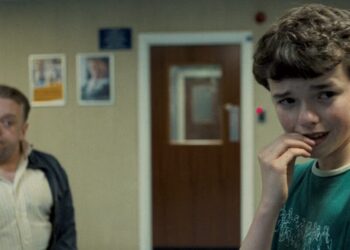
‘Kiff’ (Disney Channel)
In the crowded field of kids’ shows made with parents in mind, “Kiff” stands tall alongside “Adventure Time” and “Bluey.” Kiff, a high-maintenance squirrel, and Barry, a laid-back rabbit (voiced by Kimiko Glenn and H. Michael Croner), are middle-school best friends whose confidence in their own sophistication and jazzy insouciance is high but not quite complete. In that gap the show finds an ingratiating humor — urbane but slapstick, charming but never cloying. The series’s creators, Lucy Heavens and Nic Smal, are based in South Africa and its setting, Table Town, is a cartoon riff on Cape Town. (Stream “Kiff” on Disney Now or Disney+)
‘Mafia’ (Viaplay)
Set in 1990s Sweden, where cigarette smuggling by Yugoslav immigrants (and diplomats) kick starts the expansion of organized crime, this smart, subdued mini-series has a classic gangster-saga arc. Few romantic clichés apply to its protagonists, however — the cop (Katia Winter) and crook (Peshang Rad) whose fates become intertwined are both stubborn, hard-to-like characters whose efforts are often undermined by their caution and cowardice. The violent disintegration of Yugoslavia, playing out on living-room TV screens, is the show’s soundtrack; the feeling of no longer having a home helps turn small-time hoods into vicious racketeers. (Stream “Mafia” on Viaplay.)
‘Unforgotten’ (PBS)
Across six seasons, Chris Lang and Andy Wilson have written and directed, respectively, every episode of this British police procedural, which probably goes a long way toward explaining the assurance of its execution and the warm comfort it provides. The show’s secret sauce, though, is the performance of Sanjeev Bhaskar as Sunny, the epitome of the empathetic and intuitive cold-case cop — scourge of the shifty perp, comfort to the twice-bereaved loved one, testy and amusing surrogate for the PBS “Masterpiece” viewer. The series got back on track in Season 6 after some narrative stumbles, but Bhaskar has never wavered. (Stream “Unforgotten” on PBS)
Honorable Mentions: “Adolescence” (Netflix); “The Best Heart Attack of My Life” (Hulu); “Blue Lights” Season 3 (BritBox); “Dead Girls” (Netflix); “The Eternaut” (Netflix); “Her Majesty” (Amazon Prime Video); “The Narrow Road to the Deep North” (Amazon Prime Video); “Pati” (HBO Max); “Slow Horses” Season 5 (Apple TV); “Soldiers” (MHz Choice).
James Poniewozik is the chief TV critic for The Times. He writes reviews and essays with an emphasis on television as it reflects a changing culture and politics.
The post Best TV Shows of 2025 appeared first on New York Times.