On a recent French language immersion course in Nice, I got to know one of my classmates, an academic from Russia. On the final day of class, I gathered the courage to bring up the war between Russia and Ukraine. This conflict is deeply personal for me. Though I am a Swedish American based in the U.S., my family originates from Lviv, Ukraine, and I follow every development closely. I asked my classmate why she thought the war began and how both countries could bring it to an end.
She responded in a way that I could not have imagined. She spoke about her father’s closeness to senior figures in the Wagner group, the Russian paramilitary group that includes former convicts and has been designated as a terrorist group. In her view, Ukrainian President Volodymyr Zelensky was responsible for the conflict by failing to keep his promises to Russia, leaving Russian President Vladimir Putin with no choice but to launch a “limited, special operation” to invade Ukraine. This was her description of a war that has lasted almost four years and resulted in a million Russian soldier casualties, according to a CNN report from last summer.
The conversation left me completely chilled. How could this intelligent, funny, kind woman who had become my friend believe that a bloody war that had caused so much suffering on both sides should be allowed to continue? How could she hold beliefs that were so radically different from my own?
In today’s highly polarized landscape, when our tendency to dislike people from opposing cultural or political groups is higher than ever, sticking with like-minded people can feel like the best refuge in a hostile environment. As a sociologist and a naturalized American citizen, I get it: Belonging to a group of people who are similar to us offers validation, protection and a shared understanding. Yet I also know these like-minded groups have serious downsides, narrowing our thinking and perpetuating polarization. And when our own group’s political party is out of power, belonging to just that one group can be disheartening and lead to disillusionment.
Political scientist Robert Putnam famously lamented the decline of social capital in America, and has connected this decline with political polarization, offering shared activities that bring people together as the solution. It’s true that activities such as bowling leagues, volunteer projects and book clubs offer many opportunities to encounter the full humanity of others — their humor, kindness, creativity, their love for their children and their pets — that a narrow focus on politics can obscure.
However, we need to go further to cultivate real diversity in the shared activities and interests that we pursue. We should curate our social networks so we are interacting with people who are different from us in age, ethnicity and profession and who live in different neighborhoods. A good example is a running club (or a language group) that includes members who are younger and older, blue-collar and managers. Or, if mahjong is your passion, be sure to join two groups that are deliberately separate from each other, where you can make lots of new connections.
Such interactions, supporting the development of “weak ties,” expand your social network. Crucially, they help us develop habits of curiosity and openness that make us more resilient, both physically and cognitively, as research shows. When we belong to multiple, diverse social groups, with a steady inflow and outflow of people, we also make ourselves less susceptible to any one social group’s ups and downs. So, if you have a fallout with your running group, you can find some solace by leaning into your mahjong group.
This diversification is already understood to be valuable for children, and parents are often encouraged to support their children in belonging to social circles not only at school but also in other settings, be it a faith community or a shared-interest group such as community sports. We seem to forget that adults need this as well, for their own sake and society’s.
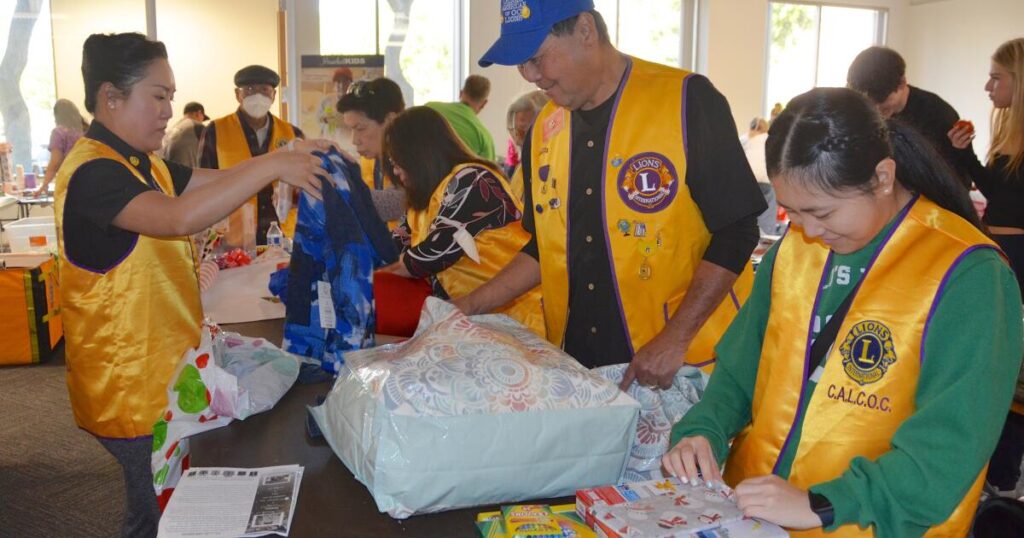
We can practice this by joining groups in small and large membership-based organizations. Remarkably, such organizations still exist in America. The neighborhood YMCA, your local community college and the public library are all likely to offer a rich smorgasbord of activities. And in pursuing our interests, we experience other ways of being in the world, of understanding events. We learn new things by listening to others’ views and their experiences.
Eventually, as we become friends, we might broach political topics, and in that process, we may learn that the other person’s views aren’t as extreme as we might have feared. Or, we may learn they are more extreme than we thought, as I did with my Russian friend. Through shared interests, we can come to appreciate aspects of people’s identities despite their politics.
So I will continue the conversation with my classmate from the French course. Even though I deeply disagree with her about the war in Ukraine, I am genuinely curious about her point of view and want to understand where she’s coming from.
While we don’t need to avoid political debates, engaging in such debates is not the solution for our polarized culture. Instead, the healing path runs through connecting with diverse groups of people — and we can start in community theaters, volunteer projects, mahjong meetups and holiday celebrations this season.
As we make plans for the coming holidays, I wonder if we can dare to reimagine some of the nuclear-family-centric ideals and instead see an occasion to invite outsiders. I have a friend whose mother often made family dinners tense and unpleasant, and I suggested “neutralizing” that family dynamic by inviting outsiders. It worked. Outsiders soften old patterns and open new windows.
That has been the holiday tradition in our family. Over the years, my husband, Paul, and I have invited up to 40 people around our table: students, neighbors, colleagues, anyone who might otherwise have been alone. Graduate students came the day before to cook with me; music from all over the world sprang out of the speakers in the kitchen, and laughter filled the room.
By opening ourselves to outsiders, we change our focus and remember our shared humanity. That’s the path to understanding our differences.
Eva M. Meyersson Milgrom is a social scientist and professor emerita of sociology and economics at Stanford University. She is working on a book on the importance of diversifying our social networks.
The post You need more friends who aren’t like you appeared first on Los Angeles Times.