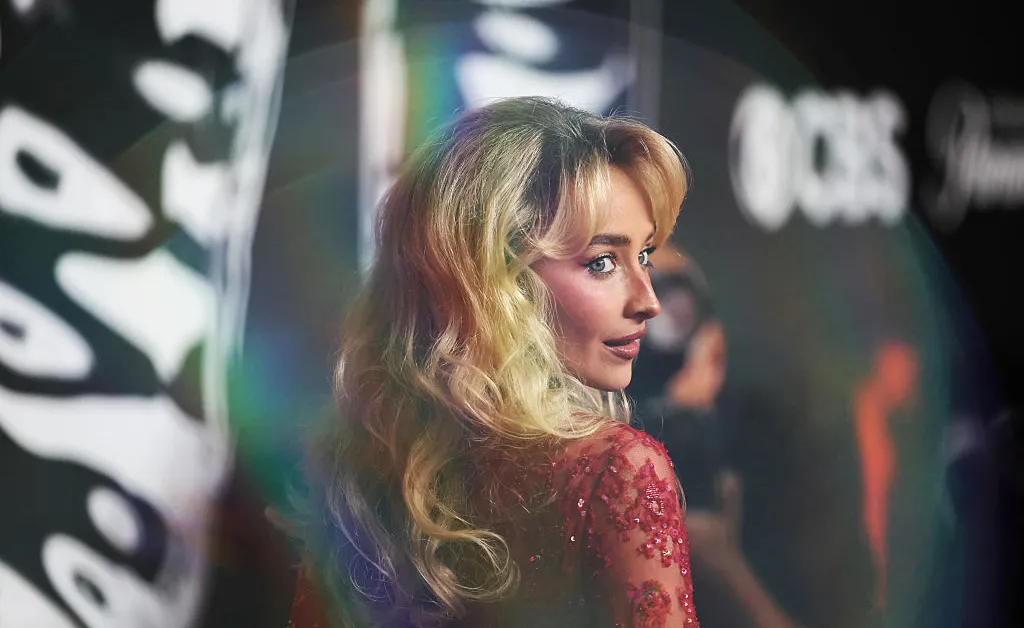
“Have you ever tried this one?” pop singer Sabrina Carpenter’s voice asks over a video of ICE agents chasing and detaining immigrants that the White House posted on social media on Tuesday, the latest in an apparent campaign to use pop-culture references to promote the Trump Administration’s agenda.
[time-brightcove not-tgx=”true”]
Carpenter, however, did not like whatever the White House was trying to do. “this video is evil and disgusting,” Carpenter replied to the post on X. “Do not ever involve me or my music to benefit your inhumane agenda.”
The White House has not taken down the video or removed the sound as of Wednesday, but spokesperson Abigail Jackson told TIME in a statement: “Here’s a Short n’ Sweet message for Sabrina Carpenter,” making a reference to the singer’s 2024 album. “We won’t apologize for deporting dangerous criminal illegal murderers, rapists, and pedophiles from our country. Anyone who would defend these sick monsters must be stupid, or is it slow?”
The White House and other federal agencies and departments during President Donald Trump’s second-term Administration have embraced pop music, memes, and even AI-generated images on official accounts.
“Nowhere in the Constitution does it say we can’t post banger memes,” the White House’s X account posted in July.
But Carpenter isn’t the first—and likely won’t be the last—to object to her work being co-opted by politics she disagrees with.
Unwilling participants in political messaging
Trump has faced pushback from artists for using their music in his presidential campaigns and even first term, but it has not deterred his Administration from aggressively posting videos with music by pop artists, including some who have publicly spoken out against him.
While legally challenging the use of a song can be costly and difficult, many artists have chosen to raise their objections publicly to inform fan bases and listeners of their political stance.
In November, singer Olivia Rodrigo, TIME’s 2021 Entertainer of the Year, shot back at the Department of Homeland Security (DHS) after it used her 2023 song, “All-American Bitch,” as the backing track for a video urging illegal immigrants to self-deport. On Instagram, Rodrigo commented, “don’t ever use my songs to promote your racist, hateful propaganda,” to which the DHS responded cheekily with a reference to Rodrigo’s song lyrics: “America is grateful all the time for our federal law enforcement officers who keep us safe. We suggest Ms. Rodrigo thank them for their service, not belittle their sacrifice.”
In October, singer-songwriter Kenny Loggins called out the “unauthorized use” of his 1986 song, “Danger Zone,” in an AI-generated video Trump posted on Truth Social. In the video, Trump flew on a jet emblazoned with “KING TRUMP” while donning a crown and dropping feces over New Yorkers, in apparent response to No Kings Protests across the country. The video with the sound remains on Trump’s Truth Social platform.
“Nobody asked me for my permission, which I would have denied,” Loggins said in a statement to the media, adding that he was seeking the immediate removal of his song from the video. The White House reportedly responded to questions from NPR about the use of the song with a photo of actors Tom Cruise and Anthony Edwards from the 1986 film Top Gun and overlayed text reading, “I feel the need for speed.”
The same month, rock band MGMT managed to get taken down a DHS video post of federal agents arresting anti-ICE protesters that used the band’s 2017 song “Little Dark Age” as a backing track, alongside the caption: “End of the Dark Age, beginning of the Golden Age.” A Digital Millennium Copyright Act (DMCA) takedown request was apparently filed, and the video was taken down on X, while it remains available on Instagram but without sound.
Another rock band, Blue Öyster Cult, reacted to Trump’s use of their 1976 hit “(Don’t Fear) The Reaper” in an AI-generated video in which Office of Management and Budget director Russell Vought was depicted as the Grim Reaper pursuing mass layoffs of federal workers and shutting down “Democratic” agencies during the U.S.’s longest-ever government shutdown. In a statement on social media, the band clarified that it was “not contacted or notified in advance” but that the copyright is “100% owned by SONY MUSIC.” The video with the sound remains on Trump’s Truth Social platform.
British pop singer Jess Glynne also had her 2015 bop “Hold My Hand,” which became an internet sensation this year, used by the White House to promote deportations back in July. In a statement to the media, Glynne said she felt “sick” and “devastated” that her song was being used to promote “division and hate,” explaining: “Hold My Hand was written about love, support, and standing by someone through everything – it’s meant to offer hope and empowerment. Using it to promote something I fundamentally disagree with goes completely against the message of the song.” Jet2, an airline whose use of the song in a holiday advertisement went viral and was what was actually used as the backing sound of the White House video, also expressed disappointment, saying the use was “not endorsed by us in any way” and the company was “very disappointed to see our brand being used to promote government policy such as this.”
Some artists, however, have largely kept publicly silent about the use of their songs. Notably, Taylor Swift, TIME’s 2023 Person of the Year who has at other times been hawkish about unsanctioned use of her music and has called out Trump before for falsely implying her endorsement, has not issued any statement after she had her songs from her latest album The Life of a Showgirl used in White House materials.
The post Sabrina Carpenter Becomes Latest Artist to Push Back Against Trump Admin Co-Opting Music appeared first on TIME.