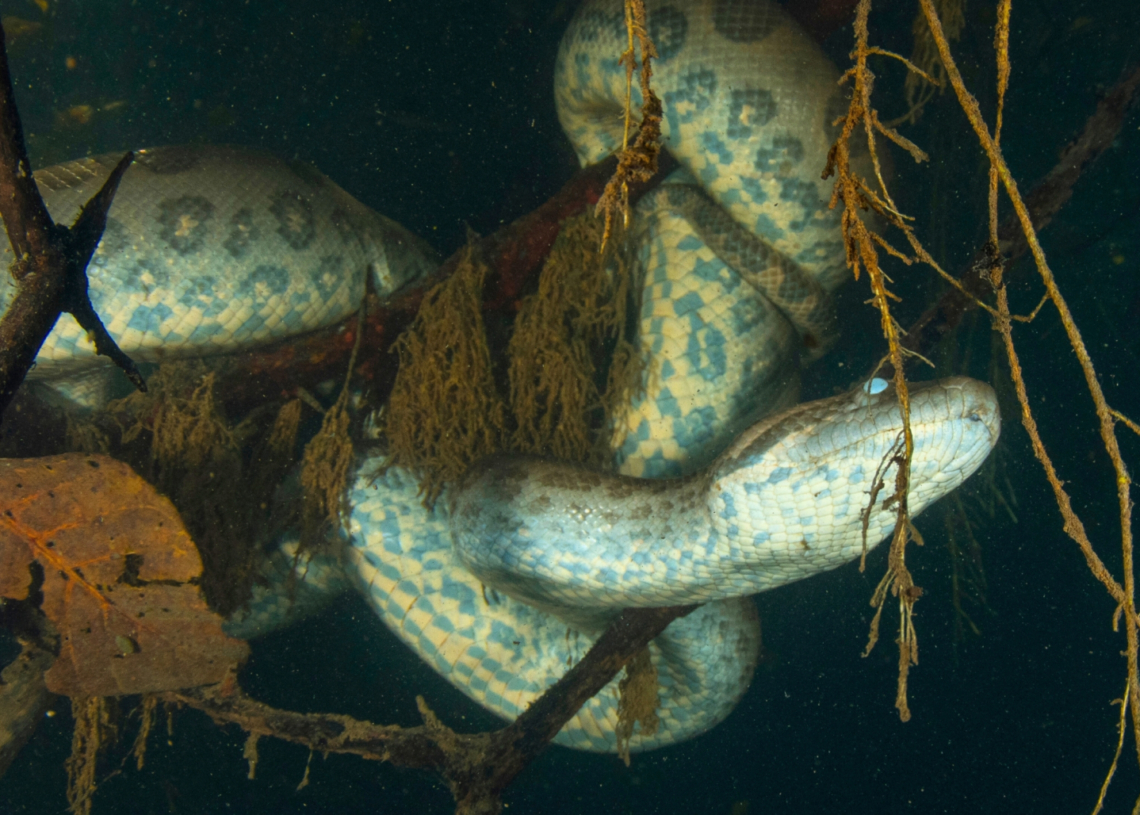
Scientists spent years wondering whether ancient anacondas made today’s versions look modest.
It would make sense. The Miocene had heat, wetlands, and enough oversized reptiles to make modern wildlife feel like toy versions. Yet the fossils say something else. Anacondas reached their massive build more than 12 million years ago and then pretty much stayed that way.
The new study in the Journal of Vertebrate Paleontology is based on 183 vertebrae from at least 32 anacondas found in Venezuela. Lead researcher Andrés Alfonso-Rojas and his team expected the bones to point toward snakes that pushed well past the limits of modern anacondas.
He admitted they thought the ancient snakes would clock in around seven or eight meters (23 to 26 feet). Instead, the calculations hovered around 17 feet, which lines up neatly with the animals we see today.

Ancient Anaconda Fossils Reveal They Were Just as Massive 12 Million Years Ago
This was the same era that produced giant crocodiles and turtles the size of bathtubs. Those species eventually disappeared as the world cooled and wetlands receded. Alfonso-Rojas said anacondas stayed put through all of that and called them “super-resilient.” It’s rare for a large-bodied animal from that period to ride out the planet’s mood swings without shrinking, adapting, or getting wiped out.
Researchers tried to figure out why a snake this big stayed this big. Climate shifts didn’t shrink them. Habitat loss didn’t do it either. Even the arrival of new predators across South America failed to make a noticeable dent. Food competition also doesn’t explain much. Anacondas grew large when prey was abundant, but the size held steady even when the ecological crowd changed. So, what gives?
What they had was a body that worked. These snakes still dominate slow water and still use their size the same way their ancestors did, with coiled patience and sudden precision. They never needed to chase speed or agility. The environment didn’t reward a slimmer build. Nothing pressured them into reinventing themselves.
Most species morph over millions of years of environmental shifts. Anacondas’ size held steady while the landscape changed again and again. They got big early. They stayed big. And it works.
The post Rare Anaconda Fossils Reveal What the Giant Snakes Looked Like 12 Million Years Ago appeared first on VICE.