A new four-part Netflix docuseries about Sean “Diddy” Combs is explicit and unwavering in its portrayal of the disgraced music producer as an alleged serial abuser and master manipulator who has never reckoned with the harm he’s caused others. It is, in other words, the kind of project one might expect from one of Combs’s most vocal professional adversaries: the rapper-turned-businessman Curtis Jackson, also known as 50 Cent.
“Sean Combs: The Reckoning,” released Tuesday, relies on a broad range of interviews — artists who worked with and for Combs, police detectives, a former sex worker, ex-members of his inner circle and two of the jurors that acquitted Combs of federal sex-trafficking and conspiracy charges this summer, but convicted him of prostitution-related charges that resulted in a more than four-year prison sentence.
The series covers a wide array of Combs’s alleged sins, and much of it will be familiar to hip-hop fans and those who followed the trial. But Jackson’s project has a few new details, accounts and intimate footage to bolster its story. Combs’s lawyers have even accused filmmakers of stealing their client’s own video, recorded in the days leading up to his arrest for a documentary that he planned to produce.
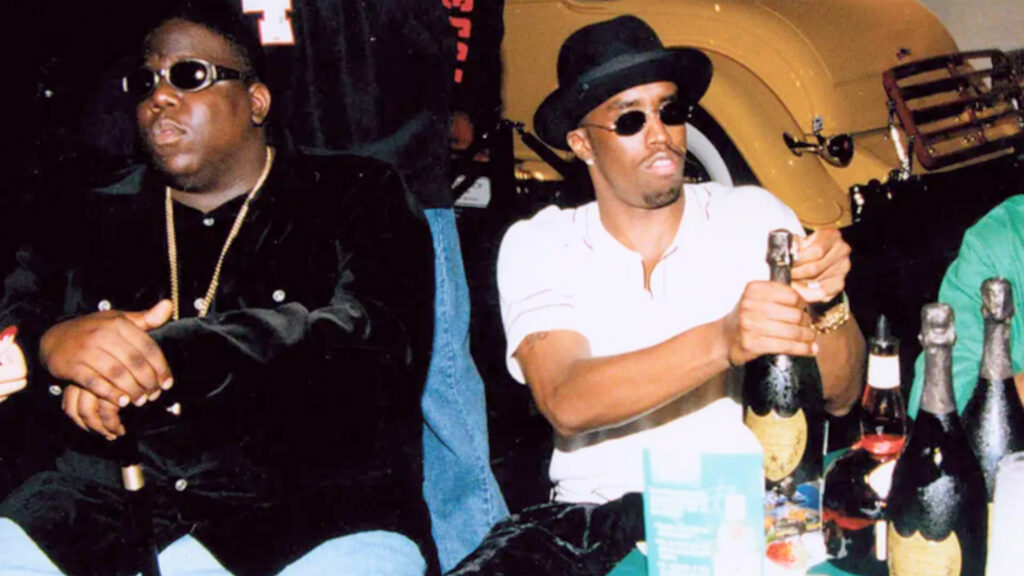
Jackson has made no mystery of his feelings about Combs. In addition to diss tracks and trolling social media comments over the years, he has publicly accused Combs of knowing who killed the Notorious B.I.G. and being involved in Tupac Shakur’s killing — accusations that are repeated in the docuseries, and that Combs has denied.
Jackson’s attacks only intensified as more than 80 sexual assault lawsuits were filed against the once-widely celebrated record producer in recent years. His series is one of the first major documentary projects to come out about Combs since his conviction.
But Netflix contends that “this is not a hit piece or an act of retribution.”
“Curtis Jackson is an executive producer but does not have creative control. No one was paid to participate,” a spokesperson said.
Here are five of the biggest moments from across its four episodes.
Combs wages ‘a media war’ in days before arrest
The docuseries introduces never-before-seen footage of Combs in the week leading up to his arrest by federal law enforcement officers in September 2024, taken by a videographer Combs hired. The footage shows an anxious Combs pacing in his room at the Park Hyatt hotel in Manhattan, flanked by his sons Justin and Christian, and fretting to his lawyers about controlling the public narrative. He appears frustrated by his limited options, explaining several times during the film, “God told me to do nothing, so I got to do what God told me to do.”
He gives explicit instructions to the videographer, telling them to get “cutaway shots” of uniformed officers who appear to surveil his hotel room from a nearby building. Combs also is shown reacting after a former Bad Boy artist, Dawn Richard, filed a sexual assault lawsuit against him days before the arrest. (Attorneys for Combs called Richard’s claims “facially ridiculous or demonstrably false” and have filed a motion to dismiss her lawsuit.)
Combs presses his team to find an editor to stitch together old clips of Richard praising him in media interviews.
“It’s a media war,” he says at another point.
Juda Engelmayer, a spokesman for Combs, lambasted the documentary’s use of the material in a statement to The Post, calling it “stolen footage that was never authorized for release,” and dismissing the docuseries as “a shameful hit piece.”
“Mr. Combs has been amassing footage since he was 19 to tell his own story, in his own way. It is fundamentally unfair, and illegal, for Netflix to misappropriate that work,” he said. “If Netflix cared about truth or about Mr. Combs’s legal rights, it would not be ripping private footage out of context — including conversations with his lawyers that were never intended for public viewing.”
Netflix denied Engelmayer’s accusations: “The project has no ties to any past conversations between Sean Combs and Netflix,” a statement read. “The footage of Combs leading up to his indictment and arrest were legally obtained.”
A juror faults Cassie Ventura for staying with Combs
“The Reckoning” features interviews with two jurors from Combs’s trial. Producers showed but did not name Juror 160 and Juror 75, both of whom said they stand by the decision to acquit Combs on sex trafficking and racketeering conspiracy charges, which could have sent him to prison for life.
“100 percent,” said Juror 75, identified in court as a South Asian man, when asked if he felt justice was served.
Juror 160, a Black woman, said she wasn’t a fan of Combs, but smiled as she recalled watching him on “Making the Band,” the reality competition show he hosted from 2002 to 2009. She recounted how animated Combs would get during certain portions of the trial, at times making eye contact with the jury. (At one point, Combs was reprimanded for this by the judge — such interactions between a defendant and jurors is verboten.)
“He would look toward us and be like, ‘you heard that?’ … ‘can you believe they said that?’” Juror 160 said. “It was funny to see because I had the same facial expressions he did sometimes” — such as when a former assistant testified about Combs allegedly kidnapping her.
In their interviews, the jurors echo several of the defense’s main arguments at trial. Juror 160 noted that Combs had not been charged with domestic assault, despite the prosecution’s voluminous (and often uncontested) evidence that he viciously abused their main witnesses, Cassie Ventura and another ex-girlfriend who testified under the pseudonym Jane.
Juror 75, meanwhile, described Combs and Ventura’s relationship as “loving” but complicated, something “you cannot explain.”
“If you don’t like something, you completely get out. You cannot have both ways,” he said. “Have the luxury and then complain about it? I don’t think so.”
Combs demands a bath after glad-handing the public
In the third episode, filmmakers featured a particular set of footage Combs commissioned in the days leading up to his 2024 arrest in New York. He is seen visiting his old stomping grounds in Harlem, where he politicks with neighborhood legends such as rapper Jim Jones, and doles out hugs and handshakes to people on the street, most of whom are Black.
After a prolonged encounter with a fan, Combs climbs into an SUV and immediately tells the people in the car, “I need some hand sanitizer.”
“I’ve been out in the streets amongst the people. Yeah, I got to take a bath. The amount of people I’m coming into contact with, that’s what I got to do,” Combs continues. “I got to go under the water. Water got to be boiling hot. Put some peroxide in that.”
In a voice-over closing out the scene, Combs’s former head of security, Roger Bonds, says, “The only thing he cared about was his self.”
Throughout the series, many of Combs’s former collaborators and associates accuse him of constantly trying to leverage those around him for his own benefit, including throughout the trial. In pleading for a lighter sentence, his lawyers held Combs up as a champion of diversity, and of Black people in particular.
“To be honest with you, Sean was uncomfortable around so many Black people,” Bonds, who is also Black, tells the filmmakers. “It was only when he needed them that he felt comfortable enough.”
Leading up to his arrest, Combs’s attorneys had accused federal agents of unfairly investigating him because he was a successful Black man.
Combs’s mother Janice is accused of abusing him
Former associates of Combs who took part in the docuseries offer plenty of theories and explanations for his alleged violence and ruthlessness, including Tim Patterson, a childhood friend who broke into the music industry around the same time as Combs.
Patterson, whose family rented an apartment above Combs in Mount Vernon, claims he repeatedly saw Combs being beaten by his mother Janice Combs.
“It wasn’t a joking thing,” Patterson said. “Damn, I hate thinking about that, man.”
Patterson said he believed a young Combs was influenced by the people his mother brought around, describing epic parties with glamorous women, pimps and hustlers. “In Sean’s household, you’d start to see all the stuff you saw in the movies,” he told filmmakers, referring to infamous blaxploitation films that frequently depicted hustlers, pimps and gangsters.
These recollections were spliced with archival footage of Combs talking about his mother toughening him up, as well as an interview he gave for a 2010 episode of “Inside the Actors Studio,” in which Janice, who was in the audience, joked about giving her son “a lot of beatings.”
A representative for Janice Combs didn’t immediately respond to The Post’s request for comment. Patterson made similar allegations about the hip-hop producer’s mother in a Peacock documentary released in January: “Diddy: The Making of a Bad Boy.” Sean has a pending defamation lawsuit against NBC Universal and Peacock over that film. The production companies have filed to dismiss the case.
A letter details sex assault accusations raised against Combs decades ago
A number of Combs’s alleged sexual assault victims participated in the docuseries, including Joi Dickerson-Neal, who in late 2023 filed a lawsuit alleging Combs drugged, raped and filmed her on a date in 1991. At the time, she was a psychology student at Syracuse University and he was a young up-and-comer at Uptown Records.
The lawsuit was one of dozens that have been filed against Combs since November 2023, when Cassie Ventura filed the first one (and settled a day later.) Combs, who is still contesting many of these suits in court, has generally accused the complainants of piling on him in a “money grab.”
But the docuseries features Dickerson-Neal reading aloud a letter she says her mother wrote to Combs’s family in 1992, the year after her alleged assault.
“I’m writing to inform you of something that your son did to my daughter,” the letter begins. It describes Dickerson-Neal’s mother learning about the alleged assault after hearing her child screaming in the night because she dreamed about “Puffy,” Combs’s stage name at the time.
“Your son has made an obscene videotape of her … without her knowledge, he videotaped him doing something sexual to her,” it continues. “Apparently, your son shows these tapes at parties on large screen televisions.”
Dickerson-Neal later recounted that she felt “helpless” watching Combs ascend to become one of the most influential music executives of his era. She said she got physically sick when she saw a massive billboard for his clothing brand, Sean John, in Times Square years later. The sign showed Combs raising his fist in an homage to the Black Power salute.
“You are really raising your hand in victory and I’m living in trauma and defeat,” Dickerson-Neal recalled thinking.
Combs has denied all allegations against him.
The post Diddy’s nemesis, 50 Cent, just released a docuseries about him appeared first on Washington Post.