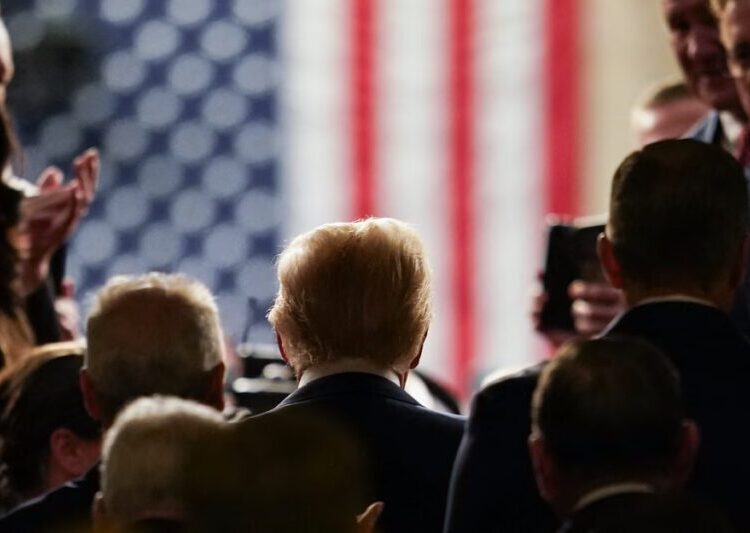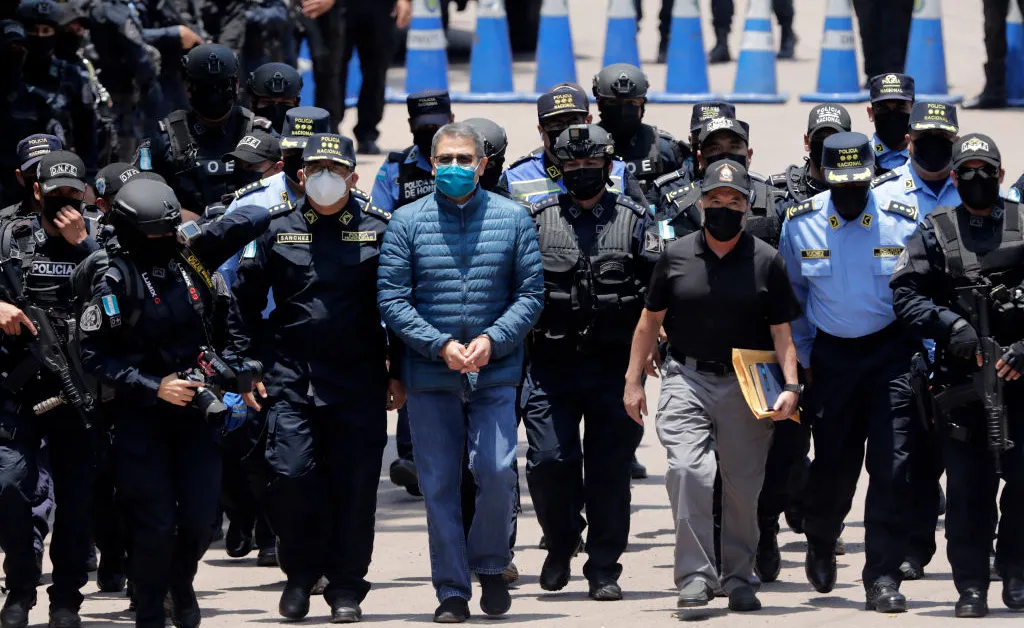
Venezuelan President Nicolás Maduro and former Honduran President Juan Orlando Hernández have both been indicted by the U.S. government on federal drug trafficking charges; Hernández, last year, was convicted. But as President Donald Trump wages an “armed conflict” with drug cartels in the Caribbean, he has taken very different approaches in his relationships with the two men—threatening to deploy military force in an escalating pressure campaign against one, while offering the other clemency.
[time-brightcove not-tgx=”true”]
Hernández, who received a 45-year sentence for conspiring with some of the most powerful drug traffickers in the world to transport an estimated 400 tons of cocaine into the U.S., was released from prison on Tuesday after Trump pardoned him.
“I will be granting a Full and Complete Pardon to Former President Juan Orlando Hernández who has been, according to many people that I greatly respect, treated very harshly and unfairly,” Trump wrote on Truth Social on Friday.
Just a day later, the President ramped up his threats against Venezuela, saying that the airspace above the country should be considered “CLOSED IN ITS ENTIRETY.” He warned earlier the same week that land strikes against Venezuela could be happening “very soon.”
The Trump Administration has called Maduro’s government “illegitimate” and accused the Venezuelan President of being a “narco-terrorist” affiliated with the criminal network Cartel de Los Soles, which the U.S. designated as a terrorist organization last week. In recent months, the Administration has amassed a significant military presence in the Caribbean to pressure Venezuela’s leadership in what it has characterized as an effort to stop cartels from trafficking drugs to the U.S. Many see the buildup as an attempt to oust Maduro from power.
Read more: How Pete Hegseth’s Account of a Deadly Strike in the Caribbean Keeps Changing
The Venezuelan President has denied any ties to the illegal drug trade, and his government has condemned Trump’s warning that the country’s air space should be considered closed as a “colonialist threat” and “yet another extravagant, illegal and unjustified aggression against the Venezuelan people.”
Within the U.S., lawmakers on both sides of the aisle have questioned Trump’s decision to pardon Hernández on the one hand while threatening Maduro on the other.
“Since September, President Trump has struck over 20 boats in the Caribbean and eastern Pacific Ocean in a supposed effort to crack down on drug trafficking—ordering the illegal execution of unknown people without evidence or trials and forfeiting the ability to gather valuable intelligence,” Democratic Sen. Tim Kaine of Virginia said in a statement. “But he finds it perfectly acceptable to excuse rich guys like Russ Ulbricht, who was sentenced to life in prison after founding the world’s largest online drug marketplace, and now Juan Orlando Hernández … This is a disgusting and incomprehensible decision by Trump, and Americans whose lives have been destroyed by narcotraffickers.”
“Why would we pardon this guy and then go after Maduro for running drugs into the United States?” Republican Sen. Bill Cassidy of Louisiana wrote on social media. “Lock up every drug runner! Don’t understand why he is being pardoned.”
Here’s what you should know.
A pardon for Hernández
The White House confirmed on Tuesday that Hernández’s pardon had been issued and his lawyer said that he had been released from a federal prison in West Virginia.
Hernández’s wife, Ana García de Hernández, thanked Trump following her husband’s pardon.
“After nearly four years of pain, waiting, and difficult trials, my husband Juan Orlando Hernández RETURNED to being a free man, thanks to the presidential pardon granted by President Donald Trump,” she said in a social media post.
Hernández served as president of Honduras from 2014 until 2022, including during Trump’s first term.
Months after the two-term President left office, an indictment issued in April 2022 charged Hernández with crimes dating back to 2004, since which time federal U.S. prosecutors alleged he “participated in a corrupt and violent drug-trafficking conspiracy to facilitate the importation of hundreds of thousands of kilograms of cocaine into the United States.” He was extradited to the U.S. in 2022 and convicted in March of last year.
Hernández characterized his prosecution as a “rigged trial” that was “based on uncorroborated statements of convicted drug traffickers” while blaming the “clear case of lawfare by the Biden-Harris administration” for his unjust imprisonment in a letter he sent to Trump days before the President announced his plan to pardon him.
“I have found strength from you, Sir,” Hernández wrote in the letter. “Your resilience to get back in that great office notwithstanding the persecution and prosecution you faced, all for what, because you wished to make your country Great Again.”
Hernández drew comparisons between himself and Trump, saying, “Like you, I sought only to serve my people, to uphold our conservative values while leading unprecedented reforms to make my country stronger and safer.”
Trump’s announcement of Hernández’s pardon came as spoke repeatedly in support of Tito Asfura, a candidate in Honduras’ Nov. 30 presidential election. Trump claimed that Asfura was “standing up for Democracy, and fighting against Maduro” in a Truth Social post last week, and then further advocated for Asfura’s election in the same post in which he said he would pardon Hernández two days later.
Trump appeared to connect the pardon and the election in the post, asserting after he said Hernández had been treated “very harshly and unfairly” that “this cannot be allowed to happen, especially now, after Tito Asfura wins the Election, when Honduras will be on its way to Great Political and Financial Success.”
Trump hasn’t provided evidence for the claim that Hernández was prosecuted unfairly. His decision to pardon the former Honduran leader has caused a stir among U.S. lawmakers, including some in his own party.
Republican Rep. Maria Elvira Salazar of Florida said in an interview earlier this week that she would not have pardoned Hernández, while at the same time praising the President’s approach to Venezuela.
“I don‘t think that that was what I would have done,” she said on CNN on Monday regarding the pardon. “But I repeat, I‘m not in the Oval Office. I do know that right now what the President is doing with Venezuela is exactly correct for many reasons.”
The White House has defended Trump’s decision to grant Hernández clemency amid the criticism, doubling down on the claim that the former Honduran President was unfairly prosecuted.
“He was the president of this country. He was in the opposition party,” White House Press Secretary Karoline Leavitt said Monday. “He was opposed to the values of the previous administration, and they charged him because he was president of Honduras.”
A standoff with Maduro
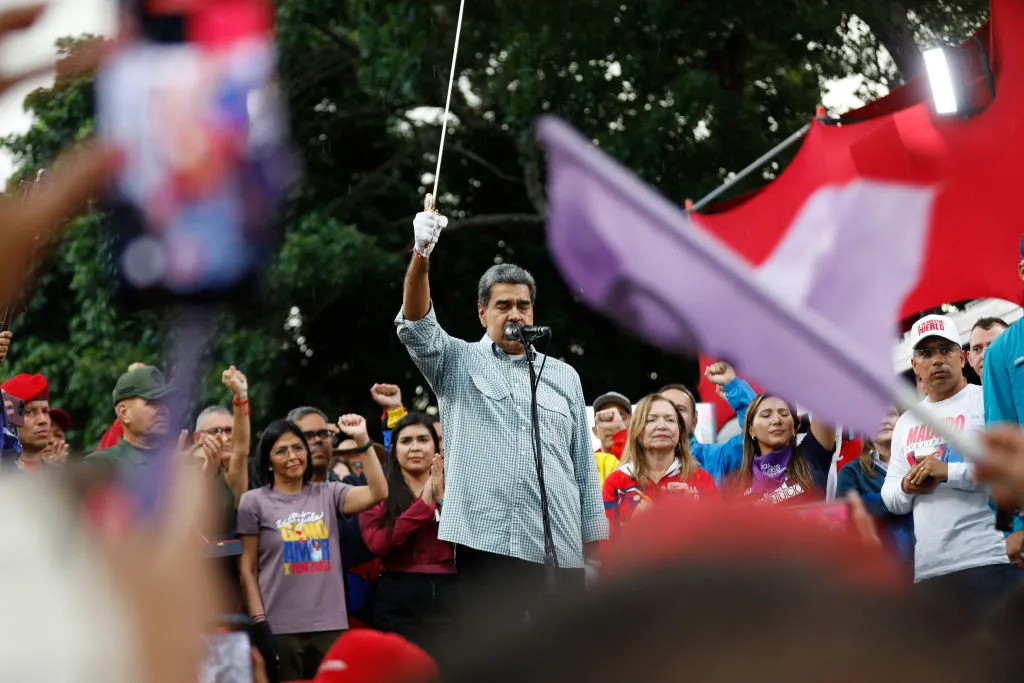
The Trump Administration’s efforts to pressure Maduro, meanwhile, are continuing to escalate.
Speaking during a Cabinet meeting on Tuesday, Secretary of Defense Pete Hegseth said that the U.S. has “only just begun” its targeting of drug traffickers after carrying out a number of controversial and deadly strikes on boats the Administration has said are part of drug-smuggling networks tied to the Venezuelan President.
The Administration began targeting suspected drug boats in the region beginning in early September.
Read more: Trump’s Caribbean Bombing Campaign Brings War on Terror to the Americas
Since the first of the strikes was carried out on Sept. 2, over 80 people have been killed by more than 20 U.S. attacks on boats in the Caribbean and the Pacific Ocean through what the Administration has dubbed “Operation Southern Spear.”
The Administration has not provided evidence for its claims that the vessels were carrying drugs, or that certain of the boats belonged to Tren De Aragua, a Venezuelan gang the U.S. designated as a terrorist organization earlier this year. The United Nations and other humanitarian organizations have described the attacks as extrajudicial killings—as has the Venezuelan government,.
Amid the strikes, the U.S. has built up the largest deployment of its forces in the region in decades, including dozens of ships, roughly 15,000 troops, and the most advanced U.S. aircraft carrier. Maduro accused the U.S. of “fabricating a new war” after the carrier ship, the world’s largest warship, arrived in the waters near Venezuela in mid-November.
“The moving of the aircraft carrier from one theater to another, bringing it from Europe to Latin America, is one of those crossing the Rubicon moments,” Ryan Berg, director of the Americas Program and head of the Future of Venezuela Initiative at the Center for Strategic and International Studies, says to TIME.
While Administration officials have characterized the U.S. moves in the region as a fight against cartels, the military operation is being seen by many—including Maduro himself—as an attempt to expel the Venezuelan leader from power. Trump reportedly gave Maduro an ultimatum on a call in November, saying he would grant Maduro and his family safe passage if he agreed to resign immediately, according to the Miami Herald, which cited sources familiar with the exchange.
The Administration also targeted Maduro specifically when it designated Venezuela’s Cartel de los Soles as a terrorist organization last week. The U.S. government has alleged Cartel de los Soles, a term used to describe a decentralized network of military and government officials allegedly involved in drug operations and corruption, is headed by Maduro and other high-ranking Venezuelan officials. Federal prosecutors previously accused Maduro of acting as a leader of the group since at least 1999 when indicting him during the first Trump Administration on charges including narcoterrorism and drug trafficking.
Defense Secretary Pete Hegseth said that the designation of Cartel de Los Soles as a terrorist organization would give the Administration “new options” for the U.S. to operate in the region.
Maduro and his government rejected the move, with Venezuelan Foreign Minister Yvan Gil Pinto calling it a “ridiculous fabrication” and denying that Cartel de los Soles exists in a post on his Telegram account.
Trump and other Administration officials’ opposition to Maduro dates back years. During Trump’s first term, he recognized Venezuelan opposition leader Juan Guaido as the country’s interim president, calling Maduro’s presidency illegitimate, along with other countries including Canada, Brazil and Argentina.
Rubio, the U.S.’s top diplomat, is a staunch and long-time opponent of Maduro; Matthew Bartlett, a Republican strategist and former Trump appointee to the State Department in his previous Administration, tells TIME the then-Florida Senator “was in the Oval Office and in the ear of the President, maybe even in the hands of the President” during the opposition to Maduro in Trump’s first term. And the Secretary of State continues to play a key role now, as the current Administration puts pressure on Maduro to relinquish power—and threatens to take still more aggressive action.
What comes next in the conflict remains unclear. Experts say further military escalation is possible, with both Trump and Maduro apparently standing their ground.
“I do think there’s a real possibility that Trump greenlights strikes because he’s moved all this equipment into the region,” Berg says.
Rebecca Ingber, Professor at Cardozo Law School and an expert on international law who served in at the State Department, tells TIME that the U.S. doesn’t have legal justification to attack Venezuela—and that doing so could lead to Venezuela and allies acting in self-defense and potentially expand the conflict.
“That’s the, first and foremost, most significant repercussion under international law: committing an armed attack against another state gives that state the right to act in self defense,” Ingber says. “We ourselves have not been subject to an armed attack by Venezuela, so we do not have the right to use force against Venezuela.”
Through a domestic lens, Ingber also notes that the Administration needs congressional approval to issue an Authorization for Use of Military Force (AUMF). But, she says, “Congress has collective action problems, and it’s not always able to legislate when the President acts.”
Maduro, for his part, has warned that Venezuela would fight if the U.S. takes military action against the country.
“We’re ready for an armed fight, if it’s necessary,” Maduro said while speaking in a broadcast on state television in October alongside his defense minister. “Along all the Venezuelan coasts, from the border with Colombia to the east of the country, from north to south and east to west, we have a full preparation of official troops.”
The post As Trump Threatens to Bomb Venezuela’s Maduro for Trafficking Drugs, He Pardons an Ex-President Convicted in a Drug Case appeared first on TIME.