On a snowy night 20 winters ago, Michael Shaikh stood outside his friend Tamim’s house in downtown Kabul, Afghanistan, waiting to be let in. Tamim had invited Michael over for dinner. The two-story home had a large front yard and a 10-foot wall that separated the public dirt road from the peaceful residence, where inside a half-dozen guests were already mingling over cocktails and wine while Tamim was in the kitchen.
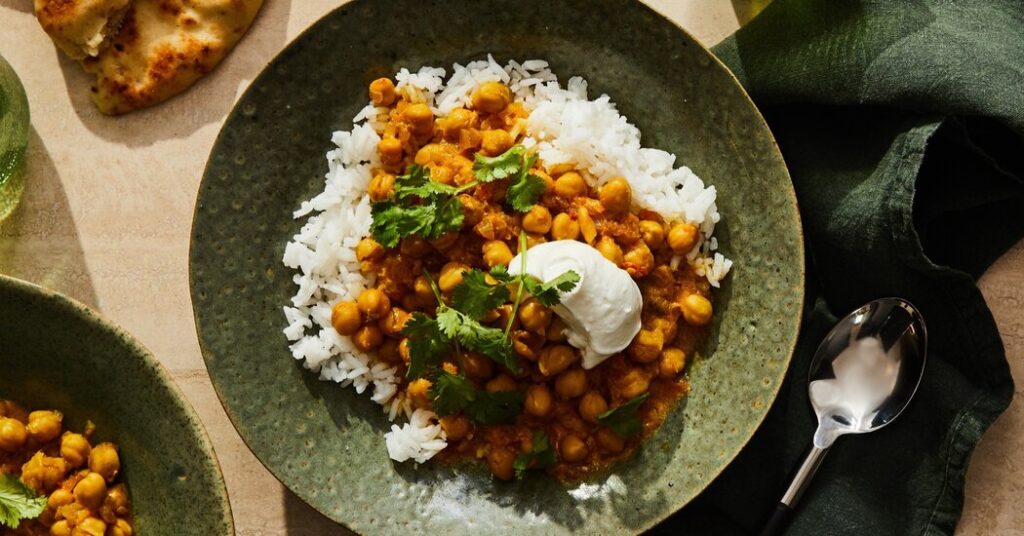
Recipe: Saland-e Nakhod (Chickpea Yogurt Stew)
“It was an intentional oasis in the middle of a chaotic Kabul,” Michael said, recalling how even though a bombing had rattled the city earlier that day, the snow had brought with it momentary peace.
Eating, too, brought with it momentary peace. Working as a human rights investigator at the time, documenting war crimes in Afghanistan and interviewing victims of violence, Michael found that most of his sources served him a meal as part of the meeting, showcasing the hospitality of Afghan culture. There’s an old Afghan saying: You can tell a man’s generosity by the length of his tablecloth. Even the Taliban, which held him briefly at one point, fed him qabuli palaw, a spiced lamb and rice dish topped with carrots, raisins and nuts. There’s something about food that can make “talking about tragedy a little less painful,” Michael writes in his debut book, “The Last Sweet Bite: Stories and Recipes of Culinary Heritage Lost and Found.”
Food was a “skeleton key of sorts,” he discovered, expanding lines of communication and capable of disarming both host and guest. Inside Tamim’s house, it was an unfamiliar dish of golden stewed chickpeas with sour yogurt that disarmed Michael the most, not just because it was delicious but because it made him ask the question: Why haven’t I heard of this stew before?
Called saland-e nakhod (also known as qurma- or qorma-e nakhod), “it’s a dish some Afghan families have forgotten,” Tamim told Michael. It was in that moment when Michael saw how war can decimate food cultures and erase recipes, and how continuing to cook and eat those dishes is, as he writes in the book, “a small but crucial act of culinary restoration and resistance.”
Many cultures have a richly spiced chickpea stew thickened with tangy yogurt, and this one belongs in that glorious pantheon right alongside the others. When Michael said to me one day, “You need to grate way more garlic into the yogurt than you think,” I liked the idea that he was passing Tamim’s recipe onto me, as in a game of telephone (but in this case, each receiver of the gift is extra careful with the delivery of the message).
There’s an old Afghan saying: You can tell a man’s generosity by the length of his tablecloth.
Like most stews, or qurmas, this recipe benefits from a longer cook time, the kind you get from lingering but not hovering. “A typically finished qurma has no extra liquid in it. Afghan stews are thickened by onion gravy once the liquid evaporates,” Zarghuna S. Adel writes in her book “The Best of Afghan Cooking.” This key point — to cook the liquid until it nearly evaporates, until the onions become the gravy — changed my stew game for life.
Michael said to me recently in a voice note: You get to know someone better when you eat and drink with them.
I thought of this the other day when I took a G train to South Brooklyn, then walked 20 more minutes to meet my friend Josh, a chef, at the Afghan restaurant Dunya Kabab House. He had a novel sticking out of his jacket pocket, and so did I, which meant the commute was long for both of us.
The meal was phenomenal. “Comfort food,” Josh called it. “Fall-apart lamb and fat-slicked rice.” He told me it felt as if we were guests in their home and they were showing us the foods that matter to them. I meet Josh every few months, miles away from our homes like this, because I know he’ll appreciate the momentary peace of a dinner table, including any lessons we might learn from our hosts, and each other, while lingering there.
The post A Rich Chickpea Stew That Tastes Like an Oasis appeared first on New York Times.