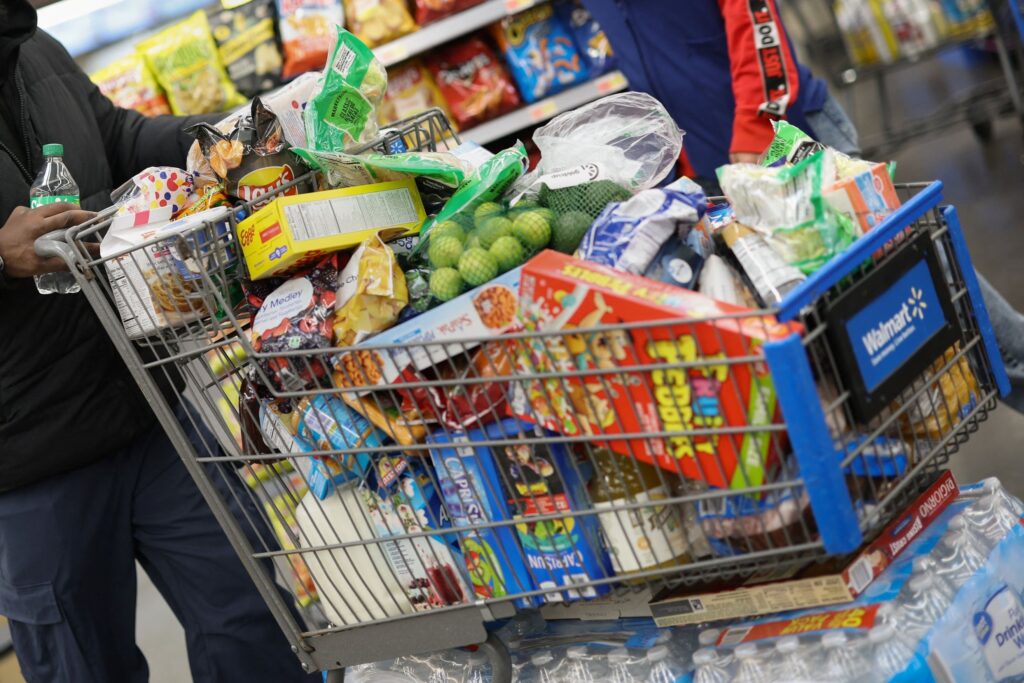
Makers of popular drinks, snacks and cereals that fill store shelves and pantries across the nation are facing legal heat again.
San Francisco’s city attorney filed a first-of-its-kind government lawsuit on Tuesday against some of the country’s largest manufacturers of ultra-processed food, accusing the companies of making and selling products that are harmful to people’s health. The lawsuit comes during growing concerns about the links between highly processed foods — which are made up mostly of substances extracted from other foods or man-made in laboratories and also often contain numerous additives — and the rising rates of many health conditions, such as chronic diseases and cancer.
“These products and our diets are deeply linked to serious health conditions, imposing enormous costs on millions of Americans and cities and states across our country,” San Francisco City Attorney David Chiu said Tuesday at a news conference. “Our case is about companies who design food to be harmful and addictive, and marketed their products to maximize profits. Like the tobacco industry, they knew their products make people very sick, but hid the truth from the public, profited from untold billions and left Americans to deal with the consequences.”
Individual companies named in the lawsuit did not immediately respond to requests for comment, but an industry trade group defended the manufacturers. It highlighted companies’ efforts to improve the nutrition of their products and warned against “demonizing” certain foods.
What the latest research says about ultra-processed foods and our health
Ultra-processed foods are broadly products that have been industrially manufactured with flavors and additives, such as sugar, sodium, emulsifiers and preservatives, to make them more palatable. While it’s easy to identify many sodas, chips, candy and frozen meals as highly processed, other items such as some breads and peanut butters, which can contain nutrients such as fiber and protein, can also fall into this category. But some nutritionists have cautioned against avoiding ultra-processed products as some can contain healthy nutrients.
Researchers estimate that 70 percent of the U.S. food supply is composed of these foods. More than half the calories Americans consume come from ultra-processed foods, which are hyper-palatable and generally inexpensive, according to a recent report from the Centers for Disease Control and Prevention. Youths consume more calories from the products than adults do, roughly 62 percent compared with 53 percent.
In 2019, a landmark study provided some of the most compelling evidence so far that ultra-processed foods are harmful to Americans’ health. The small-scale study observed 20 healthy volunteers for a month during which participants ate either meals made up of ultra-processed foods or meals of minimally processed foods. Researchers found that people on a processed food diet ate more calories and gained more weight than when they consumed foods that were unprocessed.
Other studies have increasingly linked ultra-processed foods to health problems, identifying them as risk factors for obesity, heart disease, cancer and diabetes. A recent series of papers published in the Lancet reviewed evidence of the health impacts of ultra-processed foods and found that these products are a “key driver of the escalating global burden of multiple diet-related chronic diseases.”
But researchers say it is complex and expensive to study these products, and they are still trying to determine exactly why they are leading to poor health. The Department of Health and Human Services has announced plans to study how and why such foods can lead to poor health.
What’s being done to regulate these foods?
Health Secretary Robert F. Kennedy Jr. has repeatedly said the nation’s food supply is “mass poisoning” this generation of children and has made overhauling it a core part of his Make America Healthy Again movement.
The first report from the MAHA Commission, which Kennedy chairs, identified ultra-processed foods as a potential driver of childhood chronic disease. A subsequent strategy report from the commission avoided proposing sweeping restrictions on such foods. Kennedy’s health agencies, along with the Agriculture Department, are seeking to refine the definition of ultra-processed foods. A revamp of the nation’s dietary guidelines is also due out this month.
In the meantime, states and cities have also attempted to tackle ultra-processed foods with local regulations.
California Gov. Gavin Newsom (D) signed a bipartisan bill in October that defined ultra-processed foods and aimed to phase out “the most concerning” items from school meals statewide. A number of states have also enacted laws or are considering legislation to ban food dyes and chemical additives, with many focused on schools — efforts MAHA supporters have applauded.
Why is San Francisco suing?
The lawsuit is an effort to hold ultra-processed food manufacturers accountable, said Chiu, the city attorney. It names 10 companies as defendants, including Kraft Heinz Company, Mondelēz International, Post Holdings, the Coca-Cola Company, PepsiCo, General Mills, Nestlé USA, Kellanova and WK Kellogg, Mars Incorporated and Conagra Brands.
The complaint filed in San Francisco Superior Court alleges that these companies engaged in “unfair and deceptive acts” in how they market and sell food and drink. The lawsuit seeks an order prohibiting the companies from deceptive marketing and requiring them to “take action to correct or lessen the effects of their behavior.”
“This case is not about food that is merely ‘unhealthy,’” according to the complaint. “This case is about food products with hidden health harms, that Defendants designed to be cheap, colorful, flavorful, and addictive. This case is about food products whose ingredients and manufacturing processes interrupt our bodies’ abilities to function.”
The lawsuit also seeks monetary compensation, which in part would go toward helping local governments handle the health care costs associated with ultra-processed food consumption.
The Consumer Brands Association, a trade group that represents many of the companies, defended the manufacturers in a statement. Food and beverage makers are working to improve the nutrition of their products, such as introducing options with more protein and fiber, less sugar and sodium and no synthetic color additives, said Sarah Gallo, the association’s senior vice president of product policy.
“There is currently no agreed-upon scientific definition of ultra-processed foods and attempting to classify foods as unhealthy simply because they are processed, or demonizing food by ignoring its full nutrient content, misleads consumers and exacerbates health disparities,” Gallo said. “Companies adhere to the rigorous evidence-based safety standards established by the FDA to deliver safe, affordable and convenient products that consumers depend on every day.”
The lawsuit claims that the food companies’ strategies targeted children, with a disproportionate focus on low-income communities of color.
Roughly 20 percent of U.S. children are obese, almost four times the rate in the 1970s before the proliferation of ultra-processed foods.
What could come of this lawsuit?
Legal and nutrition experts said the lawsuit could be the start of improving the country’s food system.
“Because we haven’t really seen successful litigation in this space, there’s a lot that could go wrong,” said Emily M. Broad Leib, director of the Food Law and Policy Clinic at Harvard Law School. “But I also think this is new in that it’s the first time we’re seeing a case like this being brought by someone on behalf of the government.”
Last December, law firm Morgan & Morgan filed a lawsuit on behalf of a Pennsylvania man against the same food manufacturers, alleging they had engineered their products to be addictive and marketed to children. The plaintiff alleged ultra-processed foods were to blame for his Type 2 diabetes and fatty liver disease.
While the case, which was viewed as a first-of-its kind test, was dismissed this year, the plaintiff is seeking to refile an amended complaint. The judge overseeing the case said the plaintiff’s legal arguments were flawed.
“While the Court is deeply concerned about the practices used to create and market UPFs, and the deleterious effect UPFs have on children and the American diet, it cannot allow this action to proceed because Plaintiff has failed to state a claim upon which relief may be granted.”
The food manufacturers had said the complaint “does not actually allege which specific foods and beverages he consumed, when he consumed them, or in what quantities or frequency.” They also said the lawsuit didn’t detail causal connections leading to his health maladies.
“Instead, Plaintiff’s Complaint singles out Defendants, eleven of the country’s most popular food and beverage manufacturers that are dedicated to making safe products enjoyed by generations of consumers, and essentially asks the Court to hold this select contingent of an entire industry liable for nothing more than making and advertising federally regulated and legally compliant products.”
The San Francisco city attorney’s lawsuit, brought on behalf of the people of California, could have a better chance, said Jennifer Pomeranz, a public health lawyer and associate professor at the School of Global Public Health at NYU. For one, there are more legal hurdles to face as a private plaintiff trying to prove harm, whereas city attorneys and state attorneys general bring cases that are meant to protect the broader public.
“This is a valid complaint,” Pomeranz said of the San Francisco lawsuit. “It’s incredibly well researched. It’s based on the most recent science.”
The lawsuit could help shed more light on the effect of ultra-processed food on people’s health, she said, adding that litigation is a critical tool when federal protections are lacking.
Marion Nestle — a retired professor of nutrition, food studies and public health at New York University — said that it’s too early to tell whether the lawsuit will change Americans’ consumption of ultra-processed foods, calling it a “first salvo.”
“The idea that San Francisco is doing this means other communities could be doing this too,” she said, adding this could boost those who want to implement policies to reduce intake of ultra-processed foods.
The post Why one city is suing big food over cereals, snacks and other ultra-processed products appeared first on Washington Post.