RICHMOND — An unfamiliar word keeps coming up in Virginia General Assembly budget forecasts: “downside.”
As in, the state’s fiscal outlook for the next few years is “skewed to the downside” and more likely to take a negative turn than a positive one, staffers for legislative money committees said in two recent analyses. They blame inflation, federal job cuts, tariffs imposed by the Trump administration and increases in the state’s obligation to cover social safety-net programs under the congressional budget resolution.
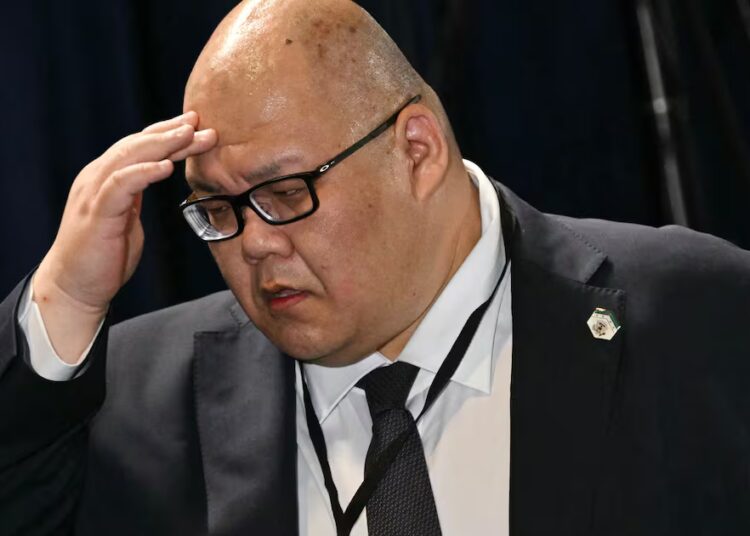
Outgoing Gov. Glenn Youngkin (R) disagrees with the gloomy tone of that outlook. He has presided over nearly four years of surpluses and tax cuts and insisted last week that economic development will keep the boom going.
But annual estimates produced for both the House of Delegates and state Senate suggest Virginia’s run of budgetary good fortune is coming to an end and could force tough decisions beginning next year. While the House and Senate are controlled by Democrats, the budget staffers are nonpartisan.
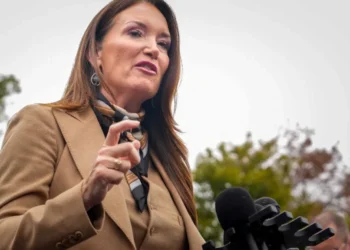
“The forecast and all that we see today lays out some real challenges,” Gov.-elect Abigail Spanberger (D) told members of the state House Appropriations Committee after attending a budget retreat and presentation two weeks ago, according to video of the event posted by the Richmond Times-Dispatch.
There are slight differences between the House and Senate budget analyses, but they agree on the fundamentals: Growing demands for mandatory state spending, driven partly by President Donald Trump’s budget deal with Republicans in Congress, are likely to eat up lingering surpluses over the next two years and leave little for discretionary spending. Sooner or later, obligations will overtake revenue and force Virginia — which is constitutionally required to balance its budget — to either cut services or raise taxes.
“It’s the worst budget setup I’ve seen in I think about 10 years,” Senate Majority Leader Scott A. Surovell (D-Fairfax) said. “There are economic hurricane flags all over the horizon.”
The holidays are high budgetary season for Virginia, which operates on a two-year spending plan adopted in even-numbered years. Youngkin will propose the final biennial budget of his term in mid-December, and Spanberger and the General Assembly will work from that document after she takes office Jan. 17. The budget will go into effect July 1 and cover the following two fiscal years.
The spending plan lawmakers wind up producing is likely to look different from what Youngkin proposes. While budget-making in Richmond is always politically charged, members of the General Assembly tend to guard the state’s reputation for fiscal discipline and sometimes clash with governors over priorities, regardless of party.
Every year, staffers for the House and Senate money committees prepare separate budget forecasts to help lawmakers start planning for the General Assembly session, which convenes Jan. 14 and is scheduled to last 60 days.
Both chambers’ late-November reports outlined a weakening state economy, with job growth having slowed over the course of 2025 and Virginia’s unemployment rate ticking steadily upward, though at 3.6 percent it’s still below the national average. They expect future job growth to lag in high-income categories — particularly in Northern Virginia and Hampton Roads, which are heavy with federal employees and contractors — and for the employment market to be stagnant, with little hiring or firing.
Those factors add up to a softer outlook for state income tax revenue. And that would hit at a time of big expenses for state government.
The congressional budget resolution pushes states to take on more of the cost of Medicaid, which the legislative analysts estimate will cost Virginia about $3.2 billion over the next 2½ years — money that was not budgeted. (The half-year is the first six calendar months of 2026, which completes the current biennial budget.)
The federal budget agreement also shifts about $440 million in other mandatory spending onto the state, according to the legislative analyses.
In addition, Virginia recalculates — or “benchmarks” — its obligation to pay for K-12 education every two years, and those costs are expected to grow by more than $800 million over the budget period.
The Senate budget analysts pointed out that those expenditures are growing faster than state revenue, which will lead to a “structural imbalance” — meaning a built-in and ongoing shortfall. Virginia’s Constitution requires a balanced budget, and the state’s coveted AAA bond rating is based partly on its budgetary stability. So this is a problem that can’t be ignored.
And it potentially gets worse.
Virginia usually conforms its state income tax provisions to federal income tax policy. Incorporating all of the changes passed this year by Congress would reduce Virginia’s revenue by $1.1 billion between now and the end of the next budget cycle, House budget analysts found.
Solving those problems could limit the ability of lawmakers and the Spanberger administration to pay for announced priorities such as addressing housing affordability, cutting the waiting list for state child care subsidies and trimming the cost of higher education, which together carry a price tag of more than $600 million, according to the House analysis.
Youngkin, who this year carved about $900 million out of the state budget as a hedge against economic uncertainty from Trump’s actions with the federal workforce, counters that the state is in strong financial shape. He has supported White House policies even as they cost some Virginians their jobs, and he has tied his political ambitions to his image as a savvy businessman.
Revenue collections for the first four months of fiscal 2026 have run some $500 million ahead of estimates, Youngkin said last week after a closed-door meeting with the Governor’s Advisory Council on Revenue Estimates, a panel of business leaders who provide insights into the state’s economic health.
“The impact of the federal government changes has been far less severe in Virginia than the pundits would have suggested,” Youngkin told reporters, according to a transcript provided by his office. “We’ve basically seen very little impact in our withholding lines and our revenue lines, notwithstanding the fact that I do know that people have been laid off. And I do know that there have been job disruptions.”
He argued that Virginia will continue to see revenue growth despite any federal headwinds because his administration has been so successful at attracting economic development and adding private-sector jobs. “I feel like the scenarios that were being discussed at both the House and the Senate [budget] retreats were overly negative from a revenue standpoint. And I think they were disconnected from the facts,” Youngkin said.
His staff is working on revenue estimates for later in December, Youngkin said, and will present “an incredibly well-funded but prudent budget for the next administration.”
The post Virginia’s state budget has been flush for years. That might be ending. appeared first on Washington Post.