The San Francisco city attorney will file on Tuesday the nation’s first government lawsuit against food manufacturers over ultraprocessed fare, arguing that cities and counties have been burdened with the costs of treating diseases that stem from the companies’ products.
David Chiu, the city attorney, told The New York Times that he will sue 10 corporations that make some of the country’s most popular food and drinks. Ultraprocessed products now comprise 70 percent of the American food supply and fill grocery store shelves with a kaleidoscope of colorful packages.
Think Slim Jim meat sticks and Cool Ranch Doritos. But also aisles of breads, sauces and granola bars marketed as natural or healthy.
It is a rare issue on which the liberal leaders in San Francisco City Hall are fully aligned with the Trump administration, which has targeted ultraprocessed foods as part of its Make America Healthy Again mantra.
Mr. Chiu’s lawsuit, which will be filed in San Francisco Superior Court on behalf of the State of California, will seek unspecified damages for the costs that local governments bear for treating residents whose health has been harmed by ultraprocessed food.
The city accuses the companies of “unfair and deceptive acts” in how they market and sell their foods, arguing that such practices violate the state’s Unfair Competition Law and public nuisance statute. The city also argues the companies knew that their food made people sick but sold it anyway.
It is unclear how successful the suit will be. In August, a federal judge in Philadelphia dismissed one of the nation’s first private lawsuits over ultraprocessed foods, filed by a young consumer who was diagnosed with Type 2 diabetes and nonalcoholic fatty liver disease at age 16. The judge, appointed by President Joseph R. Biden Jr., ruled that the plaintiff’s claims lacked specifics about which products he had consumed and when.
But the San Francisco city attorney’s office has had success as a groundbreaking public agency on health matters. The office previously won $539 million from tobacco companies and $21 million from lead paint manufacturers.
In 2018, the office also sued multiple opioid manufacturers, distributors and dispensers, reaching settlements with all but one company worth a combined total of $120 million. San Francisco then prevailed at trial over the holdout, Walgreens, scooping up another $230 million.
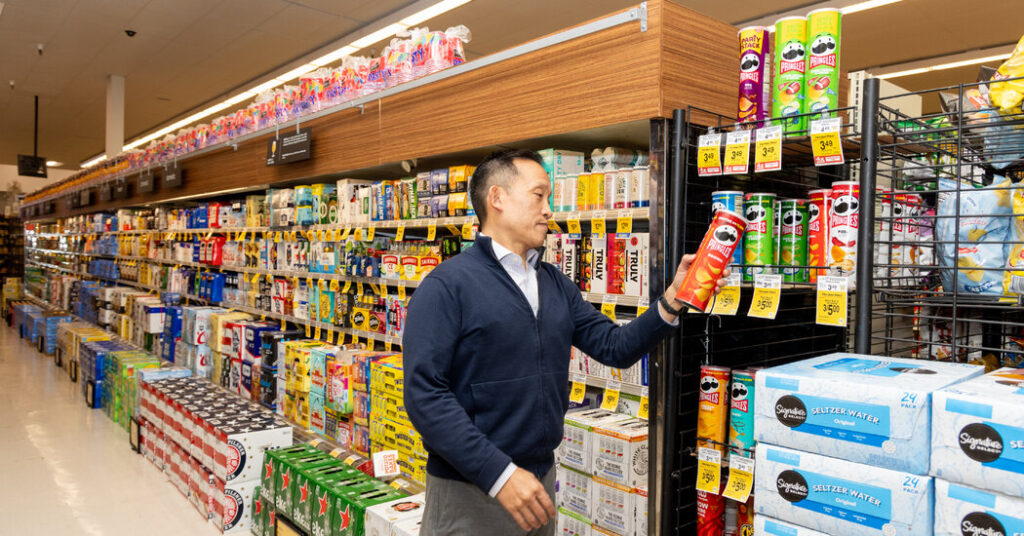
Mr. Chiu, a former Democratic state legislator and San Francisco supervisor, recently walked the aisles of a Safeway supermarket in the Excelsior District, a working-class neighborhood near the city’s southern border..
He picked up a box of Lunchables, a “lunch combination” as the box put it, which contained pepperoni pizza, a fruit punch-flavored Capri Sun and a Nestle Crunch chocolate bar. Mr. Chiu struggled to pronounce the ingredients, listed in tiny type measuring a few inches long, which included diglycerides, xanthan gum, calcium propionate and cellulose powder “added to prevent caking.”
“Modified food starch. Potassium sorbate,” Mr. Chiu continued, ticking off more ingredients on the same label. “It makes me sick that generations of kids and parents are being deceived and buying food that’s not food.”
He sounded a lot like Robert F. Kennedy, the U.S. secretary of health and human services, who has brought his Make America Healthy Again movement to Washington. Mr. Kennedy has railed against ultraprocessed foods, which are typically made in labs and contain ingredients not found in home kitchens, for contributing to chronic diseases.
Research has linked these foods to obesity, Type 2 diabetes, cardiovascular disease, cancer and cognitive decline.
Mr. Chiu stressed that he does not agree with Mr. Kennedy on other health topics, including vaccine skepticism. But he said that the science is indisputable when it comes to ultraprocessed foods.
“Many of the perspectives of this administration are not backed by science, but this is different,” Mr. Chiu said. “Even a broken clock is right twice a day.”
In the San Francisco lawsuit, the defendants include the Coca-Cola Company; PepsiCo; Kraft Heinz Company, which makes Lunchables and Kool-Aid; Post Holdings, the cereal maker; and Mondelez International, which makes Oreos and Chips Ahoy. The lawsuit also names General Mills; Nestle USA; Kellogg; Mars Incorporated; and ConAgra Brands.
None of the companies responded to requests for comment.
The Consumer Brands Association, a trade group that represents many of them, said in a statement that the manufacturers were working to introduce products with more protein and fiber, less sugar and no synthetic dyes.
Jocelyn Kelly, a spokeswoman for the association, said that there was no uniform definition of ultraprocessed foods and that it was unfair to lump them all together.
“Attempting to classify foods as unhealthy simply because they are processed, or demonizing food by ignoring its full nutrient content, misleads consumers and exacerbates health disparities,” she said.
Ms. Kelly added that the companies help to keep grocery store prices down for consumers.
States and cities have taken on ultraprocessed foods in other ways with regulations and legislation.
Democrats and Republicans in California, who are usually deeply divided, passed a bill this year that defined ultraprocessed foods and laid a foundation for banning them from schools, which Gov. Gavin Newsom called a bipartisan win.
In 2010, San Francisco banned fast-food restaurants from giving free toys, such as those found in McDonald’s Happy Meals. As mayor of New York, Michael Bloomberg tried, but ultimately failed, to ban large sodas, including Big Gulps. Numerous cities have taxed soda and other sugary drinks, and California, Arizona and West Virginia have banned some ultraprocessed products, including food dyes, in schools.
Processed foods have been around since the 1800s. During World War II, they were a useful way to provide soldiers with shelf-stable food, including canned meats and chocolate bars that did not melt. After the war, companies realized that they could sell these kinds of products to families by emphasizing that they would save time.
In the 1970s, the country had an excess of corn and wheat and turned the crops into cheap ingredients, such as high-fructose corn syrup and modified starch. Companies heavily marketed ultraprocessed foods to children, using mascots such as Tony the Tiger and Count Chocula.
Tobacco companies, including Philip Morris and R.J. Reynolds, diversified their holdings by purchasing major food companies in the 1980s and used the same marketing techniques they use to promote cigarettes to sell ultraprocessed foods.
Mr. Chiu, the father of a boy in fourth grade, said it has been a constant struggle to limit ultraprocessed foods at home. His family lives at Candlestick Point in the city’s southeast corner, where few healthy food options exist.
“When we’re busy, we stop off at supermarkets that are filled with ultraprocessed foods,” Mr. Chiu said. “It’s extremely difficult when you’re walking down the aisles and your child is tugging at your sleeve to buy the products marketed to them.”
Winding through the aisles, he called out more products. Hot Pockets. Go-Gurt squeezable yogurt tubes. Cheetos. His personal ultraprocessed Kryptonite, he acknowledged, is Pringles. He found them at the end of the cold beverage aisle, just past the White Claws and other hard seltzers, but kept walking.
Asked after he perused the store whether he felt hungry or repulsed, he laughed.
“A little bit of both,” he said.
Heather Knight is a reporter in San Francisco, leading The Times’s coverage of the Bay Area and Northern California.
The post San Francisco Will Sue Ultraprocessed Food Companies appeared first on New York Times.