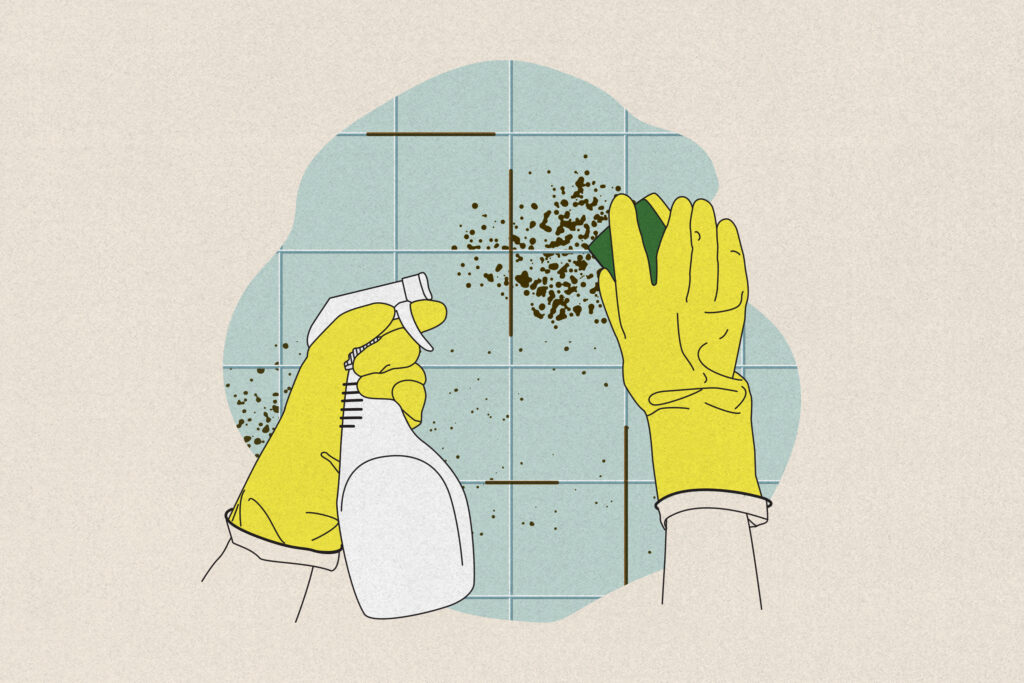
Mold and mildew are often associated with bathrooms and basements, but these fungi can appear in just about any place in the home — as well as outside it. While a small amount isn’t cause for alarm, when you spot it, it’s best to eliminate it quickly to prevent growth, as deeper infestations can sicken humans and animals.
Preventing mold and mildew in the first place through proper ventilation, maintaining healthy humidity levels and regular cleaning is ideal. However, even with these efforts, mold and mildew growth can and will happen. To answer our most pressing questions on this unpleasant topic, we enlisted experts Doug Huntley, a senior global research and development director at 3M; Melanie Carver, chief mission officer for the Asthma and Allergy Foundation of America (AAFA); and Yesenia Soto, a research and development manager at 30 Seconds Cleaners.
What exactly are mold and mildew?
We often speak of mold and mildew as one and the same but, while similar, there are differences between the two. They are both fungi, they can lead to health problems in humans and animals, and they can damage your home and property.
However, mold has a fuzzy, raised appearance, whereas mildew is a flat growth that can appear powdery. In addition, mold is typically darker and green or black in color, while mildew runs from white to gray.
How much do I really need to worry about mold and mildew?
Small amounts of mold are unlikely to cause health problems, but a larger presence can pose a risk to you.
Mold allergies typically mimic hay fever: sneezing; runny nose; coughing; itchy or watery eyes; and dry, itchy skin. Mild mold allergy symptoms, while unpleasant, are not cause for serious concern, but there are some conditions caused by mold that require immediate medical attention, including mold-induced asthma and fungal sinusitis. “Generally, however, mold doesn’t cause infections throughout the whole body in most people,” the Mayo Clinic says. “Exceptions include people with weakened immune systems or ongoing lung conditions.”
What about black mold? That’s the bad one, right?
There are several different types of mold, in colors ranging from white to black; according to AAFA, two of them, Stachybotrys and Ulocladium, are black molds. Black molds are not necessarily more or less dangerous than other types of mold, in that all molds can pose a health risk — rather, the scope of a mold infestation is what to focus on.
Where should I look for mold and mildew? Are there signs?
Soto says to be on the lookout for these common indicators of mold: peeling paint, water stains, warped surfaces or mystery allergy symptoms that flare up indoors. “Mold has a sneaky way of showing up,” she says, “and it loves to leave clues.”
Mold and mildew can usually be identified in two ways: by sight or smell. “Molds can be black, white and other colors,” Huntley says. “You can usually see or smell a mold problem; most molds produce musty odors that are the first indication of a problem. Mold can appear as slightly fuzzy, discolored or slimy patches that increase in size as they grow.”
What causes mold and mildew?
“Mold is most likely to grow in areas that are frequently or continuously damp and humid,” Huntley says, which he defines as a space that has an indoor humidity reading of greater than 60 percent; AAFA recommends keeping your home’s relative humidity (RH) between 30-50 percent. “Bathrooms, around windows and basements can be hot spots,” he says, “and any area that has experienced water damage or a water leak should receive special attention. Condensation on windows and water pipes are also common sources of indoor moisture.”
Can I clean mold and mildew myself?
Yes, but there are safety considerations and some caveats to be aware of. Eliminating mold is a relatively straightforward job, but before DIY-ing it, consider the size and scope of your mold problem and call professionals if necessary. “If in doubt,” Huntley says, “consult the EPA’s resources on dealing with mold in the home and consider hiring a professional.” The Environmental Protection Agency recommends calling a professional “if you are unsure about how to clean an item, or if the item is expensive or of sentimental value. Look for specialists who are affiliated with professional organizations.”
Because mold and mildew are allergens, it is important to take precautions when you know you will come in contact with them. “For people with asthma or mold allergy, it is best to have someone else clean up mold whenever possible,” Carver says.
What cleaning agents should I use?
Carver says that most molds can be cleaned and removed with soap and water and white vinegar; a soft bristle scrub brush can help to lift spores and eliminate staining. When choosing the right cleaning agents for the job, Soto says, “It’s important to use a product that is registered with the Environmental Protection Agency to kill mold.”
You may also choose to use a commercial fungicide; the EPA, as well as the experts we spoke to, do not recommend using chlorine bleach for mold cleanup. “Chlorine bleach and aerosol disinfectant sprays can be harmful to the airways and are not the best choice,” she says. “Bleach can kill mold on nonporous surfaces like glass, tile, sinks, bathtubs and some plastic, but it is not recommended due to health risks and its limitations.”
How do I clean mold and mildew?
“The goal is to keep both the mold and the cleaning chemicals from getting on your skin or entering your body during the cleanup,” Huntley says. When working with mold or mildew, follow these safety guidelines provided by the experts we spoke to:
- Wear gloves: The EPA recommends wearing chemical protection gloves that extend to the mid-forearm, Huntley says. Regular household cleaning gloves may not provide enough protection when working with mold and mold-killing chemical agents. Look for the designation “chemical resistant.”
- Use eye protection: Goggles help to protect eyes from irritation caused by mold, as well as the cleaning agents used to eliminate it. Select a pair that are not vented to ensure thorough eye protection.
- Don a mask: Consider wearing an N95 mask to protect the nose and throat from airborne fungi and fumes from cleaning agents.
- Avoid running fans, which can spread the mold around.
Once you’re suited up, follow these steps:
- Prepare a cleaning solution. Mix a cleaning solution of soap and water, or vinegar and water, in a spray bottle. Fill a separate spray bottle, or a bowl or bucket, with clean water for rinsing.
- Apply the cleaning solution. Spray the mold with the cleaning solution, and use a cleaning cloth or scrub brush to remove the fungal growth. Repeat as necessary until the visible mold is removed, switching to a clean cloth if the one you’re using becomes heavily soiled.
- Rinse. Rinse the surface well with clean water, and allow it to air dry.
- Clean up. Once the surface is dry, use a HEPA vacuum to go over the area to remove any remaining spores. Empty the vacuum directly into a trash bag, tie it tightly and dispose of it immediately. Launder any cleaning cloths using the sanitizing washer cycle in a separate load to prevent cross-contamination.
How can I prevent mold and mildew?
Keep up regular cleaning and home maintenance. Huntley advises immediately fixing any water leaks or cleaning spilled water.
Monitor humidity levels. A hygrometer is an inexpensive tool that measures humidity levels in the home, allowing you to monitor and maintain healthy indoor air.
Use dehumidifiers and desiccants. If your home’s RH is above 50 percent, use a dehumidifier to remove moisture from the air. In small spaces, or spaces without electrical outlets, desiccants like DampRid and plants that absorb humidity, like peace lilies, spider plants and Boston ferns, can help to control RH.
Improve air flow. “Improving air flow through your home also helps control moisture levels,” Carver says. She says that simple acts like opening windows and running exhaust fans that vent outdoors will help to keep air flowing through your home.
Choose spore-trapping filters. Homes that have central air conditioning should use filters with the Certified Asthma & Allergy Friendly designation that can trap mold spores. “You can also use a freestanding air cleaner in rooms with poorer air quality,” Carver says, “just be aware these only filter air in a limited area based on the device’s capacity and the room size.”
The post How to deal with mold and mildew appeared first on Washington Post.