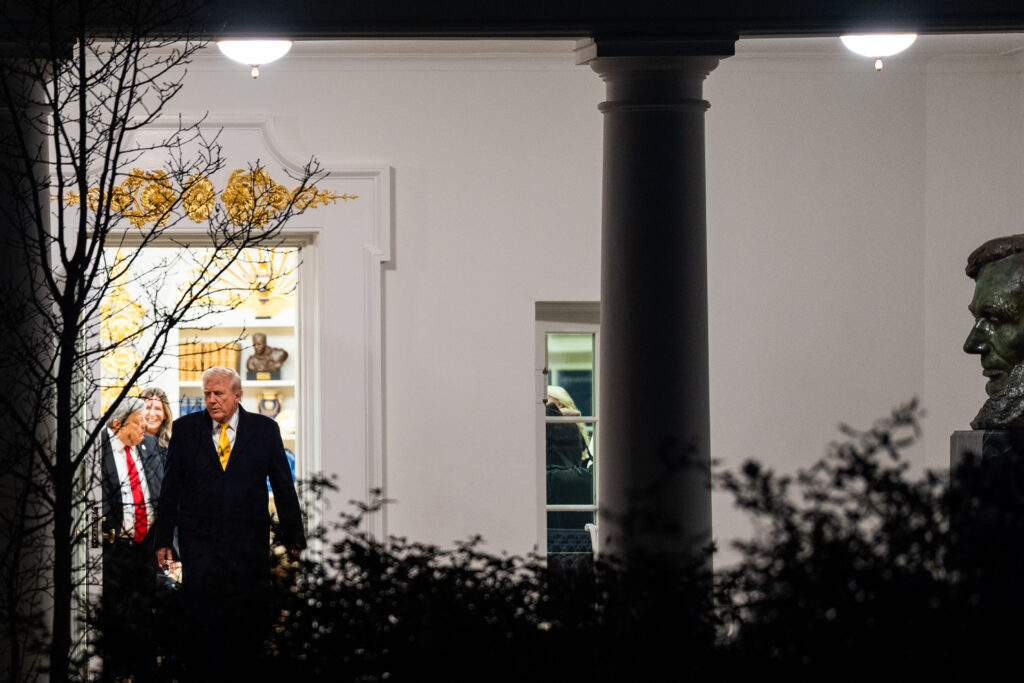
Did something spook President Donald Trump? Late Friday, he announced that he would roll back tariffs on food, just days after he embraced a much more moderate tone on immigration. The question is whether this is a momentary shift or a real change of heart prompted by sour polling, scary economic indicators and private conversations with alarmed business leaders.
Did something spook President Donald Trump? Late Friday, he announced that he would roll back tariffs on food, just days after he embraced a much more moderate tone on immigration. The question is whether this is a momentary shift or a real change of heart prompted by sour polling, scary economic indicators and private conversations with alarmed business leaders.
Democrats dominated state and local elections this month, and “affordability” instantly became every politician’s favorite word. Yet the president scoffed at voter concerns about rising prices and insisted that America was becoming more affordable on his watch. But voters tend to recognize reality over what people in power say, even if they voted for them.
Trump’s Friday executive order rescinded reciprocal tariffs he imposed on dozens of agricultural products, including beef and coffee. These goods have grown more expensive, and that has taken a toll on consumer confidence. The strain is particularly acute heading into the holiday season.
This reversal came a day after the administration announced deals with four countries to relax tariffs on bananas and other consumer goods that the U.S. doesn’t really produce. That’s progress, but it never made sense to impose the duties. In touting the move, Treasury Secretary Scott Bessent implicitly acknowledged that the tariffs have raised prices for consumers. This was obviously going to happen, but administration officials who should know better insisted that foreigners or retailers would absorb the costs rather than pass them on to consumers.
Trump also sounded more conciliatory on immigration. He made the case for H-1B visas during an interview on Fox News, saying they’re necessary because American workers lack “certain talents.” This is quite a shift from September, when he signed a proclamation intended to raise the fee for a visa to $100,000. In an even starker modulation, Homeland Security Secretary Kristi L. Noem boasted Wednesday on “Fox & Friends” that “more people are becoming naturalized under this administration than ever before.”
These comments drew the ire of many online MAGA activists. Yet no doubt the administration noticed that many of the Hispanic voters who gravitated toward the president a year ago had already moved back into the Democratic column in New Jersey and Virginia. Nine months of viral videos showing masked immigration officers clashing with nonviolent immigrants took a toll.
Over dinner Wednesday, Trump reportedly asked a group of CEOs and Wall Street titans for ideas on how to make life more affordable and prevent the American Dream from slipping out of reach. He also told the group that he thinks his policies will enable the economy to grow 5 to 6 percent a year. Such growth is never going to happen with maximalist tariffs or mass deportations of otherwise law-abiding workers.
The one-two punch of immigration restrictionism and extreme protectionism has already dragged the economy down. Layoffs are at recession-like levels, and finding a job is as hard as it’s been in years. The National Retail Federation warns that seasonal hiring for Christmas may drop as much as 60 percent from last year, partly because companies are trying to cut costs due to higher tariffs.
The 43-day government shutdown limited data collection and reporting. The White House said Thursday that the October inflation and jobs reports will “likely never” be released. Press secretary Karoline Leavitt tried to get ahead of potentially bad numbers next month by saying that the shutdown “may have permanently damaged the federal statistical system.”
Business leaders often express far greater anxiety about Trump’s chaotic trade policy in private than public. Tariffs continue to raise production costs, and their full effect hasn’t even been felt by consumers because there is a lag between higher wholesale prices and what stuff costs on shelves at supermarkets. Trump backing off his reciprocal tariffs on food will help some, but it’s only a partial fix. The Supreme Court would do Trump, and the country, a real favor by striking down his legally questionable tariffs.
The post A course correction on affordability
appeared first on Washington Post.