The U.S. economy cooled sharply at the end of 2025, with growth slowing to an annual rate of 1.4 percent, as tariffs and a weeks-long government shutdown sapped its earlier momentum.
Overall, the economy expanded by 2.2 percent last year, lower than the 2.8 percent growth the year before, according to new data from the Bureau of Economic Analysis.
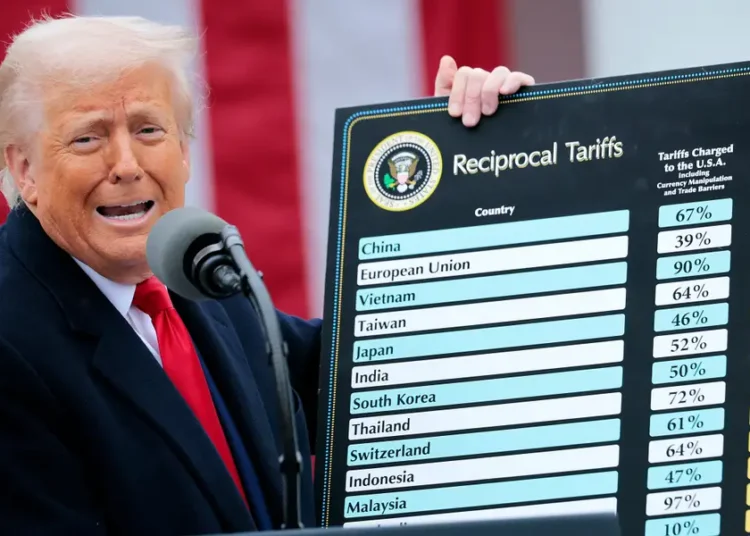
The latest gross domestic product report — which sums up the goods and services produced in the United States — reflects rising imports and a widening trade gap, despite President Donald Trump’s push to revive U.S. manufacturing. Federal spending also fell sharply, in part, because of the longest government shutdown in history, which began Oct. 1, 2025, and lasted 43 days.
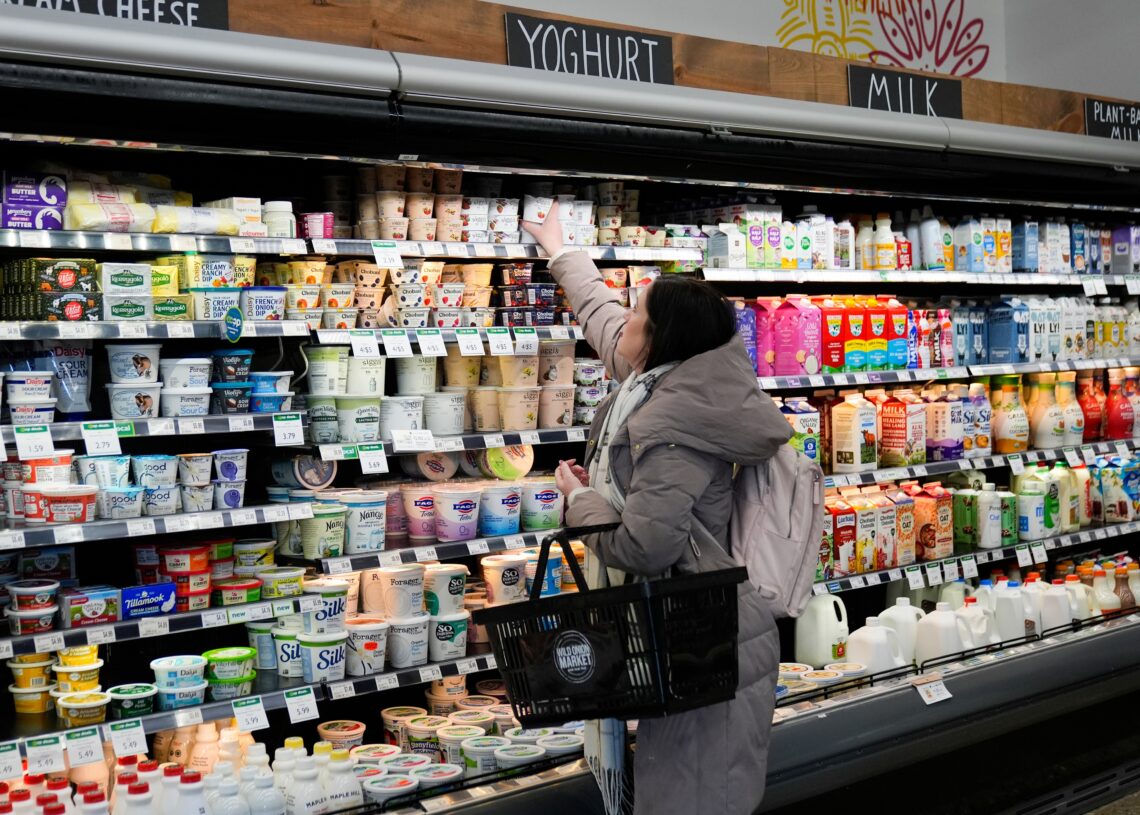
Still, those subtractions were largely offset by steady spending by American households that have been paying more for housing, utilities, health care and other services. Notably, spending on big-ticket items like cars and appliances slowed last year, as new tariffs and sluggish wage growth chipped away at families’ finances.
“Even though the headline numbers look fine, the economic environment right now is incredibly narrowly driven,” said Shannon Grein, an economist at Wells Fargo. “Higher-income households are still spending but we’re seeing pullback from middle- and lower-income households.”
The fourth-quarter report — delayed by a few weeks because of the government shutdown — was also bolstered by growing business investments in artificial intelligence. Purchases of information-processing equipment accounted for nearly half of overall GDP growth.
A separate report on Friday showed that inflation heated up in December, reigniting fears that the Federal Reserve might have to keep interest rates elevated in 2026. The Fed’s preferred measure — which strips out volatile food and energy costs — showed that overall prices rose 3 percent from a year earlier, up from a 2.8 percent rate in November.
Economists are divided on what comes next. Some said the latest report signals a transition to more muted growth in the coming months. Others said they expect the drag from the government shutdown to reverse in the coming months, putting the economy on track for heftier growth in 2026.
“That hit to government spending will be temporary — it will bounce right back again since federal employees are back at work,” said Michael Pearce, chief U.S. economist at Oxford Economics. “We’re seeing a slight slowdown now but this is an economy where the underlying activity is still rising at a pretty solid pace.”
A year ago, many economists predicted widespread slowdowns related to the Trump administration’s new tariffs and mass deportations and other immigration policies. That didn’t immediately happen. Although GDP shrank at an annual rate of 0.6 percent in the first three months of 2025, it had since picked up with outsize growth of 3.8 percent and 4.4 percent in the second and third quarters.
While growth has recently moderated, the economy remains solid by many measures. The unemployment rate, at 4.3 percent, is near historic lows. Inflation has cooled in the past year to 2.4 percent, and households and businesses continue to spend.
But economists caution that the outlook may be more fragile than it appears.
“The economy appears reasonably strong, but if you take a closer look, things are actually quite wobbly,” said Luke Tilley, chief economist at Wilmington Trust, who puts the chances of an upcoming recession at about 45 percent. “When we look at what’s going on with incredibly low job creation and consumers falling behind on credit cards and mortgages and auto loans, it paints a picture of a much weaker economy.”
The economy’s mixed signals are complicating the road ahead for the Federal Reserve, which lowered borrowing costs three times last year but is holding off on further cuts until it has a better sense of where inflation and the job market are headed.
Economists also say it’s too soon to write off the economic effects from tariffs and immigration slowdowns. Some pointed to the “slow burn” from the United Kingdom’s breakup with Europe. “Brexit” didn’t lead to a sudden drop-off in economic growth, but over the years, it gradually dragged down productivity, employment and investments.
“We’ve spent a lot of time saying, ‘Oh look, we don’t have a recession, therefore these tariffs and immigration policies are probably not affecting the economy,’” said Tara Sinclair, chair of the economics department at George Washington University. “But these policies are changing the structure of the economy in very fundamental ways. And long-run, it could mean we have 10 years of less good growth than we would’ve otherwise had.”
At LiteGear Bags, a luggage maker in Vallejo, California, owner Magi Raible said new tariffs have dragged down profits, even though consumer demand has stayed steady. The company’s most popular products, including a rolling backpack that sells for $149, are made in China and cost twice as much to import than they did a year ago.
As a result, Raible has stopped placing as many orders, leaving her with a dwindling supply of luggage to sell. And, although she has moved some production to Cambodia, the Trump administration’s blanket tariffs are making it tough to manufacture anywhere.
“As my inventory runs out, I don’t know how I’m going to replace it,” she said, adding that the uncertainty was affecting other parts of her business, too. “I had 15 employees plus subcontractors when we were moving and grooving. Now, I’m a one-woman show.”
Some business owners, especially of larger ones, say they are feeling more optimistic about the economy than a year ago, when looming tariffs and other uncertainties kept them from investing or hiring as freely as they would have liked. The mood this month at the Toy Fair, an international trade show in New York, was “a total 180” from last year, said Jay Foreman, chief executive of Basic Fun, which makes Care Bears and Tonka trucks.
“Compared to last year, everybody’s more hopeful,” he said.
Foreman is importing products as usual — after a month-long hiatus last year when tariffs hit 145 percent — and is beginning to pass on higher costs to customers. He’s also considering hiring more people but said he’s treading cautiously. “We are still sleeping with one eye open, just in case,” Foreman said.
The post U.S. economic growth slowed sharply at end of 2025, dragging down the year appeared first on Washington Post.