
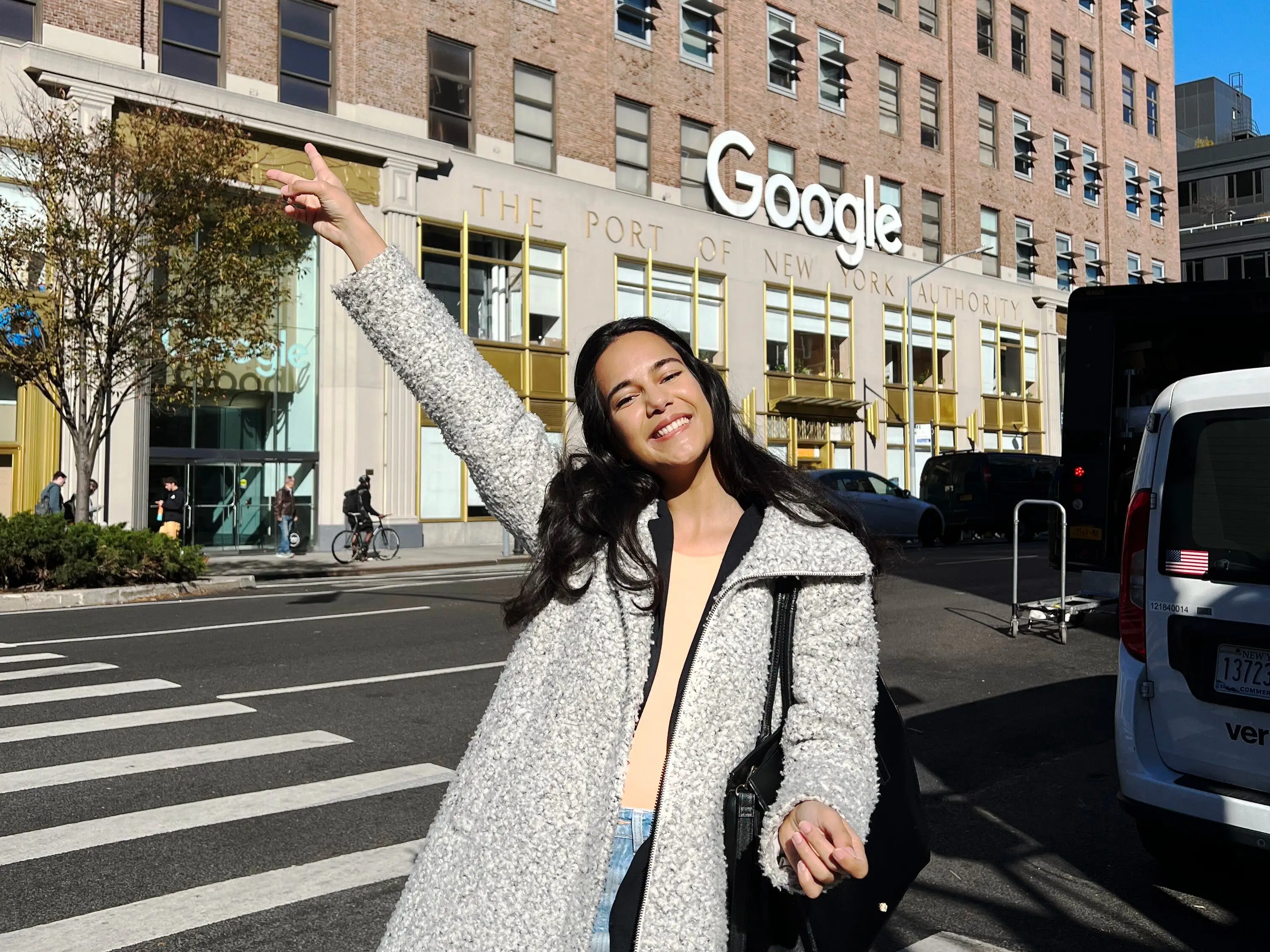
This as-told-to essay is based on a conversation with Maitri Mangal, a 26-year-old software engineer at Google, based in New York. Her identity and employment have been verified by Business Insider. The following has been edited for length and clarity.
When I started off as a software engineer, my dad, who also works in tech, kept telling me to get into AI.
I brushed it off because I was just starting off my engineering career, and no one was really talking about AI in 2019, unless they were getting a PhD.
Then in 2023, the tech industry changed and everyone started going into AI. That led me to want to start pursuing AI as a job, and also creating content about it. When trying to join an AI team, I think having a strong presence and personal brand is crucial for others to take you seriously.
In my three years at Google, I’ve changed roles three times, most recently switching to the Workspace AI team.
It’s important to make a distinction between an AI machine learning engineer and an AI software engineer. An AI ML engineer creates the model, trains it, and evaluates it. An AI software engineer integrates AI capabilities into software applications, and builds APIs and infrastructure to serve the model to the end user.
My transition to an AI team didn’t happen overnight. It required spending about a year upskilling through courses and creating content about the material, which forced me to learn the concepts.
Here’s how I made the switch:
Creating content about AI
In the spring of 2024, I started creating tech content on Instagram and LinkedIn, outside my job. That became a major factor in my transition to an AI team.
Making content motivated me to keep learning and also made me confident about sharing what I knew. Once I started seeing how much it helped people, I wanted to learn more. So that’s where the upskilling started, and I started taking courses to understand the fundamentals of AI.
Eventually, I started applying to AI teams at Google. I felt like if I was going to spend so much time upskilling and making content about AI, I should make the most of what I had. I started searching for new roles in January, about seven months after I started upskilling. In March, I landed the new job.
I still spend an hour a day upskilling
I typically take Google’s internal courses to upskill. Coursera also has amazing courses.
The easiest way to start is by taking the basics of AI, like Google’s Introduction to Generative AI and Google Prompting Essentials. Since I have a computer science background, I was able to get more in-depth with concepts like linear regression and vector analysis.
I took courses for about two hours a day, but in order to absorb the material, I had to talk about it, not just read. When I verbalized the concepts through making content, it helped me understand the material.
I also get feedback from my followers, and when they ask follow-up questions in the comments, it makes me go even deeper into understanding a topic. Talking to friends or teammates who are excited about AI also helps me better understand the material.
In this field, it’s very hard not to learn. I’m not necessarily still dedicating two hours daily to courses, but I still spend about an hour a day upskilling, whether that’s in the form of internal trainings for my job, or watching YouTube courses for the content I create.
Not everyone wants to create content, so that’s not always the best way to go about transitioning to an AI team. If you’re just starting out in tech, my biggest piece of advice would be to take on projects. You should definitely take courses about AI, but keeping up-to-date with the news and doing AI projects also really helps. Many AI courses have users do mini projects, so you get to know how to work with it.
Since I applied internally, I didn’t have to go through the same interview process. However, I still had to submit my résumé, which included all of my side projects, and I think that really helps.
Read the original article on Business Insider
The post I’m a 26-year-old Google engineer who spent a year transitioning to an AI job. Here’s how I did it. appeared first on Business Insider.