A week after launching the war with Iran, President Trump was asked whether the map of the country would still look the same after the end of hostilities. His response was striking: “That I can’t tell you. Probably not.”
In an administration that frequently confuses swagger with strategy, this remark was nonetheless extraordinary. Iran is one of the largest countries in the world. Redrawing its borders might unleash political, ethnic and religious conflict that could destabilize the entire region. This is only one example of a much larger pattern: Mr. Trump’s notion of international borders is, in a word, fuzzy.
Mr. Trump has threatened to use the U.S. military in Colombia and Mexico and promised to “take back” the Panama Canal. His administration claims to be in armed conflict with drug cartels while U.S. forces attack boats across the Caribbean and Pacific, killing almost 200 people. His long-running obsession with acquiring Greenland — backed by escalating diplomatic, economic and military pressure on Denmark and other NATO allies — has almost brought down the already-tottering Western alliance. After repeatedly musing aloud about turning Canada into the “51st state,” Mr. Trump now indulges in social media posts depicting Venezuela covered with the American flag.
Where is all this going? The president has embraced an openly imperial approach to foreign policy, one that regards treaties as provisional, allies as obstacles and military power as a personal instrument of rule. While commentators have noted the “neo-royalist” cast of Mr. Trump’s worldview, his patrimonial understanding of geopolitics threatens something even more basic: the clearly defined international boundaries that are the very foundation of state sovereignty in the modern world. For someone who talks endlessly about borders, Mr. Trump has a porous idea of what they are. The result of this thinking will be a world of fuzzy borders, leading to a cacophony of territorial claims by rival states across the globe.
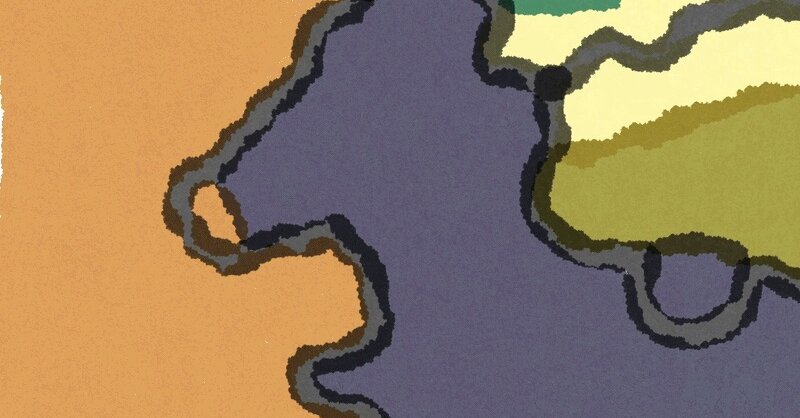
Today, international borders feel natural, even inevitable. Look at any standard map of the world, and the planet appears to be neatly parceled out, each country cleanly ending where another begins, rendered in distinct colors and locked in place by default settings. Disputes still exist — over Taiwan, Israel, Kashmir, Western Sahara — and they force awkward political compromises among mapmakers and in corporate boardrooms, where a misplaced line can trigger diplomatic backlash or regulatory punishment. Russian President Vladimir Putin’s effort to redraw the map unilaterally and erase Ukraine’s sovereignty over its legally defined territory is shocking precisely because it violates these taken-for-granted conventions. Still, for most of the world, borders appear to be fixed, legible and uncontroversial.
That stability is a historical anomaly. Before the 20th century, international borders were vague, shifting and endlessly contested. The very notion of a crisp line dividing one state from another is a modern invention. Empires continually expanded and contracted through war, marriage, purchase and inheritance. Sovereignty was personal rather than defined by clear jurisdictions, tied to dynasties rather than fixed land. Territory was treasure, to be acquired and exploited.
Imperial frontiers were zones of ambiguity and friction. They sometimes sheltered dissenters and renegades escaping imperial repression, but authority over these borderlands was almost always unstable, contested by rival powers and enforced through unpredictable bursts of violence. Fuzzy borders were not romantic spaces of freedom. They were engines of conflict.
Europe learned that lesson the hard way in 1914. An assassination in Sarajevo set off a chain reaction of incompatible territorial claims in the Balkans. Each great power felt compelled to defend its interests, its allies or its imperial future. The result was four years of industrial slaughter and more than 14 million dead.
After the devastation of World War I, the victorious allies tried to solve the problem of fuzzy borders — and failed miserably. President Woodrow Wilson’s dream of neatly aligned nation-states collapsed under political opposition at home and ethnic reality abroad. The Versailles settlement left Weimar Germany humiliated and territorially dismembered, undermining democratic legitimacy and feeding the resentments Adolf Hitler would later exploit. The Treaty of Trianon similarly left Hungary territorially diminished and politically embittered, fueling irredentist claims against neighboring states that now governed large ethnic Hungarian populations.
World War II began the same way: with border disputes. Hitler’s annexation of Austria in 1938 met only token opposition from the international community and was rationalized by influential elites as a “natural” unification of German-speaking peoples. That concession made every border in Central and Eastern Europe negotiable. The Munich Agreement gutted Czechoslovakia by handing the ethnic German areas over to Hitler. The Nazi-Soviet pact carved up the borderlands between two totalitarian regimes. Poland was erased. The result was another global war and the deaths of some 50 million people, including the near annihilation of European Jewry.
The new global order created after World War II, despite its many shortcomings, has been remarkably successful in dealing with the fuzzy border problem. We tend to think of the global liberal order as resting primarily on the creation of new international institutions such as the United Nations, NATO, the International Monetary Fund and the World Bank. Less often noticed is the invention of a world system where, in principle, the linear boundaries of every state on the planet can be demarcated and are recognized by all. This arrangement has often been violated, including by the Western powers that set it up. It took many bloody decades of struggle for former European colonies to obtain state sovereignty, and the legacies of imperial boundary-drawing continue to bedevil politics in much of the post-colonial world. Yet the post-World War II border system is still far more precise and institutionalized than that of any previous era.
Mr. Trump’s cavalier dismissal of the relevance of state borders to American foreign policy threatens to bring humanity back to the dangerous world of never-ending geopolitical struggles over contested borderlands. The intractability of the conflict now emerging over who exactly has sovereignty over the Strait of Hormuz is only a foretaste. In his second inaugural speech, Mr. Trump called for “a growing nation — one that increases our wealth, expands our territory.” But if the United States can claim all or part of Canada, Panama, Venezuela, Greenland or Cuba, why should powerful states on other continents continue to observe international law in relations with neighbors whose territory they consider to be part of their own national patrimony?
A system of fuzzy borders, in which powerful states treat territory as negotiable and sovereignty as conditional, is not a viable alternative to the liberal world order. It would mean the re-emergence of a much older political logic in which power, not law, determines the boundaries of political community. The great powers of the 21st century — the United States, China and Russia — may each be tempted by this patrimonial vision of international affairs. But the price of returning to that world would not be paid in prestige or rhetoric, but in blood.
Stephen E. Hanson is a professor in the department of government at William & Mary. Jeffrey S. Kopstein is a professor of political science at the University of California, Irvine. They are the authors of “The Assault on the State: How the Global Attack on Modern Government Endangers Our Future.”
The Times is committed to publishing a diversity of letters to the editor. We’d like to hear what you think about this or any of our articles. Here are some tips. And here’s our email: [email protected].
Follow the New York Times Opinion section on Facebook, Instagram, TikTok, Bluesky, WhatsApp and Threads.
The post Trump Is Remaking the World Map. What Could Go Wrong? appeared first on New York Times.