A young woman testified that she was out with two male friends when they decided to drink at the home of one of the men.
She became ill and one of the men helped carry her to a bed. As she drifted in and out of consciousness, she testified that both men and a third man who came into the room took turns having sex with her as she murmured, “I just want to go home.”
Prosecutors in Westchester County argued it was clear that the woman had not consented and that she had been raped. Richard Ferrante, a lawyer for one of the men, said his client believed “there was nothing done without consent.” But jurors could not agree on a verdict, resulting in a mistrial. The men pleaded guilty to lesser charges that helped them avoid prison.
Prosecutors say cases like this might have turned out differently under a bill pending in the New York Legislature that would change the state’s rape law, which has made it difficult to charge people with rape if the accuser chose to become intoxicated.
The current law excludes people who were voluntary intoxicated from claiming they were “mentally incapacitated” during an assault and therefore unable to consent, according to prosecutors. Defense attorneys argue someone could still say they were “physically helpless,” meaning they were either unconscious or physically unable to communicate consent at the time of the act.
But that definition leaves out people who were semiconscious, slurring their words, or unable to stand or walk steadily before they were assaulted, according to those that back the new bill.”
A significant number of victims who were clearly intoxicated cannot meet the “very high burden” of proving physical helplessness, said Joe Muroff, chief of the Special Victims Unit at the Bronx district attorney’s office.
If the bill passed, those victims “would be able to seek their day in court,” he said.
With at least 90 sponsors, the bill has bipartisan support from more than half of the State Assembly. But with less than two weeks before the session ends on June 4, the bill appears doomed to die without even a vote.
The first version of the bill was introduced in 2019 by Assemblyman Jeffrey Dinowitz, a Democrat representing the Bronx, but it has never been brought to the floor for a vote.
Some supporters have blamed the Assembly speaker, Carl E. Heastie, a Democrat representing the Bronx whose role is to bring bills for a vote. Last month, a dozen people, including sexual assault survivors and their advocates, protested outside Mr. Heastie’s office in the Bronx, calling on him to support the bill.
Kerri Biché, a spokeswoman for Mr. Heastie, declined to state his position on the bill. But she said that generally the speaker wants to have the support of 76 Democrats before bringing a bill to the floor. There are 103 Democrats and 47 Republicans in the Assembly.
“There’s not yet sufficient support to bring the measure to the floor,” Ms. Biché said. “We are continuing to discuss the bill with our majority members.”
Under the proposed legislation, third-degree rape could be charged in cases where a person who was under the influence of drugs or alcohol and was unable to control or understand their behavior was assaulted by someone who should have “reasonably” understood the condition of the victim.
Other states like California and Virginia already have similar laws.
Defense lawyers have pushed back hard on the legislation, saying it would make it easier for prosecutors to charge people who had sex with someone they believed had given consent and later claimed they were too intoxicated to know what they were doing.
Yung-Mi Lee, a public defender and past president of the New York State Association of Criminal Defense Lawyers, described the legislation as “very paternalistic.”
“To just say anyone who is that drunk is incapable of saying ‘no’ takes away ownership and a woman’s ability to say, ‘Well, I wanted to have sex with that person even though I wasn’t able to stand steadily,’” Ms. Lee said.
If the bill were passed into law, she said, it could capture “a lot of innocent conduct” and “be weaponized against a lot of innocent people when the so-called victim regrets having sex with the other person.”
The judge in the Westchester County case, Susan Cacace, is now the county’s district attorney.
“When you’re intoxicated, it’s difficult to formulate the words to express anything,” she said. “Victims should be protected even if they’re out for a good night and want to drink. It doesn’t make it right for them to be victimized.”
Mr. Dinowitz said it’s a “binary issue.”
“Either you’re on the side of the survivors or you’re on the side of the rapists,” he said. “For once, we should be able to put ourselves in the shoes of people who have endured untold horror and be on their side.”
Darcel Clark, the Bronx district attorney, said the proposed law would not be used to prosecute drunken consensual sex.
The burden of proof will remain high, and prosecutors will need to call witnesses or pull video surveillance to prove that a person was incapacitated, she said.
Jane Manning, a former prosecutor and advocate for rape survivors, said the legislation targets cases “where a person is visibly, severely incapacitated, and a predator takes advantage of that incapacitation.”
Opponents still have concerns.
“I, of course, want survivors to get justice,” said Assemblywoman Latrice M. Walker, a Democrat whose district includes the Brownsville neighborhood of Brooklyn. “I am also cautious about the creation of new laws and our duty to preserve due process protections.”
Mark Bederow, a lawyer who has represented defendants accused of sexual assault, said the current law is “not a license to say that somebody is not mentally incapacitated under the law, therefore they can’t be raped.”
But advocates say the current need to show physical helplessness is insufficient.
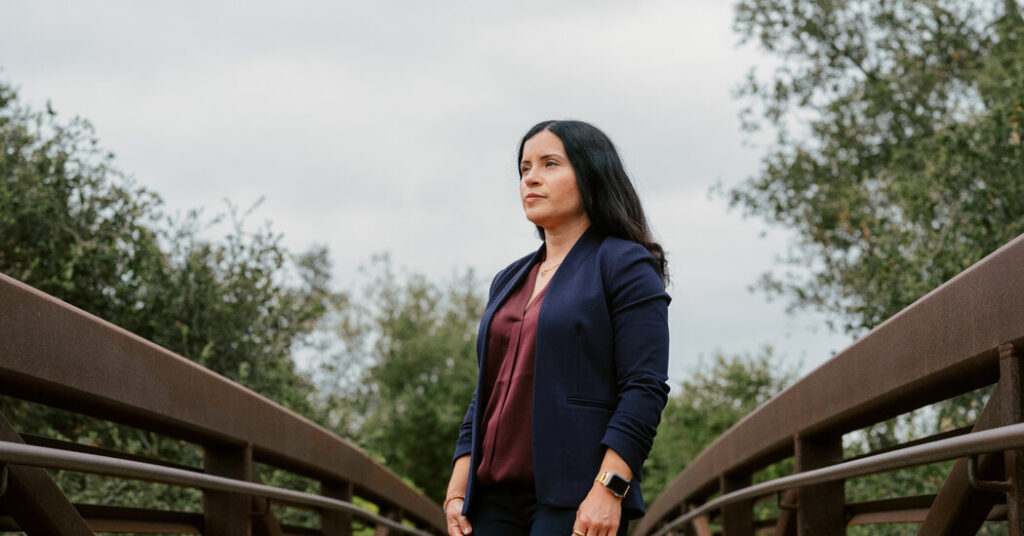
They point to the case of Leslie Hunt, who in October 2015 went out with a co-worker for drinks and woke up in a Brooklyn hospital. There, she said, a nurse told her that she had been found inside a hotel, climbing on furniture. When emergency workers came to help her, she fought with them, kicking and screaming.
A rape kit found semen on her body and she had bruises on her arms. But, in part because of errors the detectives made in the investigation, she was unable to prove she had been drugged.
And because of her conduct inside the hotel, Ms. Hunt said she did not appear “physically helpless.”
“It’s incredibly unjust,” said Ms. Hunt, now 42 and living in California. “Like I did something wrong because I chose to drink.”
Maria Cramer is a Times reporter covering the New York Police Department and crime in the city and surrounding areas.
The post New York’s Rape Laws Leave Out Many Victims Who Drank Willingly appeared first on New York Times.