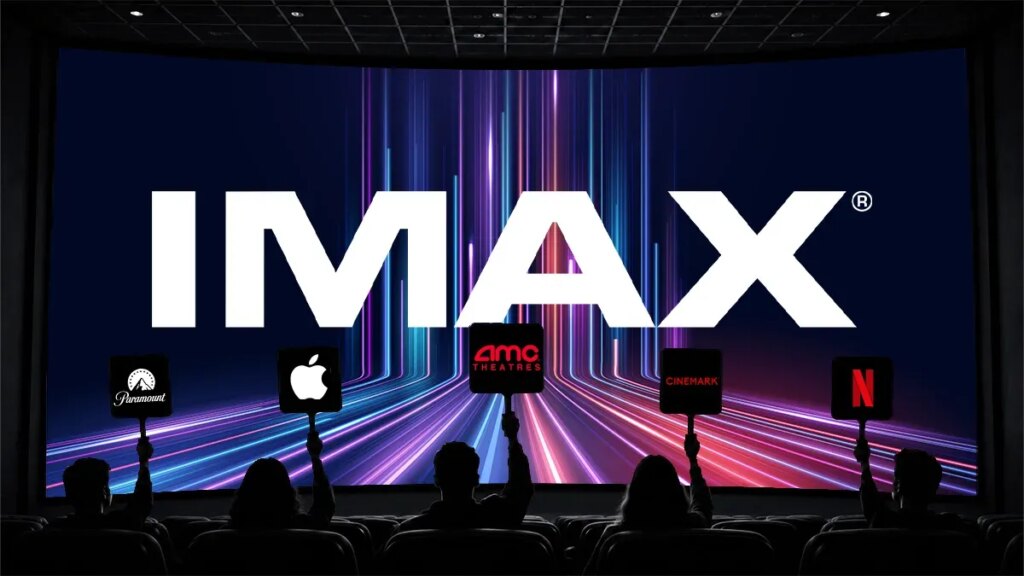
Imax is having a moment. Through the theater industry’s most turbulent periods, the premium format company has remained a rare pillar of stability for a box office that badly needed it. And now, it’s a selling point all its own.
Christopher Nolan’s “The Odyssey” this year will be the first movie ever shot entirely with Imax film cameras, a feat only accomplished by Nolan working with the Imax team to create custom equipment. Even the first collectible popcorn bucket for “The Odyssey” is an Imax camera.
With the box office enjoying its best numbers of the decade and Imax rapidly expanding its global footprint, the premium format company is in early discussions to gauge interest in a sale, an insider with knowledge of the matter told TheWrap.
Industry insiders have speculated that the deal interest was tied to the uncertain health of Imax CEO Rich Gelfond, who has been sidelined with pneumonia for the past few months and took a medical leave of absence in March. But Gelfond, who attended a J.P. Morgan-hosted investor conference via Zoom three weeks ago, has been back to work as of May 1.
“The timing of this sale reflects strength, not distress,” Qualia Legacy Advisors managing director Aaron Meyerson told TheWrap. “This isn’t a company looking for a rescue — it’s a company trying to capture maximum value at the moment when premium theatrical is one of the bright spots in the movie business.”
So who would buy the company, which has solid cash flow, little debt and strong demand among consumers and creatives alike?
{ “symbols”: [[“NYSE:IMAX|3M”]], “width”: “100%”, “height”: “400”, “locale”: “en”, “colorTheme”: “light”, “isTransparent”: false, “showChart”: true, “scalePosition”: “right”, “scaleMode”: “Normal” }
Imax could potentially fetch around $50 per share depending on buyer interest, based on the low end of a 20% to 40% premium from its current trading value, said Lloyd Greif, CEO of the Los Angeles-based investment firm Greif & Co.
As of Monday’s close, Imax has a market cap of $2.15 billion. It also has $528.4 million in total liquidity, including $146 million in cash, $154.4 million in net debt and $300.3 million in total debt, per its latest earnings disclosure.
A key challenge will be finding a buyer who wouldn’t present a conflict of interest.
Experts told TheWrap that a key risk in one of Imax’s major partners like Universal Pictures or Warner Bros. acquiring the company is that other exhibitors or studios could shift their focus to other premium large format options – hurting the company network and flow of content.
A strategic buyer could clear regulatory scrutiny by committing to operate Imax as a wholly owned subsidiary with an independent management team, or the company could be bought by a private equity firm, avoiding conflict of interest entirely.
During Imax’s investor day in December, Gelfond told shareholders that the company would be a valuable theatrical player “either as a wholly differentiated publicly traded company or as part of a larger company with the keys to unlock even greater value from our strong business worldwide.”
Wedbush Securities analyst Alicia Reese said Imax is a “rare combination of a globally recognized premium brand, an asset-light licensing model, and a structurally expanding earnings profile.”
“Imax is trading at a discount to what we believe the business is worth as a standalone entity, let alone as a strategic acquisition target,” she added. “At roughly $2 billion in enterprise value, a prospective acquirer would be buying one of the most defensible moats in entertainment for what amounts to a rounding error on the balance sheet of any major studio or technology platform.”
Representatives for Imax, Netflix, Paramount, Sony, Cinemark and Blackstone declined to comment. Disney, Comcast/NBCUniversal, Sphere Entertainment, Regal, AMC Entertainment, Apple, Amazon, Silver Lake, Apollo, Providence Equity Partners and KKR did not immediately return TheWrap’s request for comment.
Why explore a sale?
Word of Imax’s early sale exploration comes at a time when the premium format company’s global expansion has led to the best 18 months of box office business in its history.
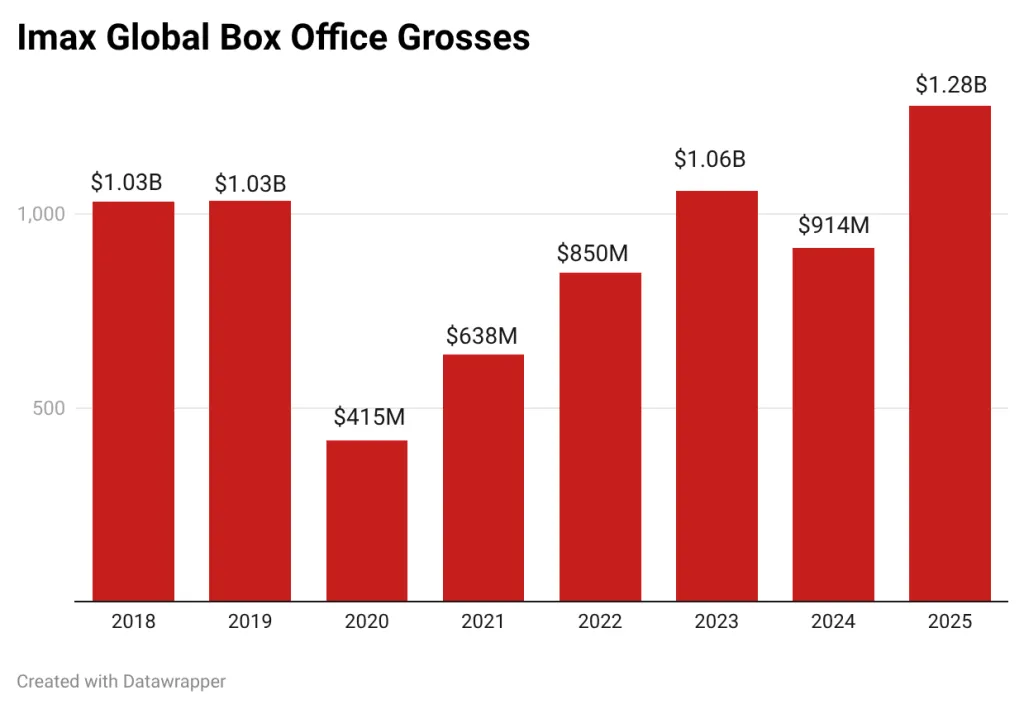
Starting with the Chinese $2 billion-plus animated hit “Ne Zha 2” and continuing through a 2025 that included films like “Avatar: Fire and Ash,” “Demon Slayer: Infinity Castle” and “F1,” Imax recorded a company record $1.28 billion in global grosses last year. Not bad considering the company has 1,865 auditoriums, roughly 0.9% of the approximately 200,000 screens in theaters worldwide.
That has led into a 2026 that Imax projects will set another record with $1.4 billion, largely off the back of second half films like “The Odyssey” and “Dune: Part Three,” along with early-year releases like Amazon MGM’s “Project Hail Mary,” which made more than $93 million on Imax.
While some Hollywood-produced Imax offerings like the “Star Wars” dud “The Mandalorian and Grogu” have underperformed with just $33.8 million grossed in the format through this past Sunday, that has been made up for by Imax’s increasing expansion into blockbusters produced in other countries like the Chinese racing film “Pegasus 3” and new auditoriums built in countries like India, which will soon gets its first “Filmed for Imax” labeled films like Namit Maholtra’s “Ramayana” and S.S. Rajamouli’s “Varanasi.”
If the global demand by studios to be associated with the Imax brand wasn’t clear enough, consider the launch of Disney’s recent “Infinity Vision” program with its subsidiary Marvel Studios, a program designed to point MCU fans to the best premium format at their local theaters to watch “Avengers: Doomsday” after the film’s move from May to December. That release date shift forced Disney to forfeit screening “Doomsday” on Imax during the holidays, as Imax had already committed to a deal with Warner Bros. to screen “Dune: Part Three.”
Option 1: The Movie Theater Chains
One of the most obvious potential buyers would be the movie theater chains themselves.
Reese said that AMC, Regal and Cinemark, who collectively represent the majority of Imax’s screen count, would have an incentive to accelerate investment in competing premium large-format technologies, including Dolby Cinema, and the companies’ own proprietary large-format screens such as Cinemark’s XD format, which is featured at 300 of its locations in the U.S. and Latin America.
“Consolidation over the last 10-15 years hasn’t been exclusive to the studio side,” Boxoffice SVP and editorial director Daniel Loria told TheWrap. “AMC purchased Carmike in 2017 and bought a bunch of European circuits in the years that followed. Regal and Cineworld merged, and while things slowed down after the pandemic as the industry tried to get back on track, it’s not a significant surprise to see exhibitor-side acquisitions resume.”
But such a deal would create a conflict of interest, as the Imax release slate would be controlled by a single major exhibitor – not to mention they’d also get a share of its box office.
Seaport Research analyst David Joyce said Imax “needs to remain agnostic and partner with all exhibitors globally.” He also noted there are guardrails in place for market delineation of how far apart Imax screens need to be, based on market population density.
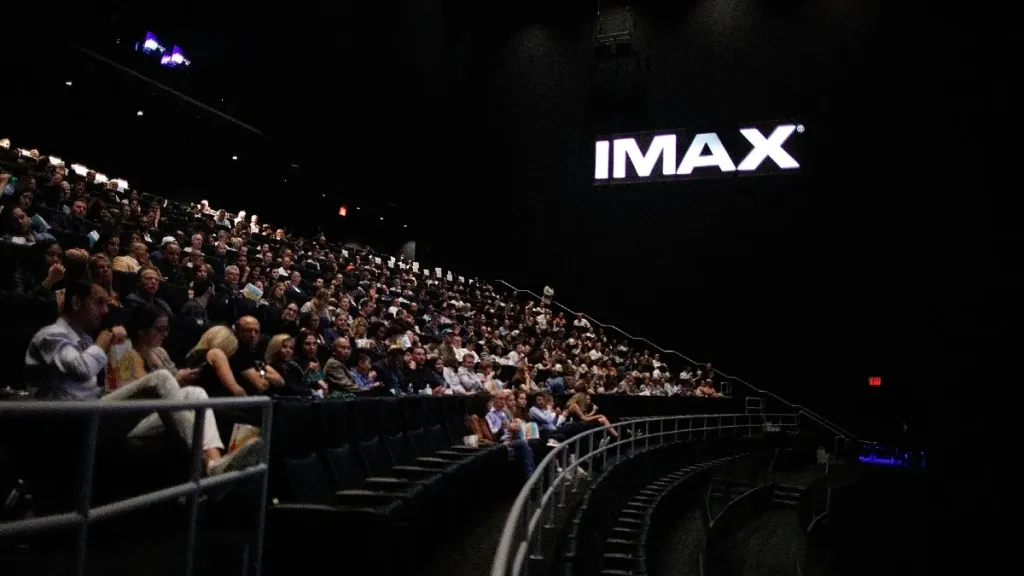
Another factor decreasing the likelihood of an exhibitor buying Imax is the movie theater industry’s widespread capital expenditures in other areas of the moviegoing experience. In September 2025, Cinema United reported that movie theaters spent a combined $1.5 billion in renovations, including $920 million from the top eight chains. That includes developing in-house premium format brands like AMC’s new 40-foot-wide “XL” screens, a format that launched last year through a partnership with projector company Barco.
That figure is expected to continue rising over the next three years, decreasing the likelihood that any exhibitor could save up the cash to be a serious bidder.
Option 2: The Traditional Hollywood Studios
The major Hollywood studios themselves could make a play for Imax, though that could present a similar conflict of interest issue — whoever the buyer is would have the ability to prioritize their own films for Imax screens.
Texas Capital Securities analyst Eric Wold told TheWrap he could see one of the large streaming or entertainment companies use Imax to “further penetrate the premium space of the market.” He also didn’t rule out an international media company, given the increasing use of local language content. But he also said he’d be surprised if any of the major Hollywood studios pursued an Imax acquisition, citing their competition for key release windows and the “likelihood that a studio would not want to share box office with another studio.”
While Meyerson said that a Disney acquisition would be “strategically obvious” given that it’s Imax’s biggest beneficiary globally, he argued that getting a deal done would be “practically impossible.”
“Owning the network gives them enormous leverage over competitors, which is precisely why every other studio would pull back and the DOJ would come calling,” he explained. “Disney would be buying something whose value depends entirely on its neutrality, and they would be eliminating that neutrality on day one.”

Reese said that Sony has the “clearest sequential strategic narrative” of any studio acquirer in that it has no streaming platform, making theatrical its primary monetization window. She pointed to its acquisition of the Alamo Drafthouse theater chain, which “demonstrated both the willingness and the regulatory freedom to move into exhibition.”
“They already have the full theatrical stack: Sony Pictures, professional projection, image sensors, post-production,” Meyerson added. “The only real hurdle is managing the perception that a studio now controls the premium screens it competes on.”
That said, other experts said that Imax’s close relationship with director Christopher Nolan might tempt Universal to consider a purchase. And Imax has a traditionally close relationship with Warner Bros., which is on the cusp of being sold to Paramount Skydance.
Option 3: Netflix
Experts said that Netflix could be a logical partner, given its interest in “eventized” programming.
The streamer has notably dipped its toe in the theatrical experience with the “Stranger Things” series finale and films like “Frankenstein” and “KPop Demon Hunters.” It also plans to give both Greta Gerwig’s “Narnia” and David Fincher’s Cliff Booth films the Imax treatment.
Additionally, Netflix made a $83 billion play to acquire Warner Bros. Discovery’s streaming and studio assets, which would’ve catapulted the company right into the theatrical distribution business. Ultimately, that deal fell apart after WBD’s board opted for a $110 billion merger with Paramount Skydance, but Netflix walked away with a $2.8 billion breakup fee.
Reese noted that Netflix’s content calendar is thin enough that the Imax conflict-of-interest problem that would constrain regular studio buyers is “meaningfully smaller.” She added that owning Imax would give the streamer a “powerful recruiting tool” for signing filmmakers. Meyerson said it also gives Netflix a theatrical footprint without the real estate headaches of buying a traditional chain.
“It’s very filmmaker-friendly and solves their ‘Netflix killing theatrical’ perception,” he added. “The problem is the entire exhibition industry would view this as Netflix weaponizing the premium screen network. They’d need to credibly commit to arm’s-length operation — and I’m not sure anyone would believe them.”

Netflix co-CEO Ted Sarandos has said M&A is one tool that would help the company achieve its goals, but emphasized it would approach opportunities with discipline and discernment. An individual familiar with the matter told TheWrap Netflix has never had discussions with anyone about an Imax acquisition.
The other problem is that, publicly at least, Netflix has downplayed its interest in theaters. After vowing a deeper commitment to theatrical as it sought to acquire Warner Bros., recent comments by Netflix film chief Dan Lin to The New York Times suggest that the company is back to keeping theatrical at a distance, aside from limited engagement releases like “Narnia.”
“There is a group of filmmakers who still want theatrical. Those are filmmakers that we’ve accepted we just won’t work with,” Lin said, noting that the February 2027 wide release of Greta Gerwig’s “Narnia: The Magician’s Nephew” is an exception, not the norm.
Option 4: The Tech Giants
Experts also floated Apple and Amazon as buyers who could easily finance an acquisition and whose core businesses aren’t in entertainment. But they noted that their growing presence and ambitions in the space could still pose a conflict of interest.
Apple has notably been investing aggressively in prestige content for its streaming service and has also forged relationships with filmmakers including Martin Scorsese and Ridley Scott. Reese said Imax’s asset-light licensing model is far closer to a software platform than a physical venue chain and fits the tech giant’s preference for “high-margin, capital-efficient businesses” more naturally than any traditional exhibitor acquisition would. She also noted that Apple operates at scale in China, where Imax’s footprint is among its most valuable assets.
But Apple has also pulled back its theatrical ambitions and hasn’t released an original movie in theaters since last year’s “F1,” making its appetite for the theatrical space unclear.
Conversely, Amazon has been investing heavily in the theatrical space and could reap the benefits. Fresh off its biggest box office hit since acquiring MGM in 2021 with “Project Hail Mary,” Amazon has committed to releasing upwards of 15 wide releases annually and is preparing to launch its own overseas distribution arm in time for its relaunch of the James Bond series.
In addition to potential conflicts of interest, Meyerson also pointed out that neither Apple nor Amazon have shown an appetite for running “asset-heavy entertainment infrastructure” and that both companies would face a high bar for regulatory scrutiny.
Option 5: Private Equity
Experts said Imax could also be a “natural home” for private equity, which would avoid the conflict of interest problem that the Hollywood studios or theater chains may have. Meyerson pointed to Silver Lake, which took Endeavor Group Holdings private last year, as a firm that “genuinely understands technology-enabled entertainment businesses at scale.”
“They get that the value is in the platform and the relationships, not just the cash flows,” he said. “If any PE firm wouldn’t kill the golden goose at Imax, it’s Silver Lake — they’ve made their reputation on exactly this kind of moat-y tech-entertainment hybrid.”
He also said Apollo Global Management would be an obvious candidate, citing their “deep entertainment infrastructure experience” through owning Yahoo and an understanding for complex rights-based businesses; Blackstone, which has scale and has shown an appetite for experiential assets; or KKR, citing its history of media investments. On the more specialized side, he floated Providence Equity, which owns a majority stake in Wasserman, and Access Industries, which has stakes in Warner Music Group and sports streamer DAZN.
But while PE gets around the conflict of interest issue, there are other potential challenges.
“The core problem is that Imax’s value is partially relationship driven. PE doesn’t buy relationships — they buy cash flows. And at Imax, the cash flows are downstream of the relationships,” Meyerson said. “There’s also the exit question. PE needs a liquidity event in five to seven years — another sale or an IPO. That overhang creates uncertainty for long-term partners who are being asked to sign multi-decade installation agreements. Why would an exhibitor commit to a 20-year Imax deal when the owner might flip the company in five?”
Option 6: Sphere Entertainment
Ultimately, Meyerson believes that Jim Dolan’s Sphere Entertainment, which owns the Sphere and MSG Networks, would be the acquirer that makes the most sense.
“Every other buyer would be acquiring Imax as a complement to something else they do. Sphere would be acquiring it as a core identity play — technology-driven premium out of home entertainment experience — and that’s a very different kind of conviction,” Meyerson said. “Together they’d own the premium experience category in a way no studio or streamer could replicate.”
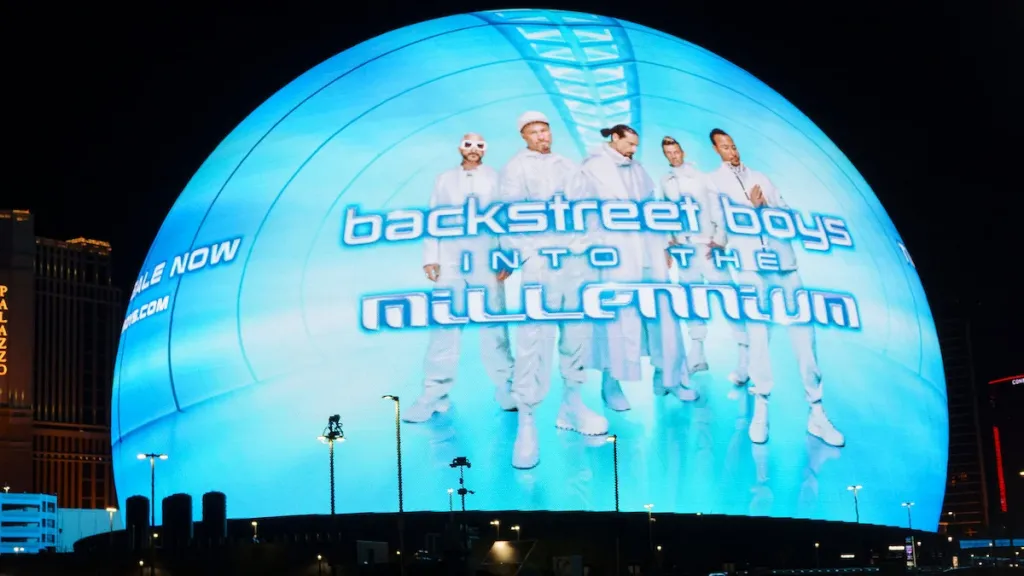
While Greif sees the strategic fit, he argued they don’t have the cash to be able to get a deal done.
“They’d have to borrow a lot to get there. They have a reasonable amount of leverage to begin with, so I don’t think they’re a logical buyer,” he said. “This would have to be a real stretch for them, and on paper it might not look like it’s accretive, it might look like a dilutive play.”
Should Imax find that there’s no interest in acquisition, the plan would be simple: keep growing. The company aims to install 175 new Imax auditoriums in theaters worldwide this year, having signed a recent deal with Australian theater chain Hoyts that doubles its footprint in the country.
And with films like “Shrek 5,” “Frozen III” and “Avengers: Secret Wars” on the chain’s 2027 slate, plus Chinese blockbusters like “The Wandering Earth III,” Imax has all the tentpoles it needs to keep bringing in big bucks.
The post As Imax Explores a Sale, Which Hollywood Studios Are Buyers? appeared first on TheWrap.